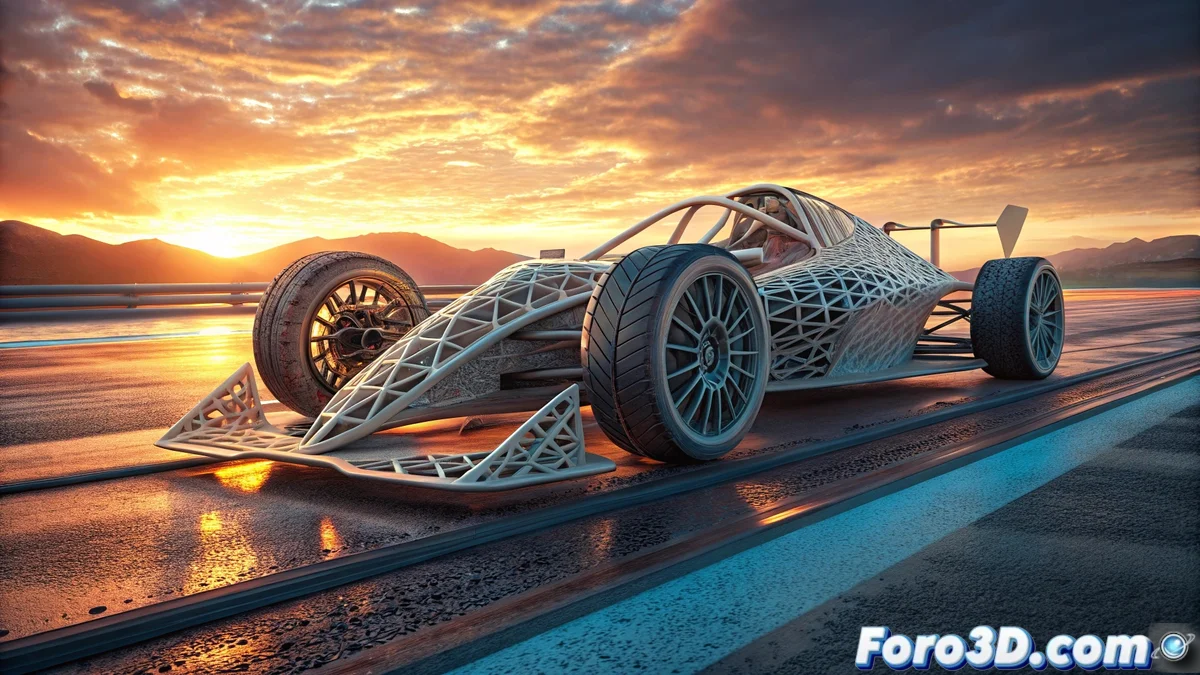
Toyota Revolutionizes Automotive Industry with Additive Manufacturing in Electric Prototypes
The renowned Japanese automaker Toyota is establishing new paradigms in the development of high-performance vehicles through the extensive implementation of additive manufacturing technologies. Its latest conceptual prototype of an electric race car integrates multiple elements manufactured using industrial 3D printing, demonstrating how this innovative methodology enables the production of sophisticated structural components with geometric configurations unfeasible through conventional processes 🚗⚡.
Strategic Benefits of Additive Manufacturing in the Automotive Industry
Three-dimensional printing empowers Toyota's engineering teams to develop ultra-lightweight parts with optimized internal architectures that maximize robustness while substantially reducing the total mass of the vehicle assembly. These customized elements range from specialized supports for energy storage systems to aerodynamic components and chassis sections, manufactured with cutting-edge materials such as advanced metal alloys and high-performance polymeric composites.
Key Operational Advantages:- Elimination of costly tools and molds through digitized processes
- Ability for rapid iteration during conceptual design phases
- Reduction of development cycles from weeks to mere days
Additive manufacturing represents a transformational shift in our approach to vehicle development, enabling optimizations unthinkable just five years ago - Toyota Advanced Engineering Team
Transformation in the Electric Mobility Ecosystem
This technological advancement gains special relevance in the segment of competition electric vehicles, where every gram of reduced mass directly translates into increases in range and dynamic performance optimizations. Toyota is systematically applying additive manufacturing to create cooling configurations integrated into the chassis structure, as well as customized battery module mounting systems that perfect load distribution 🏁.
Specific Applications in Electric Prototypes:- Thermoregulation systems fused with the structural bodywork
- Customized supports for next-generation battery cells
- Complex geometries that improve overall aerodynamic efficiency
Immediate Future of Digital Automotive Manufacturing
The ability to produce components on demand exponentially accelerates technical validation cycles, allowing engineers to continuously refine designs based on real-time performance metrics. This approach not only positions Toyota at the technological forefront of the automotive sector but also sets new benchmarks in development efficiency and customization of technical solutions for high-performance sustainable mobility 🔧.