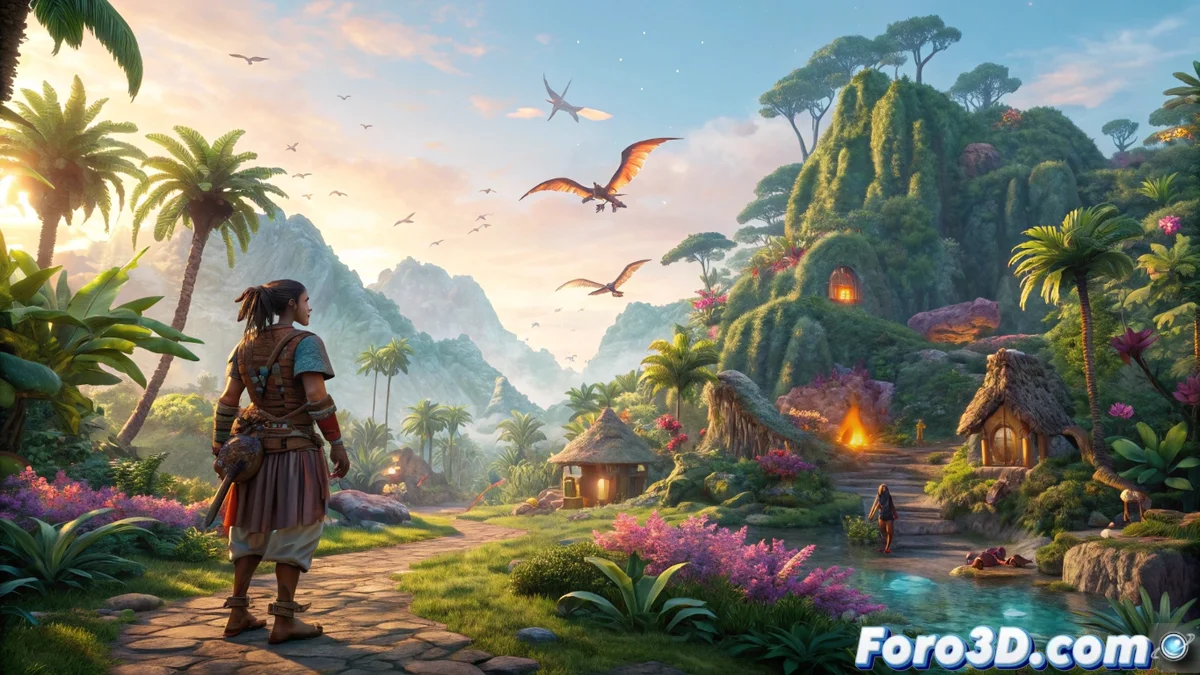
Towers of Aghasba: a tribal ecosystem that evolves in Unreal Engine
This video game places you as the architect of a fantastic island with a tribal aesthetic. Your main mission is to develop villages, cultivate the land, and restore natural balance so that the entire environment thrives. The landscape is not static; it is a dynamic ecosystem that grows and changes visually according to your decisions 🌿.
A simulated world with Unreal Engine
The Unreal Engine is the core that makes this complex simulation possible. It processes systems that govern how plants expand, how animals move, and how all world elements interact under coherent physical rules. Even building structures is based on these physics, providing a tangible sense of weight and realism. The result is a visually impressive environment where every modification you make has a direct and visible consequence.
Pillars of visual simulation:- Organic growth systems: Flora develops and spreads following simulated rules.
- Autonomous animal behavior: Fauna moves and interacts within the food chain.
- Integrated physics in construction: The structures you build obey the world's laws, increasing immersion.
The player doesn't just build buildings, but manages and observes how this ecosystem reacts, flourishes, or declines.
The ecosystem as a central character
In this project, the web of life functions as a central gameplay system. It is not decoration. Introducing or removing a species directly affects the balance of the entire biome. This transforms the traditional building experience into a constant cycle of observing and intervening. You must manage resources and witness the chain reactions that your actions trigger.
How the player interacts with the biome:- Manage the food chain: Altering a population affects predators and prey.
- Restore balance: Actions aim to return health to the environment.
- Observe consequences: Every decision has a clear visual and systemic impact.
A simulator with ecological responsibility
The final proposal combines the fantasy of leading a tribal culture with the meticulousness of overseeing a natural environment. It is an experience where your power to shape the world comes accompanied by the need to understand and maintain its fragile ecology. If you're looking for a building game where the world breathes and responds, this simulator offers that unique layer of strategic depth and organic beauty 🌺.