Too Like the Lightning Explores a Future Utopia
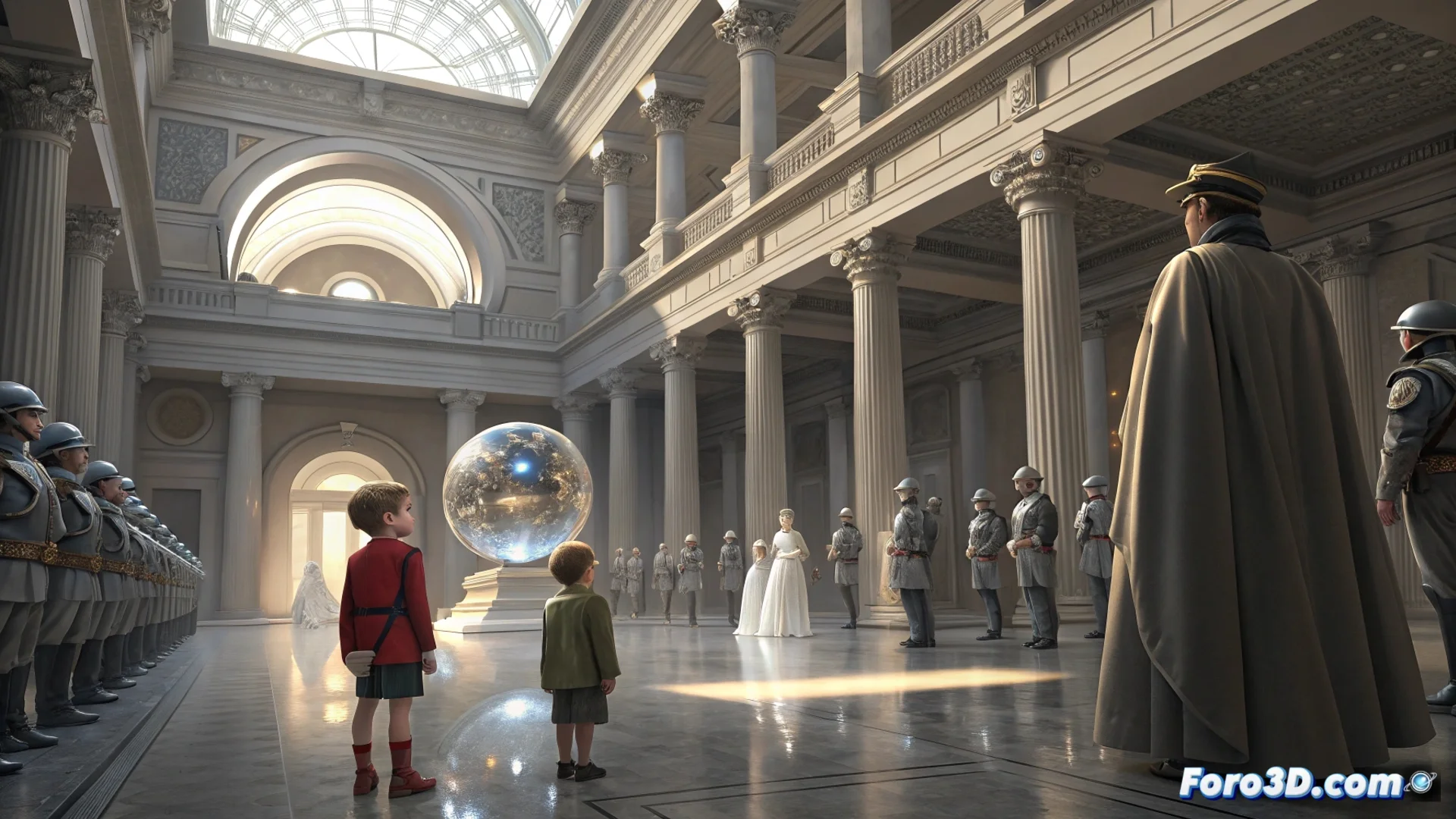
In the 25th century, humanity reorganizes its social structure after abandoning the concepts of nations and traditional monotheistic religions. In their place, the Hives emerge, collective systems that manage people's lives. This apparent global stability fractures when an extraordinary event bursts in: a child acquires the ability to animate inanimate objects. This event acts as a trigger for a conspiracy plot that puts the pillars of that ordered world at risk. 🤖
A Civilization Faced with What It Cannot Explain
Although the story does not deal directly with UFOs, the work analyzes how a technologically advanced society responds to phenomena that exceed its rational framework. The child's power functions as a narrative catalyst that forces the characters to examine the boundaries between the natural, the supposedly divine, and that created by technology. These themes of perception and knowledge also interest ufological studies, creating a conceptual parallelism. The novel explores the process of assimilating the unknown.
Key Plot Points:- The Hives or hive system replaces countries and organized religions.
- The appearance of the child with paranormal abilities destabilizes the established social order.
- The unleashed conspiracy threatens to reveal fundamental secrets of the 25th-century world.
The irony lies in the fact that, to imagine such a complex future, the author decided to look back and adopt the voice of an 18th-century narrator.
A Narrative Voice from the Past for a Distant Future
Ada Palmer chooses an unconventional literary style for contemporary science fiction. Her prose deliberately imitates the philosophers and writers of the 18th-century Enlightenment. This aesthetic decision generates a dense reading, loaded with digressions and philosophical debates on morality, politics, and power.
Style Characteristics:- Emulates the voice of thinkers like Diderot or Voltaire.
- Presents the dilemmas of the future with the analytical depth used in the past.
- Creates a unique contrast between the ultra-technological setting and the classical way of narrating it.
Fusion of Concepts to Question Reality
Palmer's book goes beyond a simple science fiction story. By forcing its futuristic society to confront an inexplicable phenomenon, the author invites the reader to reflect on how we construct our understanding of reality. The choice of an 18th-century narrator underscores this intention: to examine the eternal problems of humanity—power, faith, reason—through an ancient lens projected onto an imagined tomorrow. The work demonstrates that the great questions persist, no matter how advanced the technology that surrounds us. ⚖️