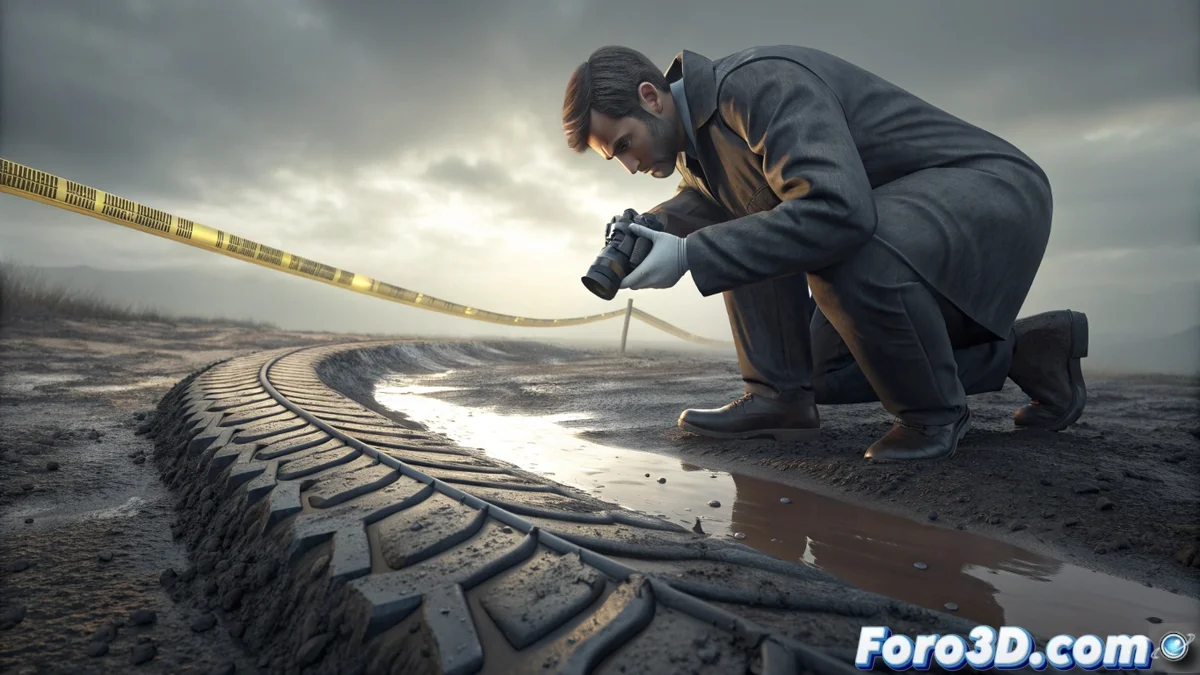
Tire Track Forensic Investigation Evolves with 3D Scanning
Forensic science adopts three-dimensional tools to document evidence more accurately and durably. When a vehicle leaves its mark on surfaces like mud or snow, a 3D scanner captures the evidence in full. This method not only records the tread pattern but also documents how the terrain deformed and the specific tire wear pattern. The result is a 3D point cloud that serves as objective and unalterable evidence. 🚗💨
Capturing the Track in Three Dimensions
Devices like the Artec Eva scanner allow registering the track directly at the scene. This process acquires data that flat photography cannot obtain, such as exact depth, volume, and deformations caused by the vehicle's weight. This information can reveal details about the load carried or the dynamics of a braking maneuver.
Key advantages of the 3D model over traditional methods:- Records the complete geometry, including the depth and relief of the track.
- Creates a permanent digital copy that does not degrade over time or with rain.
- Allows measuring and analyzing the evidence from any angle without touching it.
Physical evidence is ephemeral, but its 3D digital replica remains intact forever, allowing repeated and risk-free analysis.
Processing and Comparing Digital Data
Once scanned, the track is processed with specialized forensic software. These tools clean the point cloud, align the model, and extract millimeter measurements. The next step is to compare this digital model with a suspect vehicle's tire or with manufacturer pattern databases.
Software analysis functionalities:- Tools to filter noise and isolate the track of interest in the point cloud.
- Algorithms to overlay and compare two 3D models and search for matches.
- Ability to identify unique wear marks, cuts, or deformations that individualize a tire.
Programs like CloudCompare facilitate this direct comparison between point clouds, offering a very high level of detail to confirm or rule out links.
A Qualitative Leap in Expert Evidence
This technique represents a significant advancement over photography or plaster casts. Digital evidence is more robust for presentation in court, as investigators, the judge, or the jury can interactively examine the track, rotating and measuring it in real time. While a physical cast can break, the 3D file ensures the evidence is always available for reevaluation, guaranteeing the integrity of the judicial process. 🔍⚖️