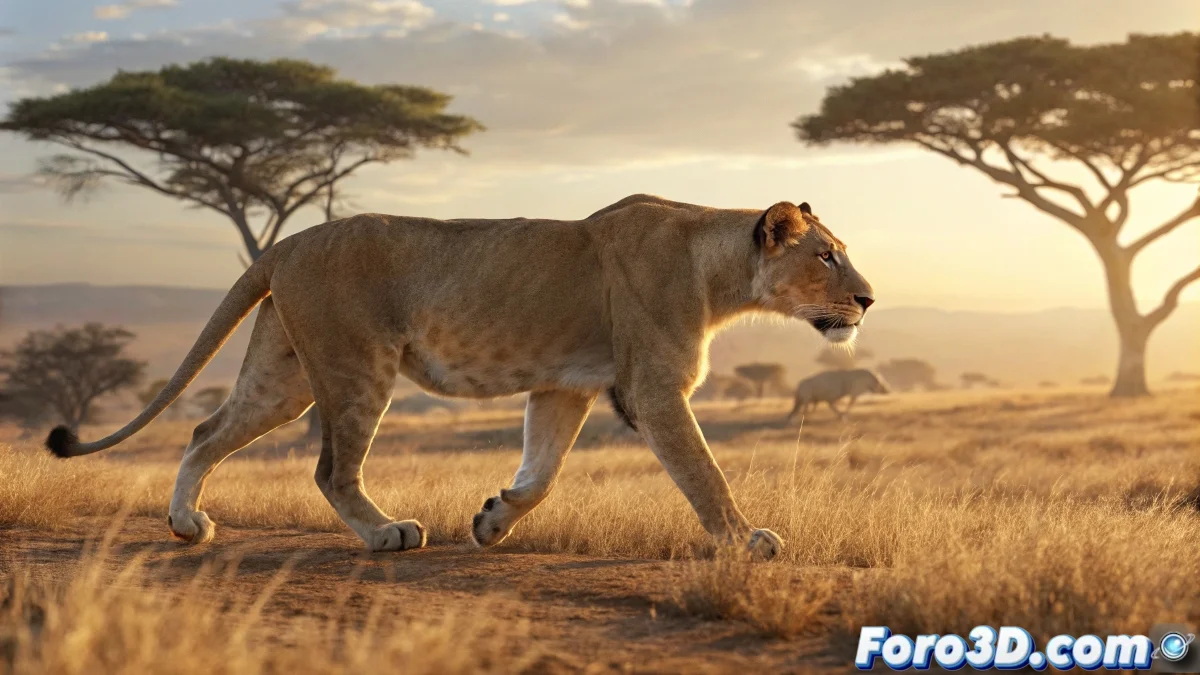
When Your 3D Lioness Walks Like She's Drunk and That's Not the Look You Were Going For 🦁
Animating a quadruped in 3D is like trying to coordinate a band where every musician plays to a different beat. First the left front leg, then the right back leg... or was it the other way around? The digital lioness that should move with wild elegance ends up dancing as if she had ants in her paws.
The ABCs of the Digital Beast Animator
To prevent your lioness from looking like furniture with Parkinson's, you must master:
- Leg Rhythm: It's not a TikTok dance, there are sequences to follow
- Gravity: That force that prevents animals from floating like balloons
- Weight: Because 300 kilos of feline don't move like a feather
A quadruped rig is like an IKEA instruction manual: if you don't follow it to the letter, you'll end up with something that doesn't even resemble the picture.
Lighting Like National Geographic (or Close Enough)
Lighting can transform your lioness from "fairground plush toy" to "BBC documentary". The options are:
- Dramatic Sunset: Warm lights that scream "Africa"
- Technical Showroom: Clinical lighting to see every flaw
- Environmental HDRI: For those who want realism without so much work
Arnold and V-Ray are your best allies... when they decide to cooperate. 🌞
The Harsh Reality of the Fauna Animator
If after hours of work your lioness still moves like a sack of potatoes with legs, remember: even in The Lion King there were discarded takes. The important thing is that in the end the result makes you roar with emotion... or at least doesn't provoke nervous laughter.
And if all else fails, you can always say it's a new species of terrestrial sea lion. Problem solved. 🎭