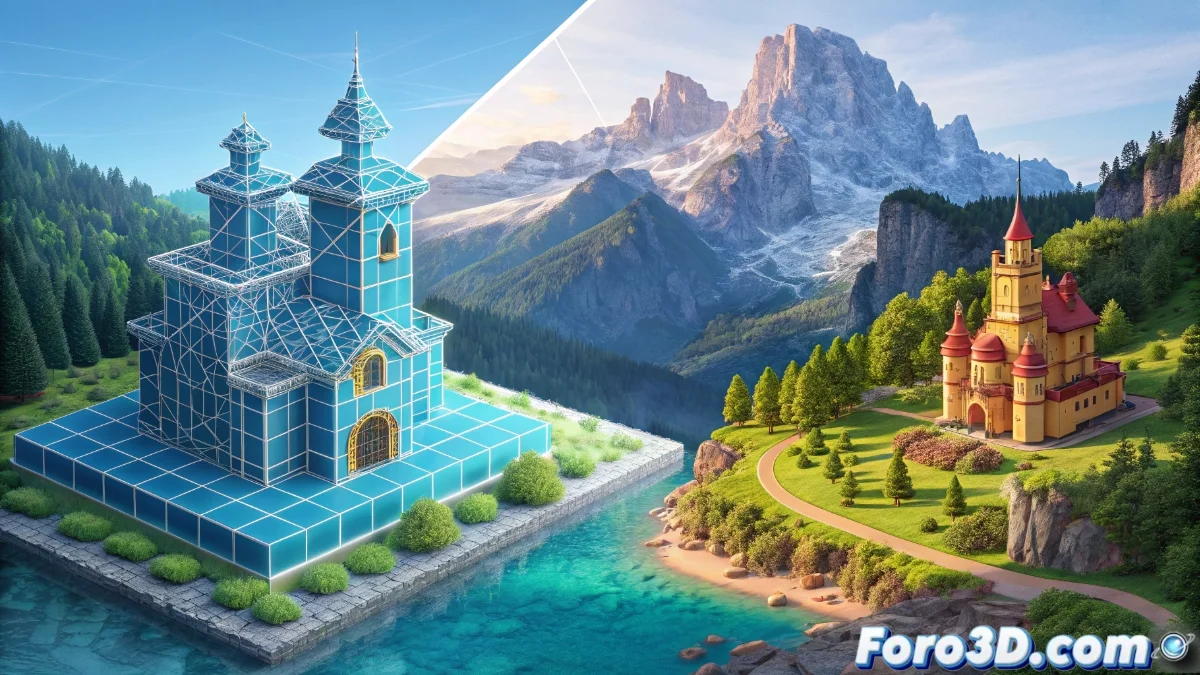
Tinkercad vs MagicaVoxel: two approaches to getting started in 3D modeling
When delving into the universe of three-dimensional modeling, beginners often encounter two tools that stand out for their accessibility and diametrically opposed work philosophies. 🎯
Constructive solid geometry versus voxel art
While Tinkercad operates through constructive solid geometry (CSG), MagicaVoxel is based on voxel art where each individual block functions as a three-dimensional pixel. This essential difference determines the types of achievable results and the creative workflows that users will follow. ✨
Main features of Tinkercad:- System based on geometric primitives like cubes, spheres, and cylinders
- Boolean operations to union, subtract, and intersect basic shapes
- Web interface integrated with 3D printing platforms
"Tinkercad transforms 3D design into an intuitive construction process using basic shapes, ideal for technical projects and architectural models"
The pixelated charm of MagicaVoxel
This tool turns three-dimensional creation into an experience similar to working with digital building blocks. Each voxel represents a cubic unit that can be placed, colored, and modified individually, generating scenes and characters with that distinctive pixelated style. 🎨
Key advantages of MagicaVoxel:- Manual and artisanal approach for detailed construction
- Ideal for retro aesthetics and indie video games
- Integrated rendering engine with professional results
Convergence of creative skills
Both platforms demonstrate that it is not necessary to master complex software to produce three-dimensional content. The construction logic acquired in one tool significantly facilitates learning the other, allowing users to expand their creative skills in complementary directions. 🚀