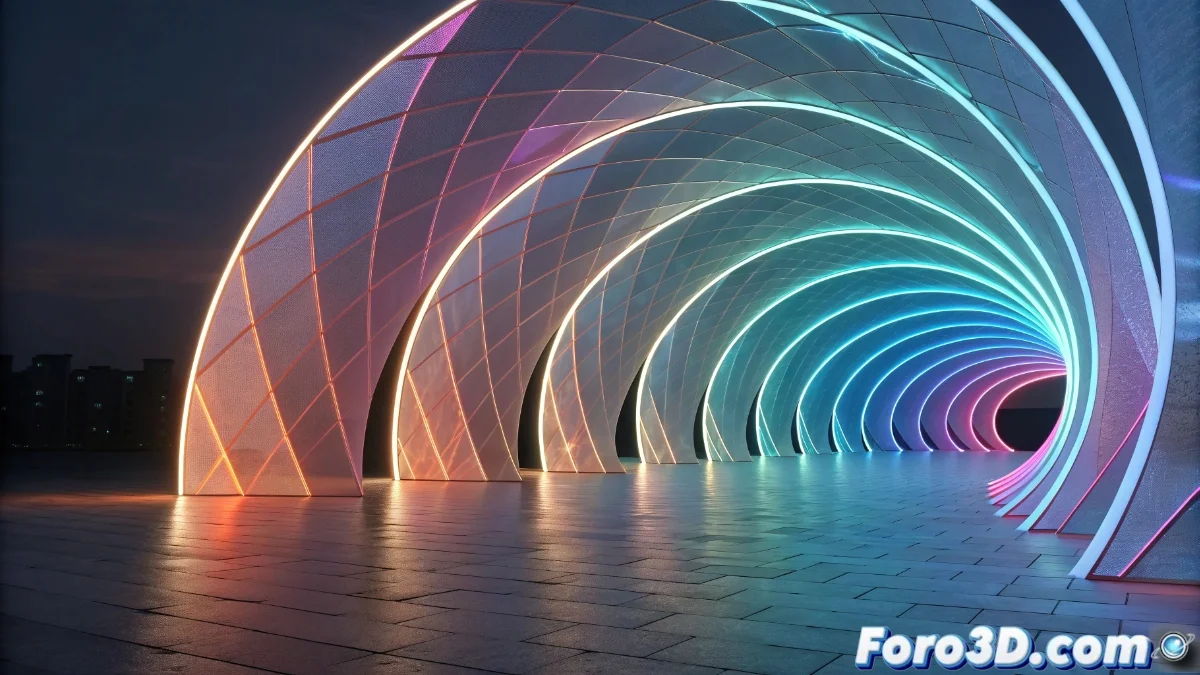
Time-offset layering: technique for organic and fluid animations
The time-offset layering is an advanced strategy that consists of replicating animation layers or visual effects and assigning them different time delays. This approach reproduces the complexity of natural movements, where components do not act in unison but with slight differences that increase realism. By using multiple instances with variable intervals, the rigidity characteristic of perfectly coordinated animations is eliminated, generating an impression of vitality and visually appealing dynamism 🌊.
Implementation in animation tools
To apply this technique, start by duplicating the base layer according to the desired effect intensity. Each copy receives a progressive time offset, generally from 1 to 10 frames, adjusted to the animation speed and creative objectives. In programs like After Effects, Blender, or Maya, this process can be automated using expressions or scripts that manage the offsets efficiently. The balance between the number of layers and the magnitude of the offset is crucial; excess can lead to visual confusion, while a minimal difference will not achieve the desired impact.
Key aspects in implementation:- Strategic duplication of layers according to movement complexity
- Precise adjustment of time intervals to avoid saturation
- Use of automation to optimize repetitive workflows
The irony of spending days replicating what nature does spontaneously never ceases to amaze.
Creative applications and practical examples
This methodology excels in particle effects, hair simulation, foliage, and crowd animation. By incorporating time-offset into particle systems, emissions acquire a more natural and less robotic behavior. In characters, it is applied to introduce subtle variations in clothing or accessories, avoiding the artificial synchronization typical of digital animation. Natural scenarios like forests or meadows gain depth by assigning small delays to groups of vegetation, creating a believable wind effect that is difficult to achieve with conventional techniques.
Main use cases:- Particle effects for smoke or fluid simulations
- Animation of clothing and accessories on characters
- Dynamic backgrounds with vegetation responding to wind
Final reflections on the technique
Time-offset layering not only improves realism but also enriches the visual narrative of any project. Although its setup requires patience and precision, the results justify the effort by offering authentic and lively movements. The challenge lies in balancing artistic control with technical efficiency, remembering that sometimes predefined software solutions cannot match the authenticity achieved through this manual approach 🎨.