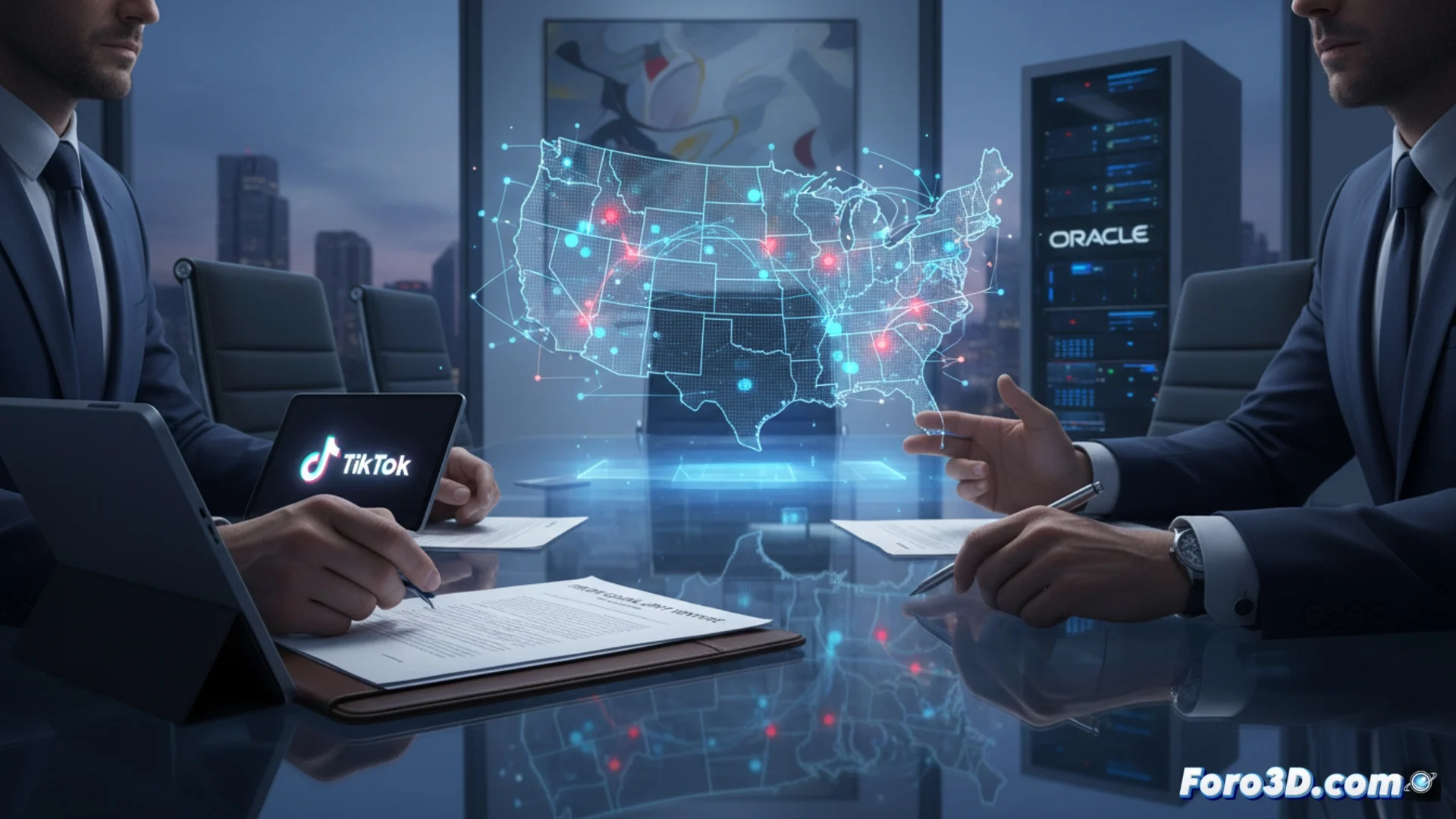
TikTok and Oracle Form a Joint Venture to Operate in the United States
The popular short video platform TikTok has agreed to create a joint venture with the American technology firm Oracle. This collaboration, named TikTok Global, aims to address the national security concerns that have worried U.S. authorities. The central plan is to store and manage U.S. user information within its territory, leveraging Oracle's cloud infrastructure. With this move, TikTok hopes to avoid a complete ban on its services in the country, a risk that has persisted for the past few years. 🛡️
The Setup of the New Entity
According to the details revealed, TikTok Global will operate as an autonomous organization. Oracle and the retail chain Walmart will hold a minority but substantial share of the capital. ByteDance, the Chinese company that owns TikTok, will retain majority ownership. However, the board of directors of the new company will include U.S. national security experts. Oracle will not only host the data but also review the source code and application software to ensure there are no vulnerabilities that could jeopardize user privacy.
Key Points of the Structure:- Oracle and Walmart hold a significant minority stake.
- ByteDance maintains majority control of the company.
- The board of directors will include U.S. national security experts.
Oracle will review every line of TikTok's code to ensure there are no backdoors, an unprecedented level of access for an external company.
The Political Environment and Responses
This agreement comes after an executive order from former President Donald Trump, which demanded that ByteDance divest its U.S. operations. The Joe Biden administration has maintained a cautious stance, analyzing the dangers posed by applications with foreign owners. Although the deal with Oracle appears to be an interim solution, some politicians in Washington remain skeptical and argue that only a complete sale to a U.S. company can effectively reduce the risks. The Committee on Foreign Investment in the United States (CFIUS) continues to evaluate the case.
Political Context Factors:- Trump's executive order drove the need for change.
- The Biden administration continuously assesses security risks.
- The CFIUS review process is still ongoing.
The Security Paradox
The irony of this situation is evident. To protect U.S. citizens' data, a company is now granted permission to meticulously inspect the application's code. Many observers point out that this technical intrusion represents a form of surveillance similar to what was being prevented, although originating from a different actor and with a stated goal of transparency. The balance between security, privacy, and corporate control becomes the core of the debate. 🤔