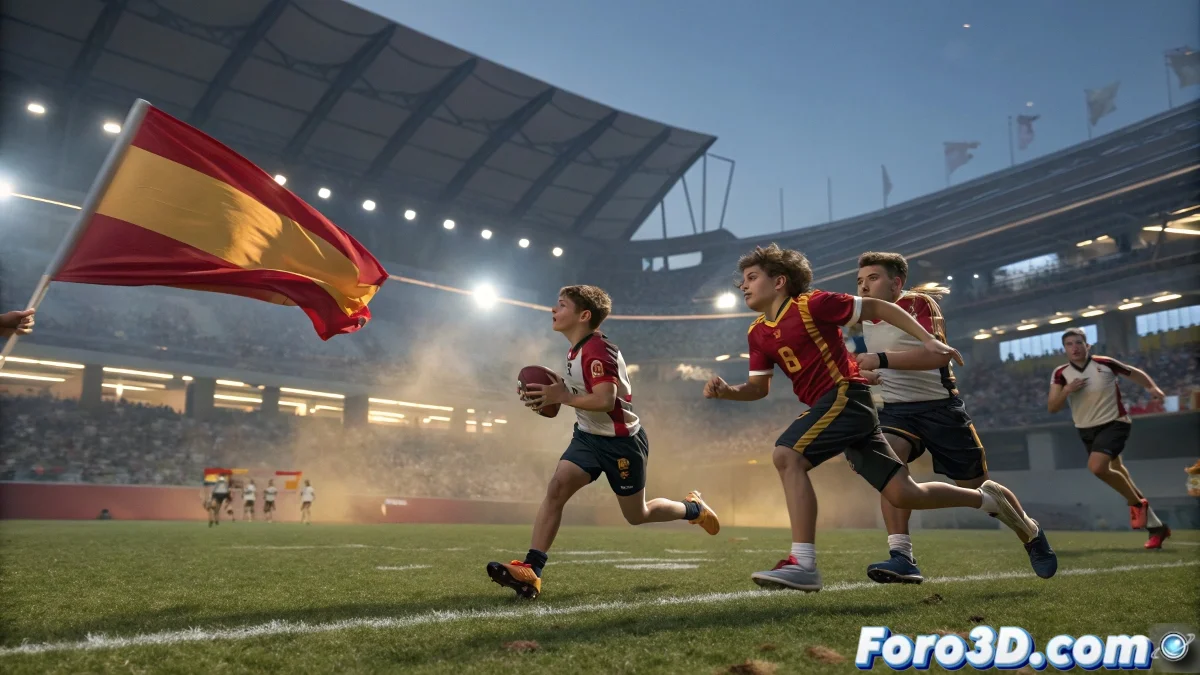
Three Spanish Youngsters Shine in the European Flag Football Championship and Their Recreation in Maya
Spanish sports celebrate a significant achievement in an emerging discipline 🏈. Three young Spanish players have won the bronze medal with the national team at the U15 European Flag Football Championship held in Austria, proving that dedication and training pay off even in minority sports. This milestone represents an important advance for flag football in Spain, showing how national athletes can compete at the highest level against teams from countries with greater tradition in this sport. To analyze and visualize the plays that led to this success, Autodesk Maya becomes an invaluable tool, allowing the action to be recreated in a detailed and understandable way.
When you animate the perfect play more times than you would execute it in real life.
Scene Setup and Basic Modeling
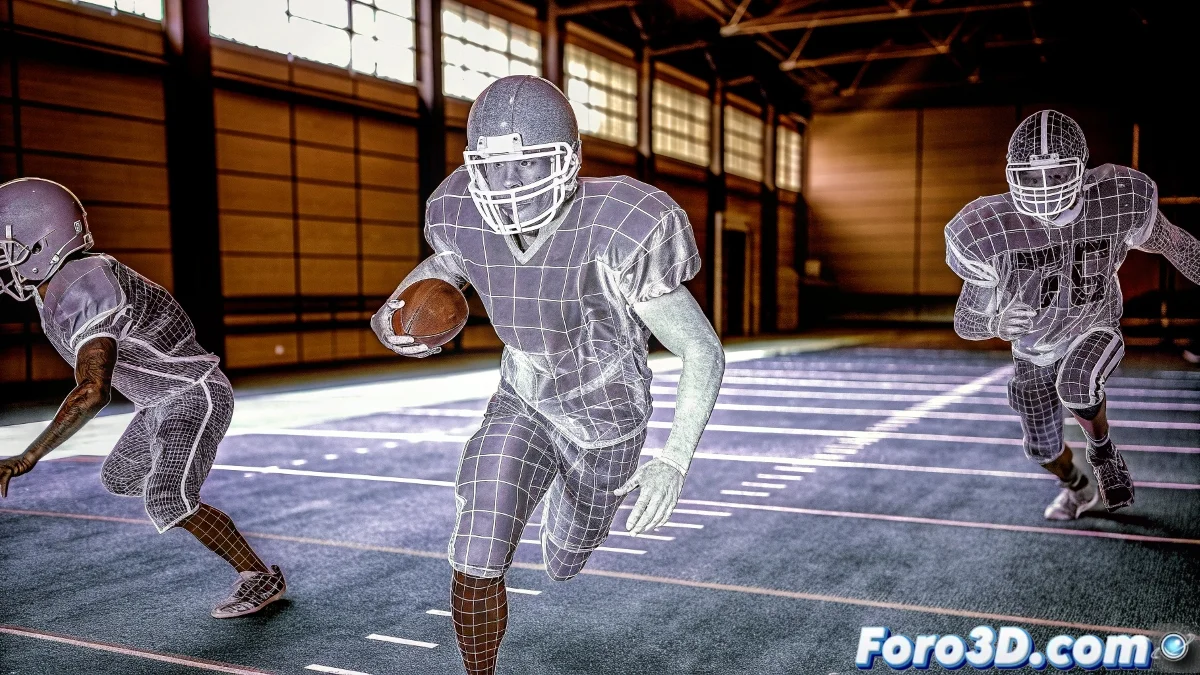
The first step to recreate this sports feat in Maya consists of properly setting up the workspace and metric units, organizing the project folders for models, textures, and renders. We model the playing field as a large plane with regulation dimensions, adding game lines and goalposts using basic primitives and polygonal modeling tools. The players are created from capsules and cylinders that form the bodies, optimizing the geometry to facilitate the subsequent rigging and animation process. We activate wireframe mode in the viewport to clearly visualize the mesh structure throughout the creation process. 🎯
Rigging and Animation of Sports Movements
The credibility of the sports visualization crucially depends on efficient rigging systems and realistic animations. We apply basic rigs to the players using Maya's HumanIK system or creating custom rigs specifically adapted to flag football movements. We animate with keyframes the fundamental actions: runs, direction changes, passes, and defenses, paying special attention to body mechanics and weight transfer. For complex movements, we import and adapt motion capture data, adjusting them to the proportions of our models to achieve maximum sports authenticity.
Trajectory Visualization and Technical Analysis
The true educational value of this recreation lies in the clear visualization of trajectories and movement patterns. We activate Motion Trails for the players and the ball, showing their complete routes during the plays. We adjust colors and thickness of the trails to visually differentiate between offensive players, defensive players, and the ball, creating an animated diagram that reveals the strategy behind each play. This wireframe representation is invaluable for coaches and sports analysts, allowing them to visually break down actions that in real time occur too quickly for the human eye.
Lighting and Camera Setup
To maximize the legibility of the technical visualization, we set up a neutral but effective lighting system. We place directional lights that evenly bathe the scene without creating distracting shadows, highlighting the wireframe geometry without compromising its clarity. We establish multiple camera angles: a general view that shows the complete team disposition and complex plays, and close-up cameras that focus on specific actions like receptions or runs. The absence of textures and complex materials keeps the focus on technical analysis rather than aesthetic realism.
Wireframe Mode Rendering and Practical Applications
We use the Arnold rendering engine to obtain clean and professional wireframe visualizations. We activate Wireframe mode in the objects' attributes or through specialized shaders, adjusting the line thickness to optimize legibility according to the camera distance. We render in standard resolution and save in PNG format to preserve the sharpness of the lines. The final result is a powerful didactic tool that allows coaches, players, and fans to understand the tactical complexities of flag football in a visual and intuitive way.
Curious how recreating a touchdown in Maya can be easier than catching a real pass at 50 km/h, and without the risk of breaking anything. In the end, the rigged players always reach the ground without injuries, something that doesn't always happen in the game... but they also don't celebrate with the same emotion as our young bronze medalists. 😉