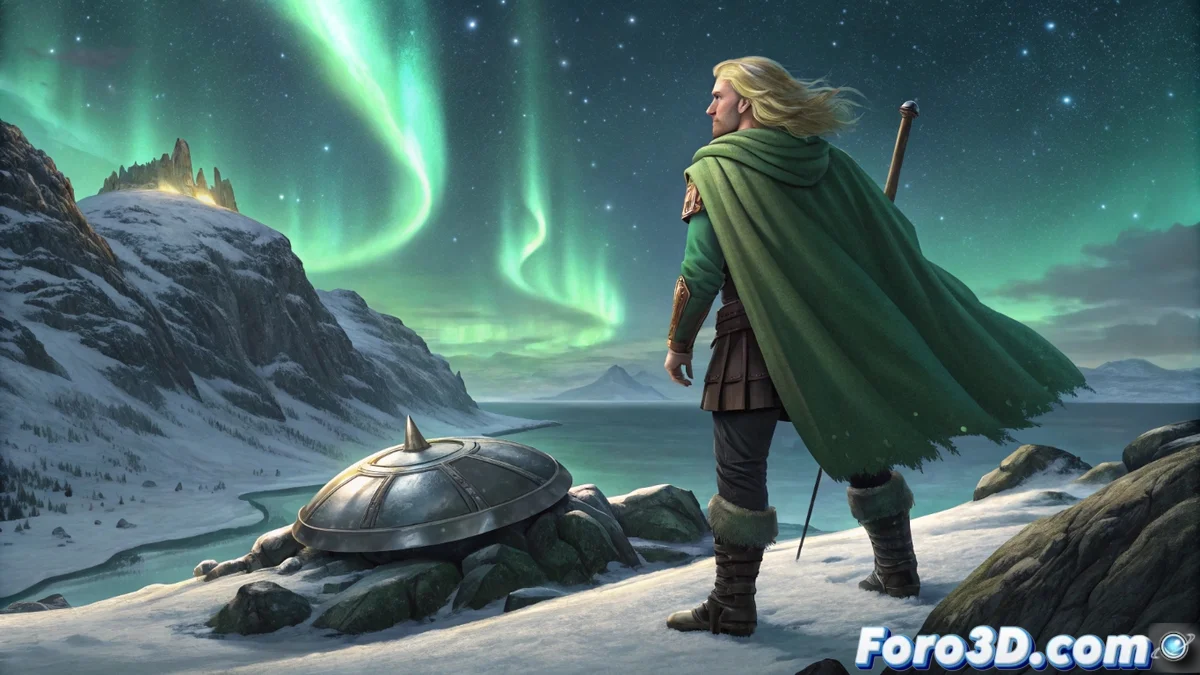
Thorgal: the epic fusion of Norse mythology and science fiction
In the landscape of European comics, few sagas have achieved the depth and recognition of Thorgal. Conceived by the masterful mind of screenwriter Jean Van Hamme and brought to visual life by the brush of artist Grzegorz Rosiński, this work transcends generic labels to offer a unique narrative experience. Its protagonist, Thorgal Aegirsson, is a character caught between two worlds: raised by Vikings but with an extraterrestrial origin that makes him an eternal outcast. His simplest longing—a quiet life alongside his wife Aaricia and their children—repeatedly clashes with a destiny that drags him into adventures where the mythological and the fantastical merge with concepts of ancient science fiction. This singular fusion is the soul of the series, creating a narrative that is epic in scale and intimate in its emotional focus. 🛡️✨
The pictorial transformation of a master of linework
The evolution of Grzegorz Rosiński's art is a journey parallel to that of the hero himself. The series begins with a realistic and detailed style, ideal for capturing the harshness of the Viking world, the coldness of steel, and the robustness of the longships. However, as the story progresses, his technique undergoes a metamorphosis toward a more pictorial and expressionist language. This shift is accentuated by the adoption of direct color, where Rosiński employs watercolors and digital techniques reminiscent of oils to infuse a deep emotional texture into every scene. Landscapes cease to be mere backdrops to become characters: misty forests whispering secrets, fjords of absolute coldness, and impossible architectures of forgotten civilizations. Each panel thus transforms into an autonomous work of art that enriches the reading.
Pillars of Thorgal's visual narrative:- Initial realism: Precise linework to define the Viking world, its armors, ships, and hostile environments.
- Evolution toward the pictorial: Use of watercolors and digital oils that bring a dreamlike and emotional atmosphere.
- Color as narrator: The chromatic palette defines moods, from the warmth of home to the coldness of destiny.
Thorgal is proof that comics can be, simultaneously, a thrilling adventure and a profound reflection on identity and destiny.
A cosmic antihero in search of a home
The greatness of Thorgal as a character lies in his contradictory humanity. Unlike the archetype of the glory-thirsty Viking warrior, he is a reflective strategist who avoids violence, a devoted father and loyal husband, constantly tormented by his split identity. This psychological complexity unfolds in a vast narrative universe that goes far beyond Nordic settlements. The saga incorporates Norse deities that interact directly with mortals, creatures from myths, and ancestral technology so advanced that it is indistinguishable from magic. Through these elements, the series masterfully explores universal themes such as free will versus destiny, the weight of family heritage, and the eternal search for belonging.
Key elements of Thorgal's universe:- Genre fusion: Norse mythology, epic fantasy, and ancient science fiction intertwine seamlessly.
- Thematic depth: Exploration of inner conflict, family, and the struggle for peace in a violent world.
- Vital contrast: Despite his stellar origin, his struggles are often earthly, like surviving winter, prioritizing the hearth fire over interstellar ships.
The legacy of a masterpiece
Thorgal establishes itself not only as a milestone of European ninth art, but as a saga that redefines what an adventure can be. The combination of Van Hamme's intricate scripts and Rosiński's evolving art creates an immersive experience where every rereading reveals new nuances. It is a story about a man who, with the cosmos as his heritage, discovers that his most important battle is for a place to light the family fire. This duality between the cosmic and the everyday, between imposed destiny and chosen home, is what guarantees its eternal place in the comic pantheon. 🪐🏠