They Discover in Pompeii the Secret of Roman Concrete
An excavation in Pompeii has unearthed a unique scene: a construction site frozen in time by the eruption of Vesuvius. 🏛️ This discovery offers a direct window into the materials and methods used by the ancient Romans, allowing observation of their concrete manufacturing process firsthand.
A Domus Frozen in Time
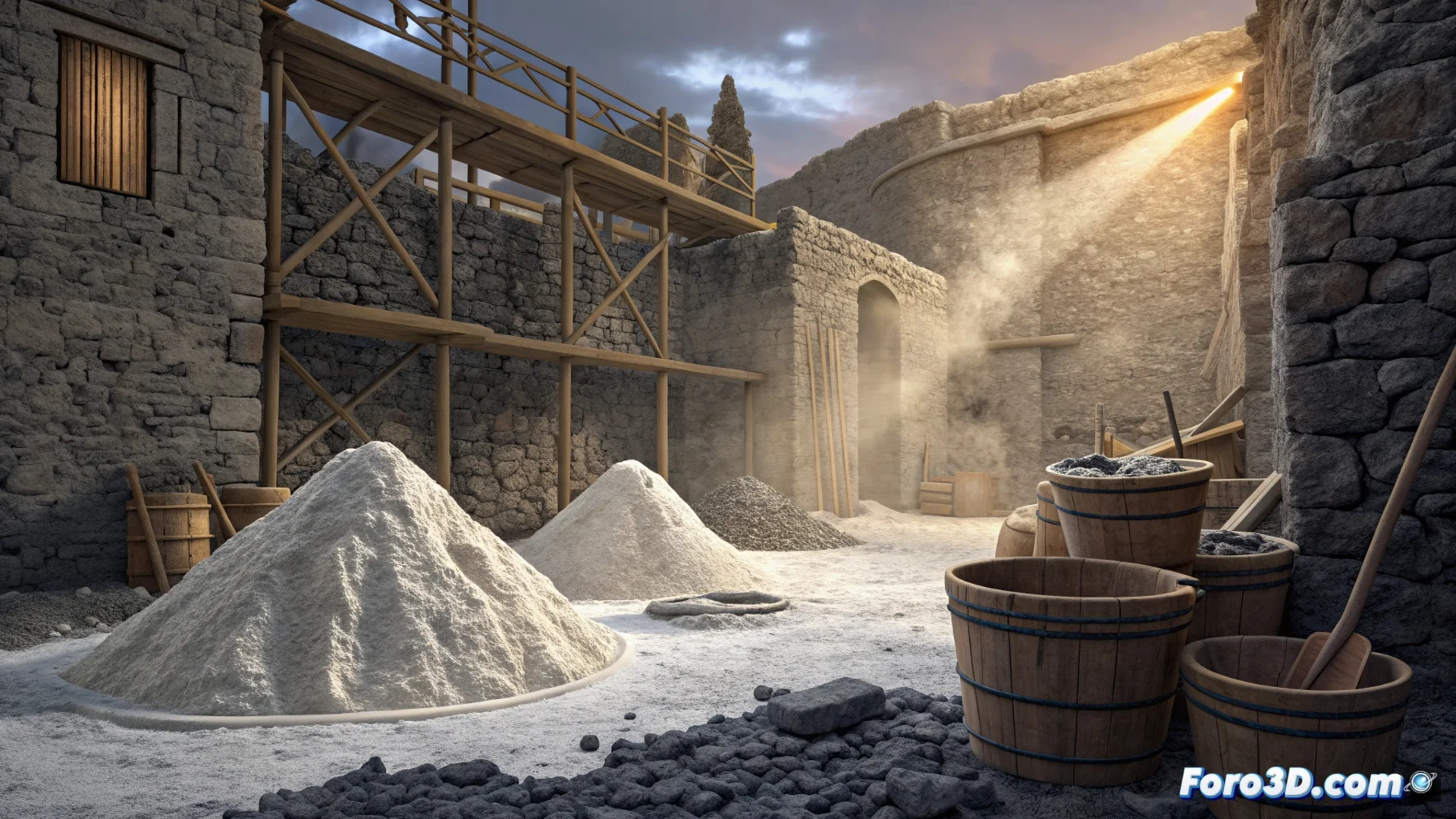
The archaeologists found a domus under renovation that contained all the elements of an active construction site. The site preserves piles of unused quicklime, stone fragments, and various tools, providing an invaluable snapshot. This context allows studying the logistics and materials in their original state, before mixing them.
Key Elements of the Discovery:- Pure quicklime: Found in its original state, unslaked, contradicting previous hypotheses.
- Local pozzolana: Volcanic ash from the area, an essential component for the chemical reaction.
- Tools and fragments: Evidence of the manual process of preparing and placing the material.
The hot mixing technique could be the key to understanding the millennial longevity of the Pantheon and Roman docks.
The Revolutionary Hot Mixing Technique
The most significant discovery is the evidence that the Romans mixed quicklime hot. Instead of using slaked lime, they combined quicklime directly with pozzolana and water. This exothermic reaction generated high temperatures, accelerating setting and creating a unique microstructure. 🔥
Advantages of This Method:- Fast setting: The heat generated accelerates the hardening process.
- Greater durability: Forms calcite crystals that seal microcracks over time.
- Self-repairing capacity: The material can "heal" its own cracks, a property that modern concrete does not have.
Lessons for Modern Construction
Studying Roman concrete is not just an archaeological matter. Understanding its formula and the hot mixing process can inspire the development of new cements. These materials could be more sustainable and durable, reducing the environmental impact of construction today. The discovery in Pompeii reminds us that advanced technology sometimes has very ancient roots. 💡