Thermoelectric Cooling and the Peltier Effect in Solid-State Systems
Thermoelectric cooling is a cooling method based on the Peltier effect. This solid-state system operates without moving parts, using only a semiconductor module and a direct current to transport heat from one side to the other, generating cold and hot zones with great precision. 🧊🔥
Operation of the Peltier Module
The core of this system is the Peltier module. It is composed of multiple pairs of semiconductors, one N-type and one P-type, connected electrically in series but thermally in parallel. When current is applied, the charge carriers move thermal energy from one side of the device to the opposite side. This establishes a very pronounced temperature gradient: one side absorbs heat and cools, while the other releases it and heats up intensely.
Key characteristics of the process:- Actively transports heat using electricity.
- Produces simultaneous cooling and heating on opposite sides.
- Its response is fast and allows very precise thermal control.
To make it work, you must dissipate much more heat than you remove, so your main cooling system now has to deal with the component's heat plus the extra heat produced by the Peltier module itself.
Applications and Practical Uses
Its solid-state nature and ability to achieve very low temperatures locally make it ideal for applications requiring precision. It is common in scientific equipment, to stabilize sensors in CCD cameras or laser diodes. In the computing field, it is sometimes integrated into extreme cooling solutions for processors.
Typical implementation in computing:- The Peltier module is placed directly on the processor.
- The cold side extracts heat from the chip.
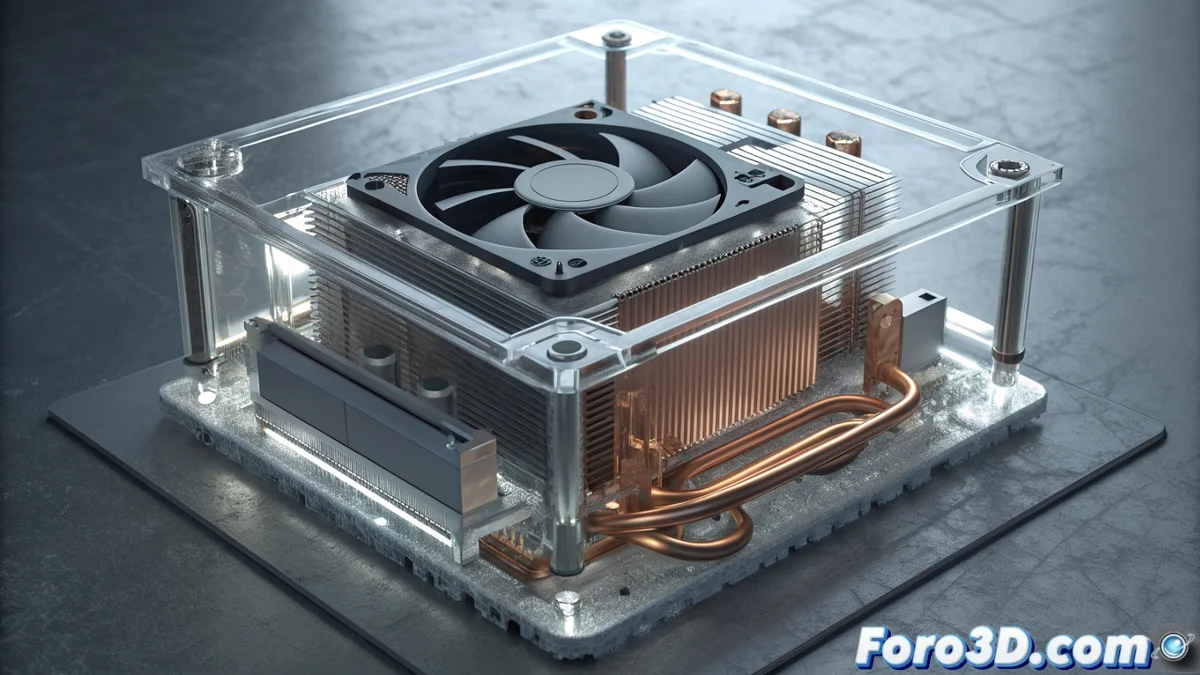
- The hot side is coupled to a traditional heatsink and a powerful fan to evacuate the intense heat generated.
Considerations on Efficiency and Thermal Paradox
However, its energy efficiency is low compared to a conventional air heatsink. The module consumes a lot of electricity and, consequently, generates more total heat than it manages to move. This is a crucial thermal paradox: the overall cooling system must evacuate both the component's heat and the extra heat produced by the Peltier module itself, a factor that is often underestimated when planning these systems. ⚡