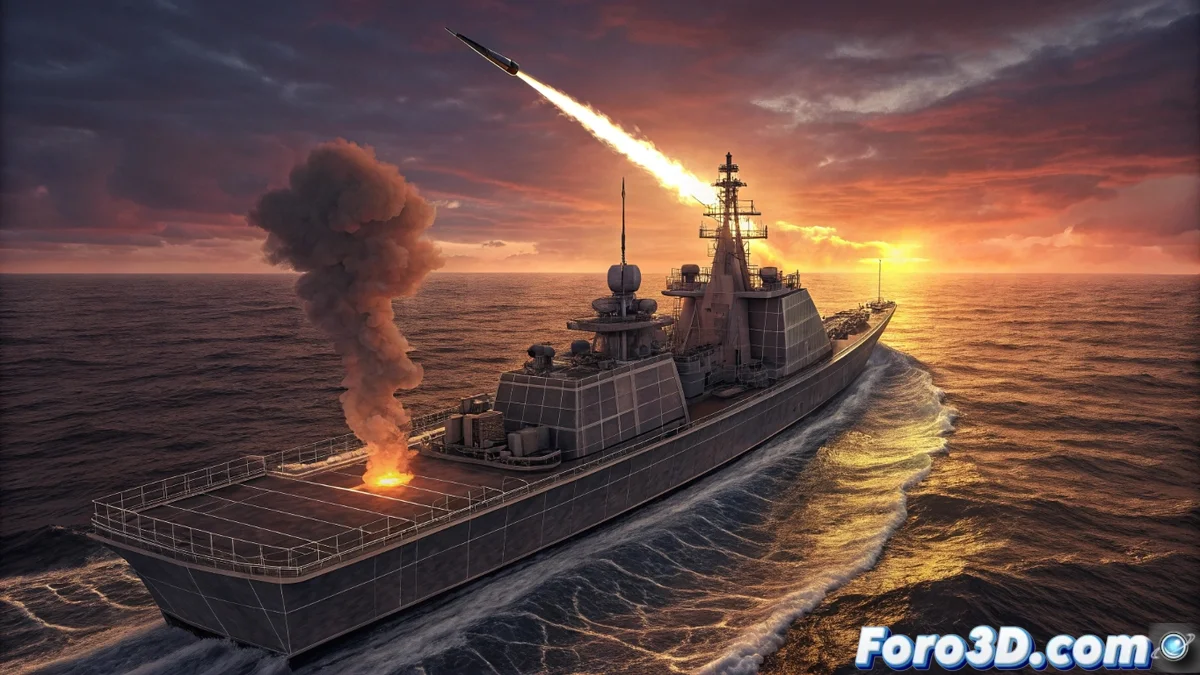
The Zircon 3M22 Missile, the Russian Hypersonic Weapon
The Russian navy deploys the 3M22 Zircon cruise missile, a weapons system that redefines naval combat. Cataloged as SS-N-33 by NATO, this hypersonic projectile is designed to be launched from naval platforms and reach targets at a speed and trajectory that challenge current defenses. Its presence marks a shift in the balance of maritime power 🚀.
Design and Integration into Naval Platforms
The Zircon features a cylindrical body with a length ranging between eight and ten meters. Its diameter, between 0.6 and 0.8 meters, allows it to use the universal vertical launch system UKSK that the Russian navy already operates for other missiles like the Kalibr. This compatibility facilitates equipping frigates, corvettes, and submarines without drastically modifying their infrastructure.
Key features of the system:- Scramjet propulsion: An engine that allows it to maintain sustained hypersonic speeds during its flight.
- Adaptable flight profile: After launch, it ascends to high altitude and then descends to fly low over the sea, making detection and interception difficult.
- Launch container: It is transported and fired from the same type of container as other Russian missiles, speeding up its operational deployment.
A missile that flies so fast it probably reaches its target before the alarm system finishes sounding.
Operational Capabilities and Warhead
The extreme speed of the Zircon, exceeding Mach 8, is its main asset. This allows it to cover great distances in minimal time, drastically reducing the adversary's reaction margin. Its trajectory can include evasive maneuvers, further complicating tracking and neutralization by anti-missile defense systems.
Details of its power:- Conventional warhead: It can carry a payload of between 300 and 400 kilograms of explosive.
- Nuclear option: Unofficial reports suggest there is a variant with a nuclear warhead, although Russia has not verified it.
- Primary targets: Its design prioritizes attacking high-value assets such as aircraft carriers, battle groups, or critical coastal facilities.
Strategic Impact and Deterrence
The introduction of the Zircon gives Russia an attack tool with almost no warning time for the defender. Its ability to overcome existing anti-missile defenses represents a significant technological challenge and alters strategic calculations in maritime theaters. This missile is not only a weapon but an element of deterrence that projects power and complicates global defense scenarios ⚡.