The Wild Robot is an animated film based on Peter Brown's book that presents a deep and emotional story. The plot follows Roz, a robot that arrives on an uninhabited island and must adapt to the wild world. This film poses a fascinating question: what happens when a precise technological creation must survive in a natural environment full of chaos and randomness?
A unique visual style
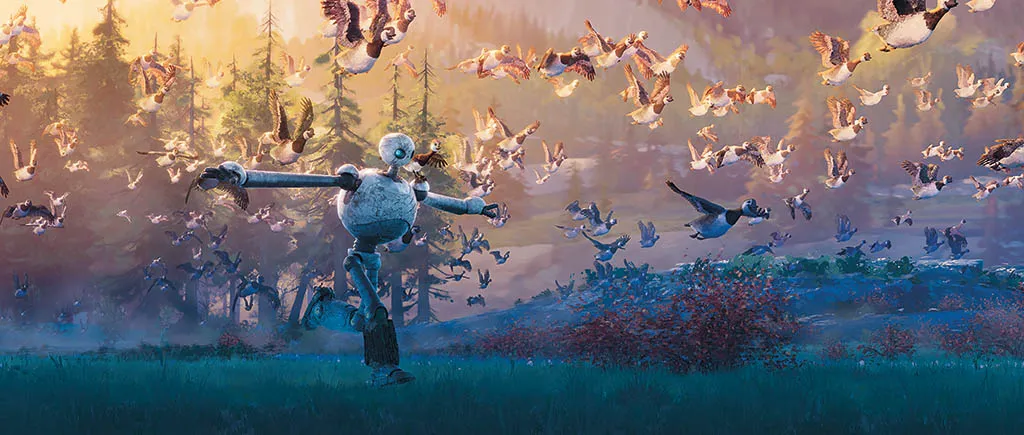
The creators of The Wild Robot decided to avoid the cold and calculated style of traditional computer animation. Instead, they opted for a warmer and more artisanal approach, similar to traditional animation, with a touch of digital painting. This style not only brings a visually rich atmosphere but also makes the landscapes and characters feel more natural and close to a hand-painted work.
Roz's design: a robot that integrates with nature
Roz's character was designed to evolve visually as the story progresses. At first, Roz has a more "technological" and clean appearance, but over time, she becomes covered in dirt and vegetation, integrating more with the island. This visual change symbolizes her adaptation to the wild environment. To achieve a more realistic and believable representation of a robot, the creators avoided using a conventional facial expression. Instead, they drew inspiration from silent cinema, taking Buster Keaton as a model, whose characters convey emotions through body language.
The landscapes: a blend of traditional art and futurism
The island's landscapes were inspired by Tyrus Wong's watercolor paintings, known for their use in the classic Bambi. This artistic influence combines with Syd Mead's futuristic design for the robots and the human world in the story. The goal was to create a sense of optimism for the human world and a more natural and wild atmosphere for the animal environment.
Digital animation with touches of traditional painting
One of the most innovative techniques in the film is the combination of digital animation with touches of traditional painting. This approach brings the scenes to life, making them look more organic and natural. Additionally, special efforts were made to represent elements like water, wind, and vegetation in a way that they did not seem computer-generated, but hand-painted.
The authenticity of the animal characters
The animals, such as the otters and other island creatures, were designed and animated based on the real behavior of animals in nature. The animators ensured that their movements were as realistic and natural as possible, avoiding human gestures often used in other animations. This detail contributed to the film's authenticity, making the animal world more believable and true to reality.
An innovative approach to animation
"The Wild Robot not only seeks to tell an emotional and deep story, but also to offer a unique visual experience, combining modern technology and traditional art."
The Wild Robot is not just another animated film; it is a work that seeks to explore the relationship between technology and nature through a visually striking approach. The blend of digital and traditional animation techniques not only creates a unique atmosphere but also highlights the importance of the connection between living beings, whether human or machine.