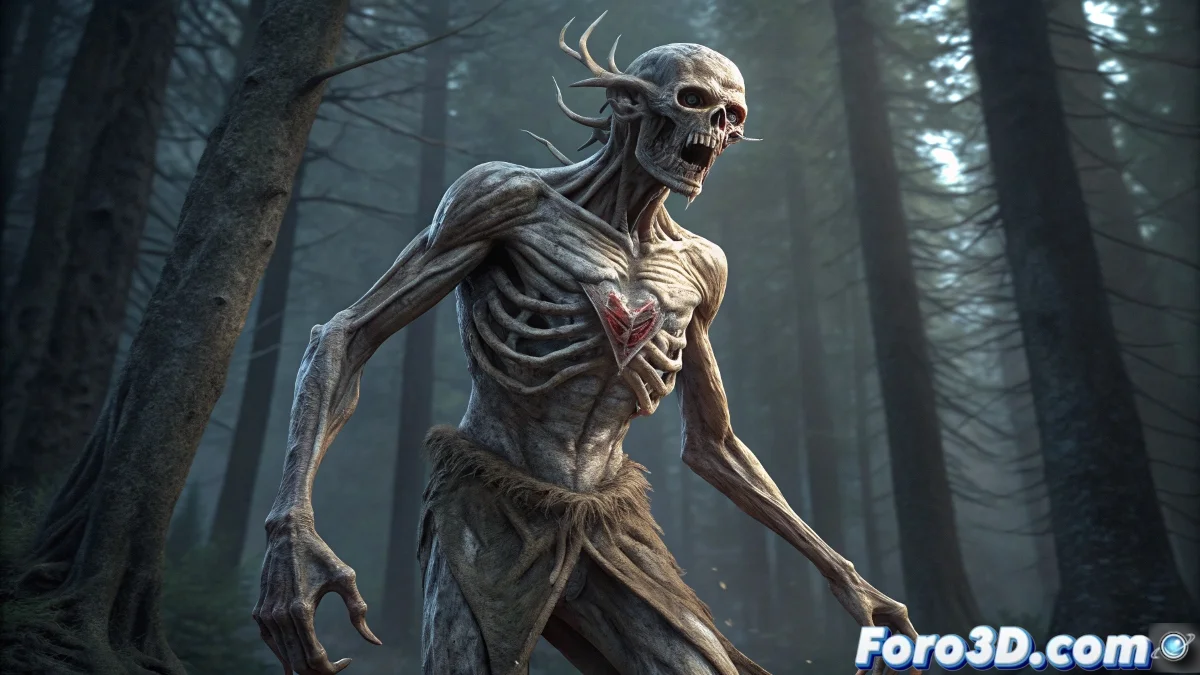
The Wendigo from Algonquian Folklore: Creature of Insatiable Hunger
The Wendigo represents one of the most terrifying creatures in Native American folklore, specifically from the Algonquian tribes of Canada and the United States. This entity embodies insatiable hunger and the dangers of cannibalism, transforming from a human being into a skeletal monster whose height constantly increases while its hunger is never satisfied. According to the legend, those who practice cannibalism during times of scarcity or are possessed by evil spirits may undergo this irreversible transformation, becoming eternal predators with a heart of ice. ❄️
Origins and Cultural Significance of the Wendigo
The Wendigo myth arises from the spiritual beliefs of the Algonquian peoples, serving as a moral warning against cannibalism and extreme greed. Traditional stories describe the Wendigo as a creature that was once human but, after resorting to cannibalism or being possessed, transforms into a being of dual nature: physical and spiritual simultaneously. Its most distinctive feature is the heart of ice that symbolizes its inability to feel compassion or satiety, condemned to an existence of perpetual hunger.
Main Characteristics of the Wendigo:- Skeletal and emaciated figure with skin stretched over the bones
- Variable height that grows with each act of cannibalism
- Elongated face with deer-like features
- Sunken eyes that glow with supernatural light
- Hands with long and sharp claws
- Ice heart visible through the translucent chest
The Wendigo is not just a monster; it is the physical manifestation of hunger that never ceases, of the void that consumes everything in its path and, ironically, grows the more it feeds.
Initial Setup in ZBrush
To begin our Wendigo sculpture, we will set up ZBrush with attention to initial scale and symmetry. We will start from a human base that we will then progressively distort to create the monstrous transformation characteristic of this mythological creature. 🎨
ZBrush Project Preparation:- Open ZBrush and load a humanoid base mesh from LightBox
- Set initial resolution to 256k polygons for basic details
- Activate radial symmetry to work on both sides simultaneously
- Set MatCap Gray material for better shape visualization
- Create separate layers for: Base_Human, Transformation, Skin_Details, Supernatural_Elements
- Set document resolution to 4K for detailed work
Blocking the Base Shape and Proportions
The initial blocking is crucial for establishing the skeletal proportions of the Wendigo. We will use basic sculpting brushes to create the prominent bone structure and hunched posture that suggests hunger and depravity.
Shape Blocking Process:- Use Move brush to exaggerate limb and torso length
- Apply Clay Buildup brush to develop main bone volumes
- Use Inflate brush to create eye sockets and sunken cheeks
- Employ Smooth brush to soften transitions between anatomical planes
- Create exaggeratedly visible pelvic structure and ribcage
- Establish elongated neck and prominent spine
Development of Skeletal Anatomy
The skeletal nature of the Wendigo requires special attention to bone anatomy. We will work layer by layer to make the bones appear visibly prominent under tight, dehydrated skin.
Advanced Anatomical Detailing:- Use Standard brush with DragRect to define collarbones and shoulder blades
- Apply Dam Standard brush to mark individual ribs
- Use Slash3 brush to create visible tendons and ligaments
- Develop elongated skull with Move Topological brush
- Create sharp pelvis and prominent hip bones
- Detail hands with elongated phalanges and knobby joints
Sculpting the Face and Deer-like Features
The Wendigo's face combines distorted human features with animal elements, particularly deer characteristics. This fusion creates the terrifying essence of the creature, balancing the familiar with the completely alien.
Facial Development:- Lengthen facial bones using Move brush with soft falloff
- Create deep eye sockets with negative Inflate brush
- Develop minimalist nose that merges with the face
- Add bony protrusions suggesting embryonic antlers
- Sculpt wide mouth with retracted lips over sharp teeth
- Create sunken cheeks that reveal underlying dental structure
Texturing and Skin Details
The Wendigo's skin must convey extreme dehydration and supernatural antiquity. We will use a combination of alpha brushes and polypainting techniques to create a surface that looks parched over bones.
Texturing Process:- Apply Standard brush with wrinkled skin alpha for base
- Use Inflate brush with vein alpha for visible vascular system
- Create flaking areas with Slash1 brush and DragRect
- Implement polypainting for pale and grayish tones
- Add necrosis and freezing areas around the chest
- Create gradual transparency toward the ice heart area
Creation of the Ice Heart and Supernatural Elements
The ice heart is the central symbolic element of the Wendigo. We will develop this feature using translucent sculpting techniques and freezing effects that suggest its magical and cursed nature.
Supernatural Elements:- Sculpt thoracic cavity with ribs opened outward
- Create crystalline heart shape using Trim Dynamic brush
- Add internal fractures with variable size Dam Standard brush
- Develop frost effects with custom Ice alpha brush
- Create ice veins extending from the heart
- Add suspended snow particles using Spray brush
Final Pose and Expression
The pose and expression of the Wendigo must communicate its eternal hunger and predatory nature. We will work with Transpose Master to create a dynamic pose that suggests movement and constant search for food.
Expressive Pose Development:- Use Transpose Master for temporary rigging
- Create hunched posture that emphasizes exaggerated height
- Position arms in reaching and grasping gesture
- Tilt head forward with piercing gaze
- Place legs in stalking or pursuing position
- Adjust facial expression to show simultaneous agony and hunger
Rendering and Final Presentation
The final render must emphasize the spectral and terrifying nature of the Wendigo. We will use BPR and post-processing to create an atmospheric image that captures the essence of this folklore creature.
Rendering Process:- Set up BPR with high sampling for render quality
- Apply subsurface scattering materials for translucent skin effect
- Use directional lights to emphasize bone structure
- Set up dark environment with volumetric fog
- Apply separate render passes for Photoshop compositing
- Perform post-processing to adjust horror and mystery levels
Conclusion: The Anatomy of Eternal Hunger
The Wendigo sculpture in ZBrush demonstrates how modern digital tools can bring mythological creatures to life with striking realism. This project not only exercises advanced sculpting techniques but also explores the intersection between physical horror and psychological horror, where the true monstrosity lies not in appearance, but in the concept it represents: the hunger that consumes both the predator and its victims, in an eternal cycle of dissatisfaction and destruction. The next time you face a mythological creature project, remember that the real challenge is not in recreating the form, but in capturing the conceptual essence that makes that creature memorable and terrifying across generations. ✨