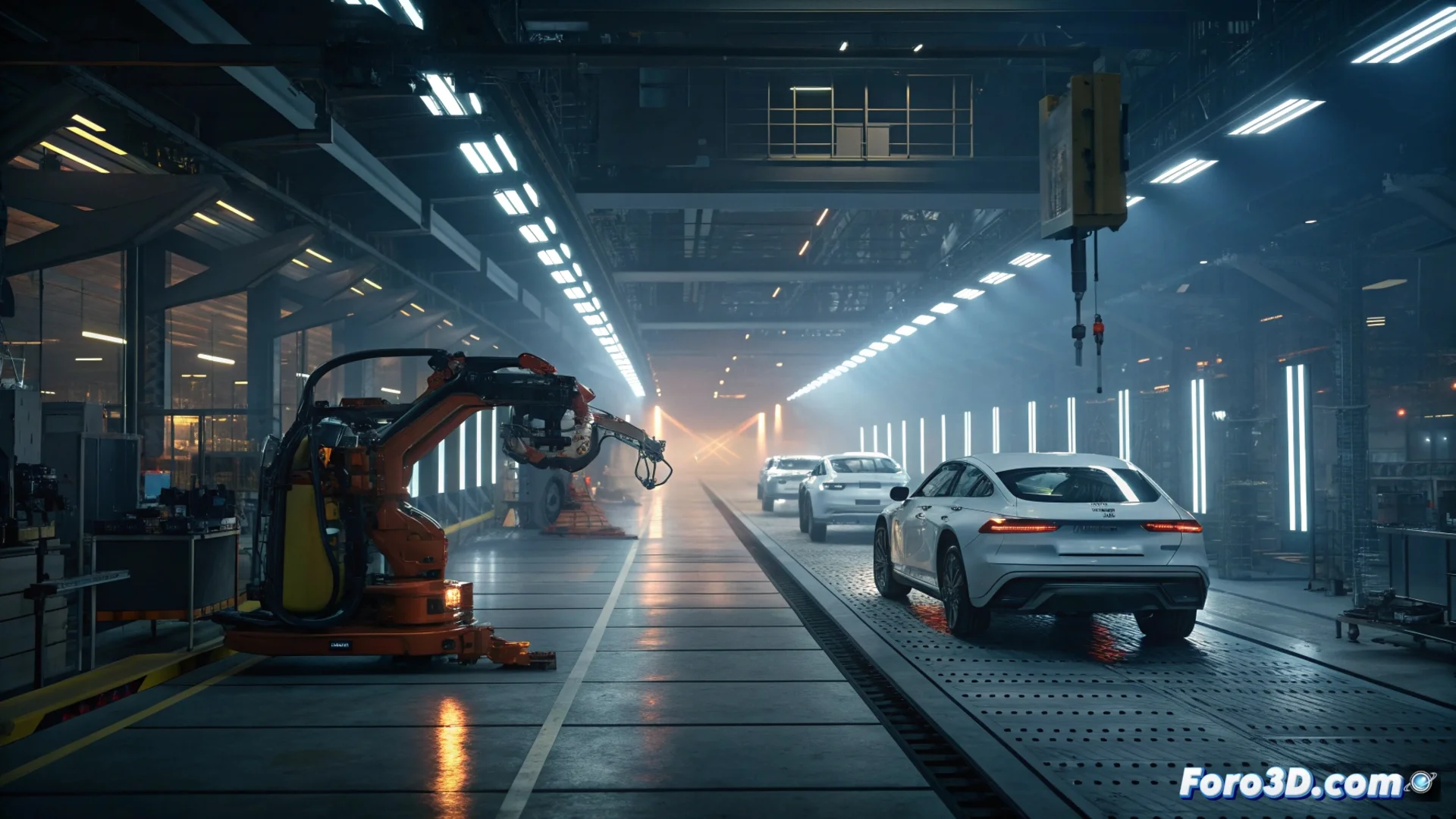
The war in Ukraine paralyzes the European automotive industry
The armed conflict in Ukraine triggers a serious disruption in the supply chain for car manufacturing in Europe. The industry critically depends on components made in Ukraine, such as specialized wiring systems for vehicles. With Ukrainian factories stopped or operating at minimal capacity, European assemblers cannot complete their vehicles and are forced to halt assembly lines. This new shortage combines with the already persistent chip shortage, creating a critical scenario that severely limits automobile manufacturing. ⚠️
Cascade shutdowns in assembly plants
Numerous factories of major brands in countries like Germany, Czech Republic, and Slovakia have had to stop their operations. Finding alternative suppliers for wiring is complex, as relocating that production requires a lot of time and large investments. Meanwhile, pending orders pile up and delivery times to customers extend dramatically. This situation endangers the sector's recovery after the pandemic and threatens thousands of jobs throughout the value chain.
Immediate consequences of the paralysis:- Production lines stopped in multiple central European plants.
- Delivery times for customers extending considerably.
- High risk to direct and indirect jobs in the industry.
The perfect storm of supplies: without cables from Ukraine and without semiconductors, the assembly line falls silent.
Energy costs multiply economic pressure
The war has also caused energy prices in Europe to skyrocket. Industrial plants, which consume large volumes of electricity and gas, face operating costs that multiply. This reduces their profit margins at a time when they are already selling less because they cannot finish products. Some analysts warn that if this scenario persists, it could force some less competitive facilities to close permanently, reconfiguring the continental industrial map.
Factors aggravating the crisis:- Record-high electricity and gas prices, affecting factory viability.
- Reduction in profit margins due to the combination of high costs and low production.
- Potential risk of permanent industrial closures and structural changes in the sector.
An uncertain future for electric mobility
It seems that the transition to electric vehicles, which was seen as a path of innovation, now also involves the challenge of learning to manufacture cars without the essential wiring components to connect all their systems. This added obstacle tests the fragility of global supply chains and underscores the need for the industry to develop long-term resilience strategies. 🔌