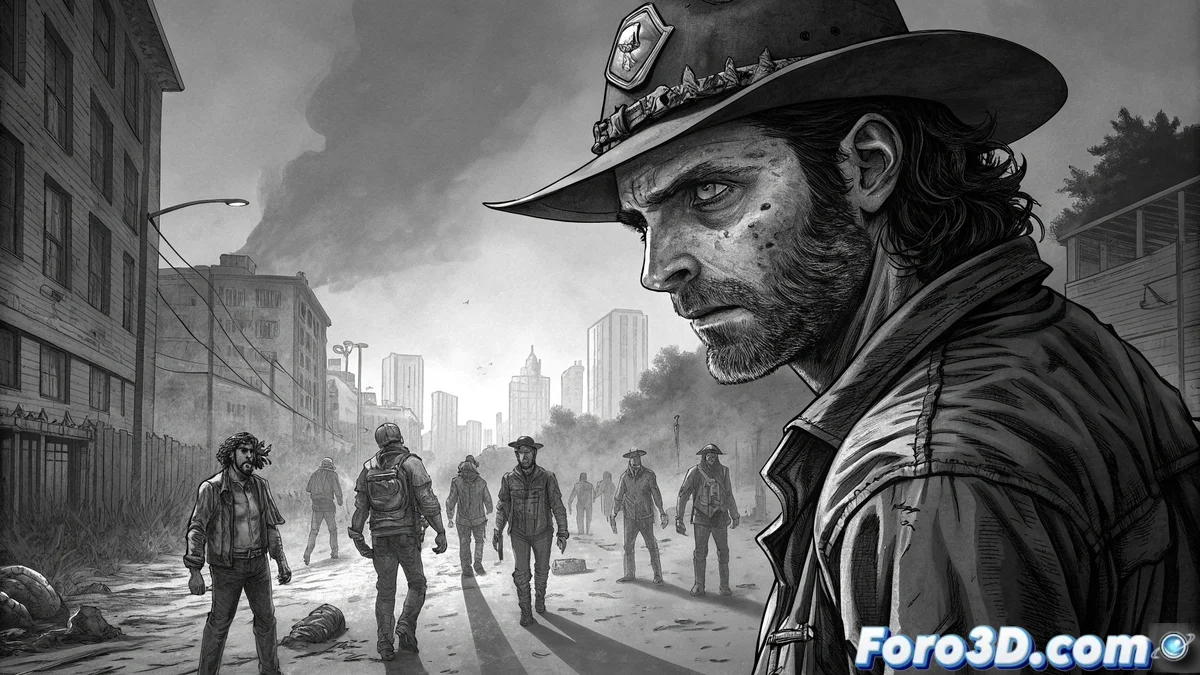
The post-apocalyptic world that redefined survival horror
Image Comics celebrates the enduring legacy of The Walking Dead with the release of its massive fourth compendium, gathering over 1,000 pages of Robert Kirkman and Charlie Adlard's acclaimed series. This collection arrives at a significant moment for the property, demonstrating how a narrative that began as a niche comic has grown into a transmedia cultural phenomenon that continues to resonate with audiences worldwide. A testament to the enduring power of storytelling in the comic medium.
The evolution of a decaying world
This volume covers some of the series' most complex and mature narrative arcs, taking readers from the introduction of the terrifying Whisperers to the exploration of the mysterious Commonwealth. The narrative demonstrates how Kirkman and Adlard kept their world fresh through the constant evolution of threats—both human and zombie—and the deep development of characters who have aged and changed alongside their readers.
Compendium highlights
- Introduction and development of the Whisperers
- Exploration of Commonwealth society
- Evolution of relationships between main characters
- Conflicts that redefine the concept of humanity
The art that captured desperation
Charlie Adlard, who took over the artistic reins after the early issues, developed a distinctive visual style that became synonymous with the series. His expressive use of black and white, cinematic composition, and ability to convey emotion through grim faces and desolate landscapes elevated the narrative beyond the typical zombie comic, setting a standard for mature horror in the medium.
Legacy for visual creators
- Study of narrative through ellipsis and pacing
- Reference for credible post-apocalyptic world design
- Examples of long-term character development
- Inspiration for psychological horror projects
A demonstration of how an apparently simple premise can evolve into a deep exploration of human nature when handled with consistency and long-term vision.
For 3D artists and environment designers, The Walking Dead offers a masterclass in creating oppressive atmospheres and believable worlds that feel alive despite being populated by the undead. The attention to detail in urban decay and the world's temporal progression provide valuable lessons for worldbuilding projects in any medium 🧟♂️.
And so a story about zombies ended up becoming a deep study of the human condition... although probably creating renders of decaying buildings is easier than maintaining narrative coherence through more than 1,000 pages of apocalypse 😅.