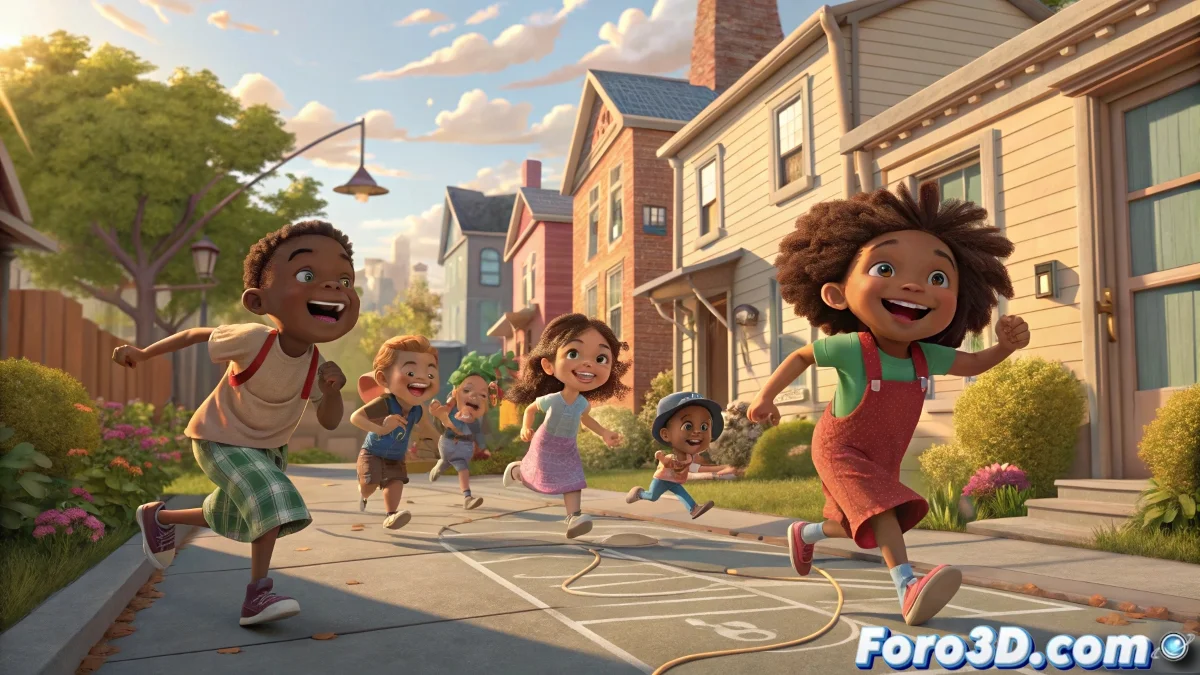
The Vital Importance of Street Play in Child Development
In today's digital era, we have witnessed how traditional play spaces have been progressively replaced by virtual environments, generating profound consequences in the formation of new generations. This transformation represents much more than a simple change of scenery, constituting a fundamental alteration in the natural learning processes during childhood 🏘️.
Irreplaceable Physical Benefits
The spontaneous motor activity that occurs on streets and parks provides unique bodily stimuli that cannot be replicated in controlled spaces. Unpredictable movements, changes of direction, and adaptations to uneven terrain develop superior neuromotor capacities compared to those obtained through structured exercises.
Exclusive Physical Advantages:- Development of complex motor patterns through improvised jumps, runs, and turns
- Bone and muscle strengthening through activities with constant variability
- Improvement of dynamic balance and eye-hand-foot coordination in real situations
Children need to move freely to fully develop their physical and cognitive potential - the street offers that irreplaceable space for exploration
Building Social Intelligence
Unstructured outdoor games function as natural laboratories of coexistence, where children learn to negotiate, lead, follow rules, and resolve conflicts without immediate adult intervention. This exposure to authentic social dynamics forges interpersonal skills that last a lifetime 👥.
Social Competencies Developed:- Negotiation capacity and establishment of spontaneous agreements
- Emotional management in the face of victories, defeats, and unexpected situations
- Development of empathy and understanding of different perspectives
Fostering Autonomy and Creative Thinking
The absence of predefined structures in traditional street play forces participants to constantly invent new rules, roles, and objectives. This process stimulates innovation capacity and real-time problem-solving, while facing calculated risks that teach evaluation and independent decision-making 💡.
Cognitive Skills Developed:- Divergent thinking through the creation of original games and narratives
- Ability to quickly adapt to changing environments and circumstances
- Development of personal judgment and confidence in autonomous decision-making
The Necessary Balance Between the Virtual and the Real
It is paradoxical to observe how modern societies invest resources in creating digital simulations of experiences that children previously found naturally by simply leaving their homes. Recovering the balance between both worlds has become a crucial challenge to ensure complete and satisfactory child development 🌟.