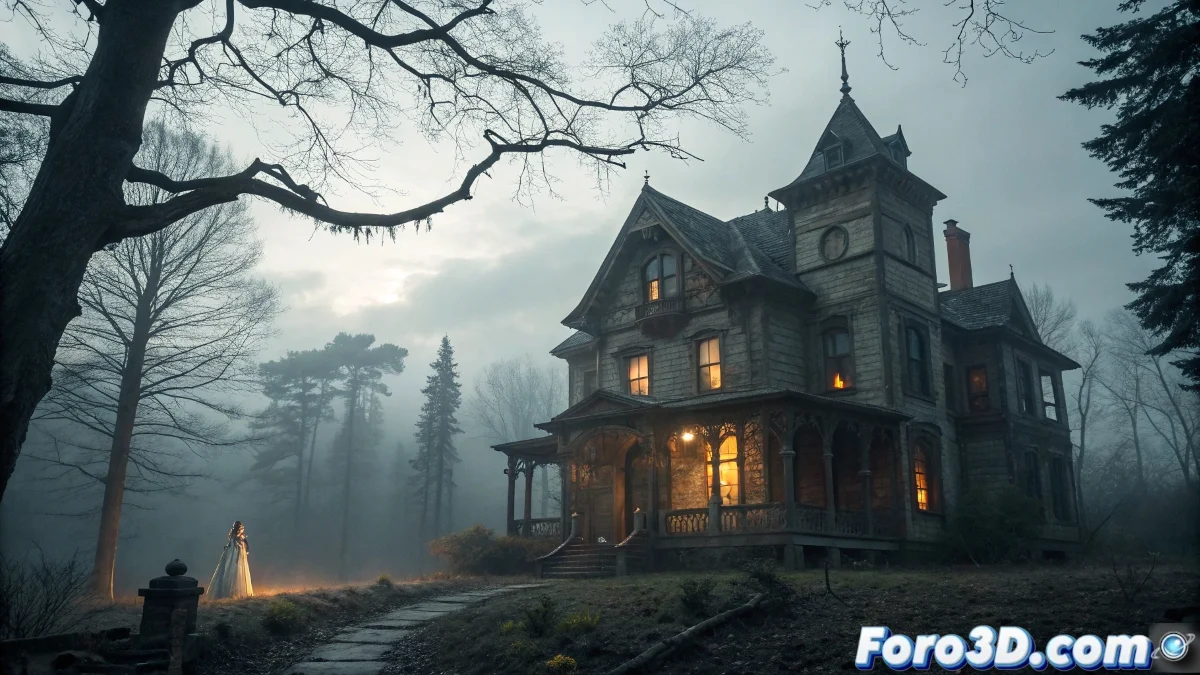
When Horror Dresses in Digital Tuxedo
In The Fall of the House of Usher, RSVFX proved that true terror doesn't scream... it whispers in perfectly placed pixels. Mike Flanagan and Netflix brought the gothic to the 21st century, where even ghosts have a VFX supervisor. 🎩👻
"The challenge was to make the impossible feel inevitable. That slightly altered face in the mirror disturbing more than any CGI monster."
The Mansion That Lives (and Kills)
To bring the Usher house to life:
- Digital extensions that multiplied depth and claustrophobia
- Architectural breathing through subtle wall deformations
- Impossible reflections in mirrors and liquid surfaces
- Custom storms that responded to the characters' emotional state
The result is so oppressive that Netflix should offer therapy sessions. 🛋️💀
Effects That Aren't Seen... But Felt
The catalog of subtle horrors:
- Corpses with micro-movements that are almost imperceptible digitally
- Blood that flows against gravity in key moments
- Shadows that recompose a few frames later than normal
- Faces that age/rejuvenate in real time
Because in the Usher house, even the visual effects have daddy issues. 👨👧👦🔪
Technology in Service of the Gothic
The key tools:
- Facial morphing for progressive transformations
- Fluid simulations for blood with personality
- Compositing in Nuke integrating the real and the spectral
- Matte paintings that expanded the decay
So now you know: the next time you notice something strange in your house... it might be dampness, or a very meticulous VFX artist. 🏚️💻
Poe's Visual Legacy
The details that honor the original:
- Color palette reminiscent of ancient engravings
- Transitions that mimic candle flickers
- Degradation effects inspired by daguerreotypes
Because in this adaptation, even the pixels read poetry. 📜🖤