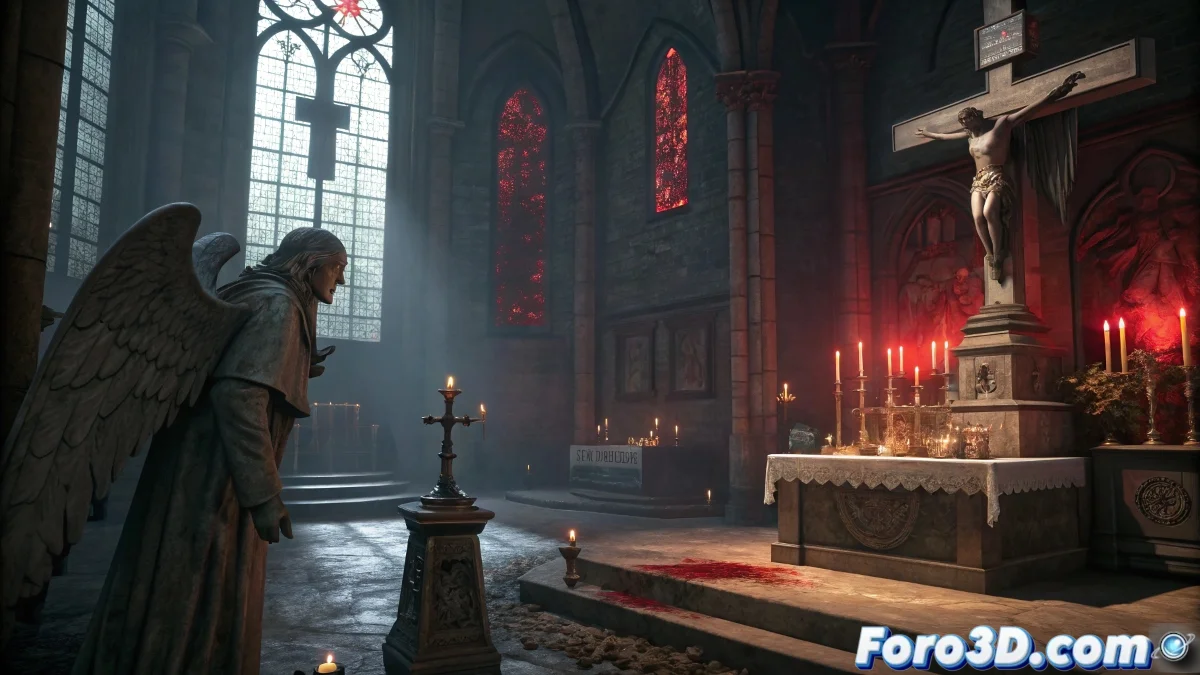
When Less Is More... And Much More Terrifying 👁️🗨️
Herne Hill has proven in The First Omen that true horror lies not in what you show, but in what you suggest. With a minimalist yet devastatingly effective approach, their visual effects don't scream "Look at me!", but whisper "Did you see it... or did you imagine it?" in the viewer's ear. 😨
"Our goal was not to scare, but to make the audience scare itself"
The Art of the Invisible (But Present) 👻
Their arsenal of subtle terror includes:
- Stained glass windows that vibrate with infernal light 🏛️💀
- Faces that deform like wax in the sun 🕯️👥
- Religious symbols that bleed for no reason ✝️🩸
Technology in the Service of Fear 💻👹
To create this visual nightmare:
- Projections in Nuke that modify real spaces 🎭
- Particles in Houdini for demonic presences 🌫️
- Modeling in Maya of sacrilegious objects ⚰️
Psychology of Horror 🧠⚡
The true genius lies in what they DIDN'T do:
- Never showing the demon completely 👺
- Using brief shots that generate doubt 🤔
- Creating anomalies that could be tricks of the light 💡
The result is a film that makes you question every shadow, every reflection, every movement in the background of the shot. Like in the best nightmares, the most terrifying thing happens on the edges of your vision... and your mind. 🌑
Lessons for Horror Artists 🎓🔪
This project teaches that:
- The audience's imagination is your best tool 🧠
- Sometimes you need to render less to impact more 💥
- True horror lives in the details 🕳️
Herne Hill has created something rare in modern cinema: visual effects that disappear into the narrative, only to reappear in your dreams. And that, my friends, is cinematic black magic. Or should we say... digital magic. 🎥✨
Chilling fact: For the possession scenes, they used algorithms that analyzed human facial expressions and deformed them progressively, creating an effect that seems "something human... but not quite." 😱