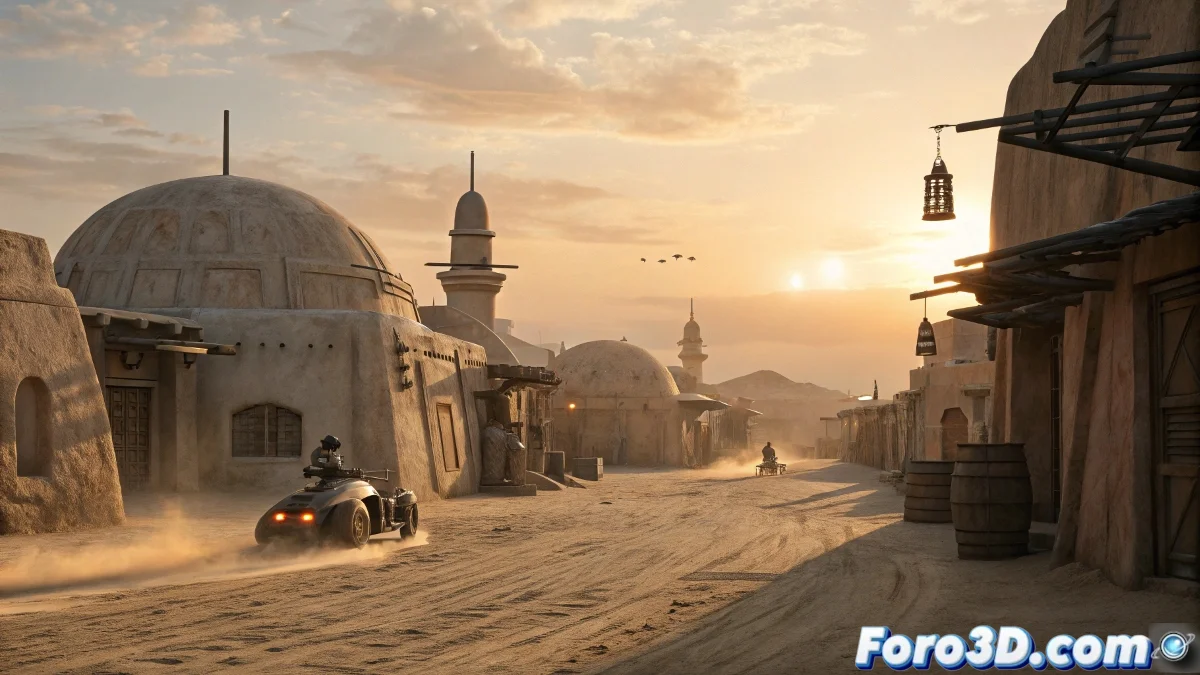
When the Bounty Hunter Needs Pixels 💀
Bringing The Book of Boba Fett to life was not just about having good aim, but mastering digital art. Hybride Technologies proved that in that galaxy far, far away, visual effects are as crucial as a good blaster.
The Ingredients of This Galactic Recipe
For this special effects bank, the following were needed:
- Digital Mos Espa with more layers than Boba's armor
- Alien creatures more realistic than Coruscant's politicians
- Flying speeders that defy the laws of physics (but not the budget)
- StageCraft because even shoots need innovation
The result is so immersive that even the Jawas were impressed. And they've seen it all. ✨
Technology at the Service of Tatooine
"Recreating Mos Espa was like building a real city, only our bricks were pixels and our cement, code"
The StageCraft LED screens consumed more watts than the Death Star's beam itself. And that was just the set. 💡
The Art of Making the Alien Believable
Balancing the gritty realism of Star Wars with digital magic was like negotiating with the Hutts: it requires patience, resources, and a technical miracle or two. The integration of digital elements was so perfect that even Fennec Shand doubted what was real.
And that's how a universe expands: with enough technology to make George Lucas smile, and enough art to keep fans from taking off their helmets. Does anyone have a droid protocol translator? 🤖
Bonus: Galactic Technical Secrets
For those who want to see the B-side of Tatooine:
- Mos Espa used photogrammetry of real locations in Jordan
- The CGI creatures incorporated advanced digital musculature systems
- The speeders required custom physics simulations
- StageCraft needed pre-rendered 8K environments with dynamic lighting
All this while maintaining that dirty, lived-in aesthetic that makes Star Wars feel like a real place... even if we wouldn't want to live there. Well, maybe in Naboo. 🌌