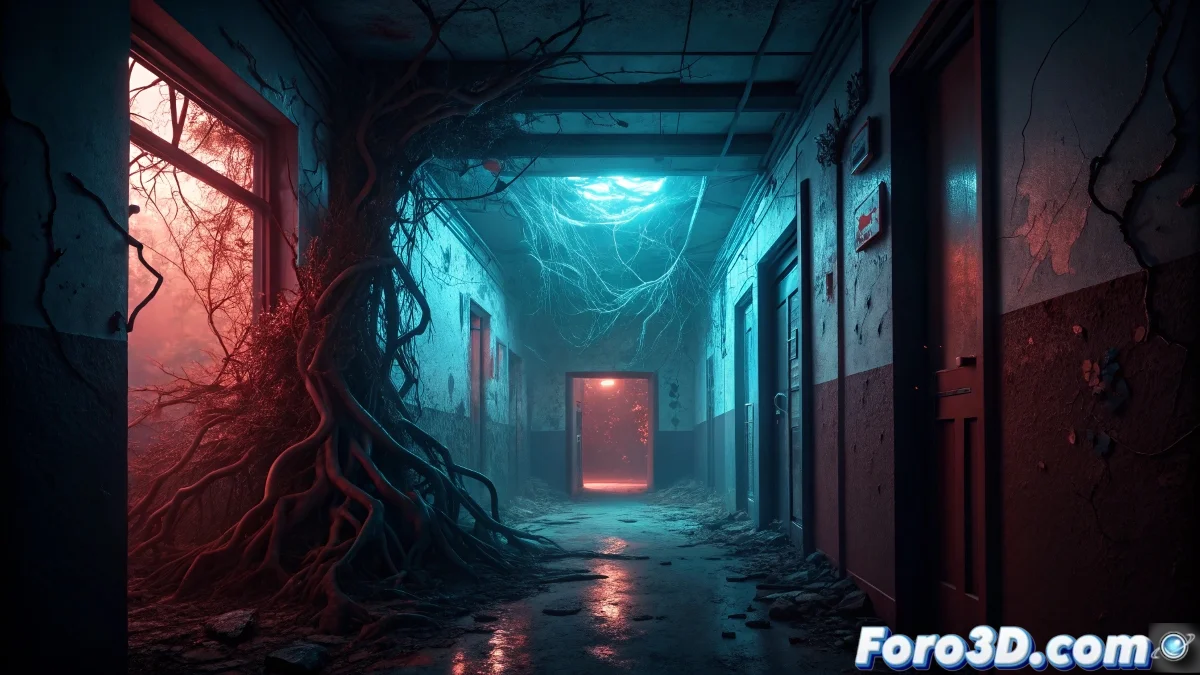
When the Upside Down Became Even More Terrifying 🔥
The fourth season of Stranger Things needed visual effects that made the previous seasons seem like a walk in the park. Scanline VFX rose to the challenge by creating some of the series' most impactful sequences... and along the way, several nightmares for viewers.
The Ingredients of 80s Horror
For this retro terror recipe, the following were needed:
- Dimensional portals that make your hair stand on end (literally)
- Organic structures that grow faster than the season's hype
- Massive destruction because Hawkins couldn't remain intact again
- Perfect integration with the series' 80s aesthetic
The result is so intense that even digital Walkmans trembled during rendering. 📼
Technology in the Service of Terror
"We wanted every portal to look like an open wound in reality itself. Not just a dimensional door, but something that hurt to look at"
The fluid simulations for the portals consumed more computing power than all of Hawkins had in the 80s. And they even had a Soviet supercomputer there. 💻
The Art of Making the Supernatural Believable
Maintaining the balance between Lovecraftian horror and 80s aesthetics was like mixing Coca-Cola and Mentos: explosive but delicious. The integration of digital elements with practical sets was so perfect that even the actors doubted what was real.
And that's how you bring terror to the 80s: with cutting-edge visual effects, a pinch of nostalgia, and enough digital nightmares to make Vecna proud. Ready for the trip? 🚲🌌
Bonus: Technical Secrets of the Upside Down
For those curious about the technical processes:
- The portals used custom volumetric simulations in Houdini
- The fungal structures were created with procedural growth systems
- The hospital destruction required more than 200 layers of compositing
- A special pipeline was developed to maintain the 80s color palette
All of this while respecting that characteristic look that makes even the apocalypse seem like it's from a VHS. 📺💀