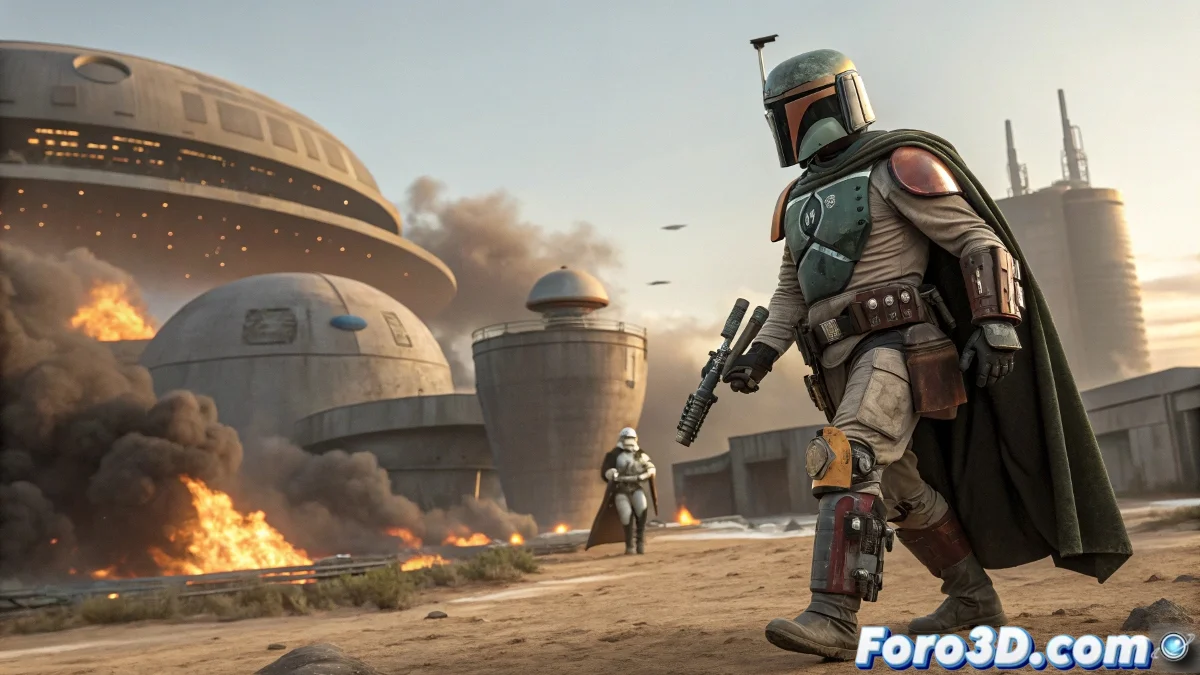
When Tatooine's Dust Turns into Digital Art
In The Book of Boba Fett, the Image Engine studio proved that even the most rebellious sand can be tamed with enough talent (and terabytes of simulations). The VFX artists faced the challenge of recreating Tatooine's iconic landscapes, making every grain of dust dance to the rhythm of speeders and explosions. After 100 simulations, the result was so realistic that even the Jawas doubted if it was CGI 🏜️.
The Tools Behind the Galactic Magic
To build this universe, the team used a software combo that would make any technician cry with emotion:
- Autodesk Maya and Arnold: for modeling ships and achieving lighting that even Tatooine's sun would envy.
- Houdini: the unsung hero that made explosion smoke follow the laws of physics... or at least, the laws of spectacle.
- Nuke: where everything came together with the elegance of a Jedi wielding a lightsaber (but with less risk of losing a hand).
The 3D tracking was so precise that even Boba Fett would have approved its aim.
Details Only a Protocol Droid Would Notice
One of the best-kept secrets was how to maintain the glow of lightsabers amid digital dust storms. The solution: physically based lighting and a team willing to render until their eyes dried out like raisins in the desert. The result was so good that many viewers swore they saw real sand on their screens... until an animated dewback passed by 🦎.
For behind-the-scenes lovers, Image Engine's breakdown is like finding an instruction manual in an ancient language, but with less risk of explosions (only guaranteed admiration).
So the next time you see Boba Fett walking among perfect dunes, remember: behind every great hero is a team of artists who probably dreamed of particles and shaders that night 😴💥.