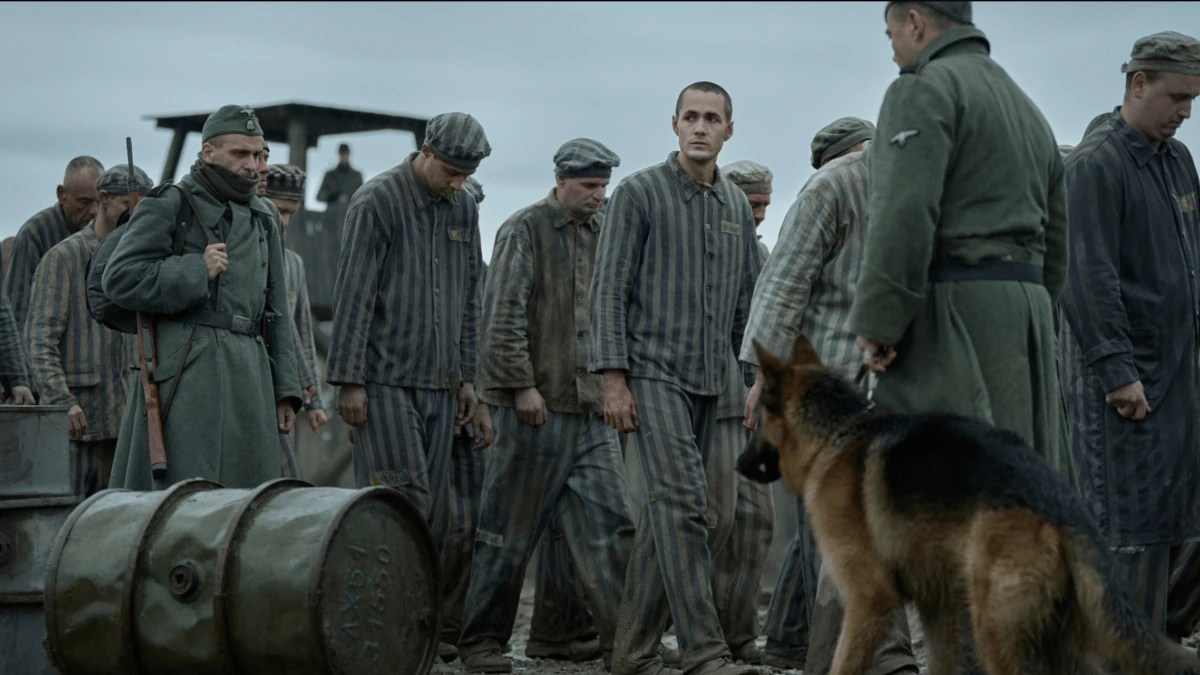
The Tattooist of Auschwitz is a deeply moving story based on real events. The plot follows Lali, a young Slovak Jew who, in 1942, was deported to the Auschwitz concentration camp. There, Lali was selected as one of the Tätowierer (tattooists) in charge of marking identification numbers on the prisoners' arms. Amid the suffering and horror of the camp, Lali finds love in Gita, a prisoner whose number he himself tattooed on her arm. Together they fight to survive in a place where hope seems to have vanished.
The Power of Memory and Testimony
Decades later, Lali, now in his 80s, meets Heather Morris, a writer who will help him share his painful but hopeful story. The reunion with his past and the remembrance of his love with Gita allows him finally to face the ghosts of his youth and give crucial testimony about the brutality of Auschwitz. This testimony not only recounts the horrors experienced but also the spirit of resistance, love, and hope that endured, even in the darkest moments.
The Visual Impact of the Story: The Importance of Visual Effects
The visual impact of The Tattooist of Auschwitz goes beyond the narrative. Visual effects played an essential role in creating the atmosphere and historical context of the film. The digital reconstruction of Auschwitz-Birkenau was one of the most outstanding achievements of the visual effects team, who created vast and detailed 3D environments. These effects not only accurately illustrated the concentration camp but also showed its expansion over time, providing a visual context that enriched the narrative.
The Reconstruction of Auschwitz-Birkenau: A Faithful Representation
The Union team, led by VFX supervisor David Schneider and 2D supervisor Dan Victoire, was key in creating this visual atmosphere. With a team of 70 artists distributed across 14 departments, Union worked closely with Synchronicity Films and the production team to ensure a faithful and moving representation of the historical events.
Historical authenticity was crucial. The smallest details, such as the texture of the mud and the wear of the structures, were carefully crafted. Additionally, dynamic effects such as fire, smoke, ash, and severe weather conditions were incorporated, enriching the atmosphere and making the horrors of Auschwitz come alive in an overwhelming way.
VFX as a Narrative Tool
In addition to environmental effects, Union also worked on creating 2D and 3D sprites to represent the prisoners and guards. These elements not only served to set the scenes but also helped convey the collective suffering of the prisoners without needing to constantly show the horror explicitly. This respectful and sensitive approach to the historical events made the VFX not just a technical tool, but an integral part of the film's storytelling.
"The passion and dedication of everyone involved made the visual impact not only a technical representation, but a visual testimony of human suffering, always respecting the history."
Collaboration in Creating a Faithful Atmosphere
Collaboration was essential for the project's success, with the Union team working in close relation with the Synchronicity Films production. The key to this collaboration was the absolute respect for the history and the humanity of the characters. Despite the devastating nature of the story, the visual effects became a means to convey the story in a way that allowed the viewer to emotionally connect with the characters, their sufferings, and their struggle to survive.