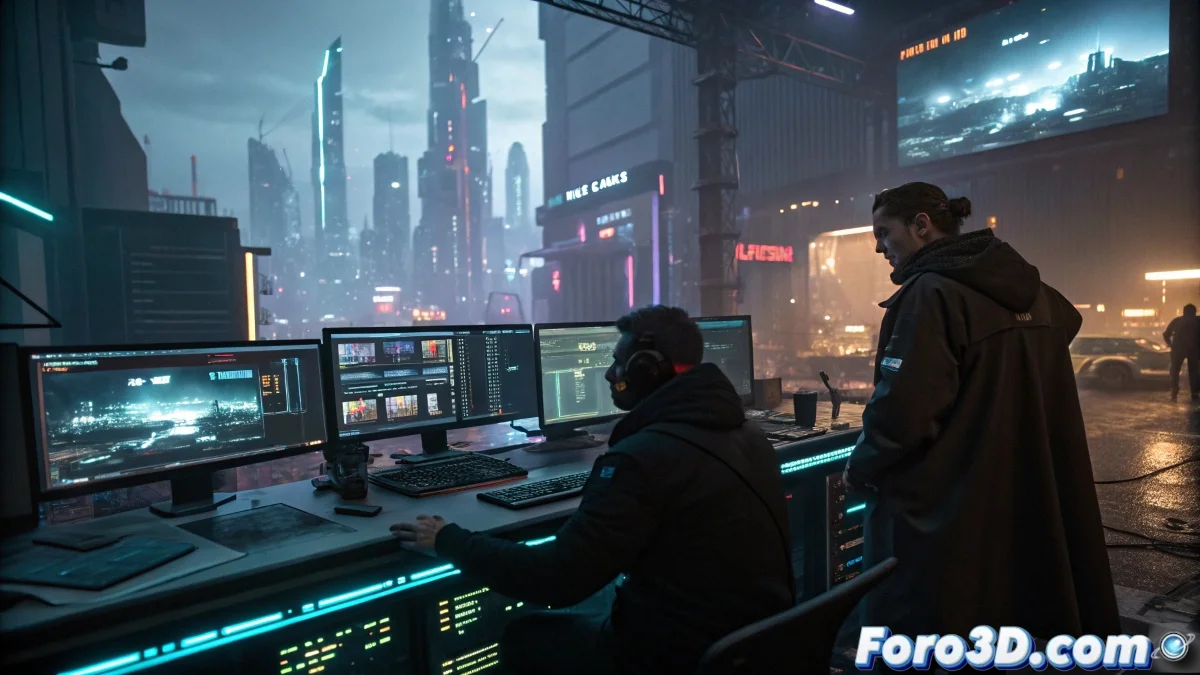
The VFX of Black Mirror Season 7: How Número 8 Created Hyperrealistic Dystopias
When the technology in Black Mirror makes you question reality, you can thank Número 8. The studio has revealed how they built the 1,200+ visual effects for season 7, where every brain interface and virtual world was designed with one premise: it must look so real it's scary. Because in this series, the future isn't bright... but its renders are. 💻🌑
"Every effect had to feel like technology that could launch tomorrow... with terrible consequences" - VFX Supervisor
The Dystopia Toolkit
Key technical workflow:
- Houdini: Simulations of "glitched" brain implants
- Unreal Engine 5: Previsualization and real-time environments
- Nuke: Compositing interfaces that hack the fourth wall
- Machine Learning: Generation of "too perfect" digital landscapes
From Script to Visual Nightmare
Creative process:
- Pre-viz in Unreal: Real-time blocking with directors
- Simulations in Houdini: From data particles to disintegrating cities
- Hybrid Rendering: Path tracing for cinematic quality
- "Dirty" Compositing: Adding the Black Mirror seal: calculated digital imperfections
Why This Breakdown is Gold for Artists
Key lessons:
- Narrative over spectacle: Every effect serves the story
- Horror in the details: A pixel out of place breaks the illusion
- Familiar technology: Future interfaces evolve from current ones
- Bugs as storytelling: Glitches reveal character
So while Netflix makes you wonder "could this happen?", remember: that existential discomfort is the triumph of artists who spent months perfecting every sinister pixel. And if any effect seems too real, don't worry... it's probably already in development at some startup. 😉
P.S.: The artists confess to having seen "digital artifacts" in the real world for weeks... the Black Mirror syndrome is real.