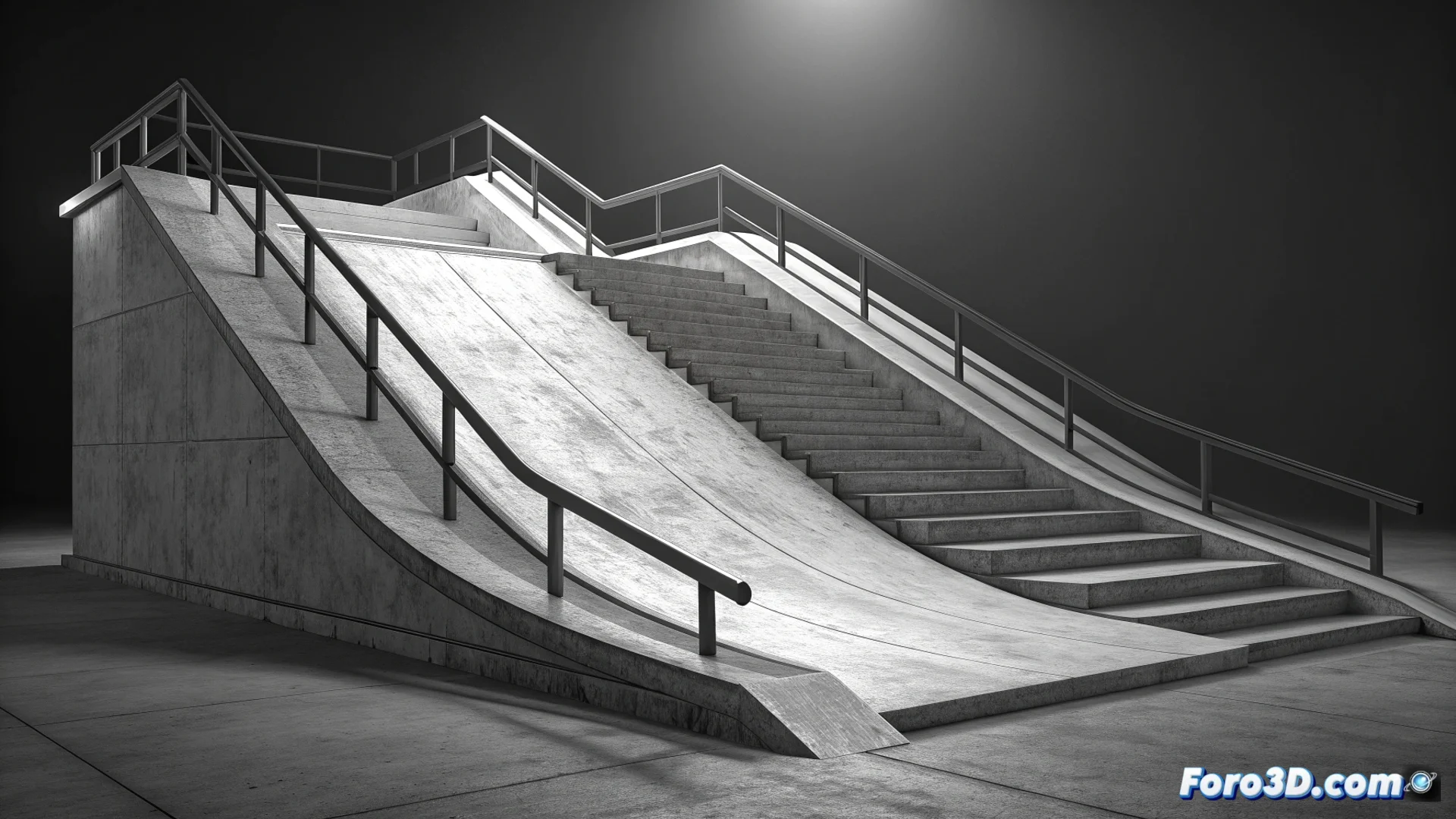
The Value Scale: The Foundation for Creating Volume and Depth
The tonal range is the full spectrum of lights and shadows you can use, from the brightest white to the deepest black. Understanding and mastering this scale is fundamental for any artist, as it allows you to build the illusion of three-dimensionality and space before even thinking about color. An image with a well-defined value structure is perceived with clarity and strength, regardless of its color palette. 🎨
Using Values to Model Forms
To create volume, you must distribute tones logically according to a light source. Surfaces that receive direct light impact lighten, while those in shadow darken. The progressive transition between these areas, the gradient, is what truly makes an object appear solid and occupy space. Controlling this transition allows you to represent different materials and direct the viewer's attention across the canvas.
Keys to Applying Values:- Define the Light Direction: Establish where the main light comes from to assign lights and darks coherently.
- Control the Gradient: The softness or hardness of the transition from light to dark defines the texture and hardness of the material.
- Organize the Composition: A clear value map helps separate planes and main elements of the scene.
Painting with color without a solid value foundation is like building without foundations: the result will be flat and unstable.
Depth and Atmosphere Through Tone
Values also govern the sense of depth. As a rule, elements in the foreground show higher contrast, with intense blacks and pure whites, and defined details. As objects recede into the background, contrast reduces and values compress into a middle range of grays. This phenomenon, known as aerial perspective, is essential for simulating distance and a believable atmosphere, establishing a clear visual hierarchy in the scene.
Common Mistakes to Avoid:- Starting with Saturated Color: Skipping the grayscale stage often results in confusing images where forms do not separate well.
- Using a Limited Tonal Range: Working only with mid-values produces flat images without dynamism.
- Ignoring Aerial Perspective: Not attenuating contrast in the distance flattens the scene and reduces the sense of space.
Integrating the Value Scale into Your Workflow
Incorporate the study of values as the first step in your creative process. Organizing the scene in black and white allows you to solve composition, volume, and lighting problems without the distraction of color. This solid foundation ensures that, when you add color, your work maintains its structural clarity, volumetric strength, and atmospheric depth. Mastering the grayscale scale is mastering the essence of form and space. ✏️