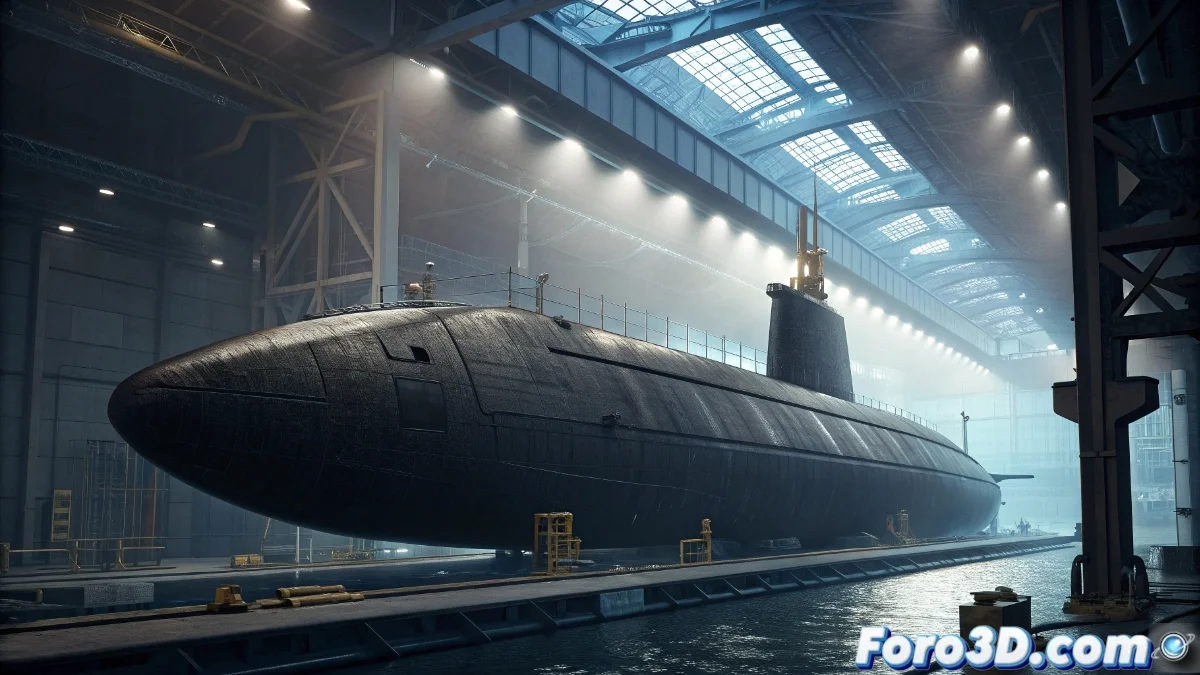
The U.S. Navy Transforms Submarine Manufacturing with 3D-Printed Complete Hulls
The U.S. Navy is leading an unprecedented revolution in naval construction through the application of 3D printing technology to manufacture complete hulls of submarine vehicles. Its OMTD project has successfully produced a 9-meter submarine whose hull was entirely manufactured using additive manufacturing, enabling ultra-fast development cycles and a drastic reduction in traditional timelines 🚀.
Strategic Benefits of Additive Manufacturing in Submarine Vehicles
3D printing of submarine hulls provides significant operational and strategic advantages. It facilitates accelerated design iterations, where engineering teams can evaluate and adjust complex geometries in days instead of months. Additive manufacturing eliminates the need for expensive molds and tools, cutting prototyping costs by more than 90%. Additionally, this methodology allows the incorporation of optimized structural features unachievable with conventional techniques, simultaneously improving the vehicle's hydrodynamics and structural integrity 🌊.
Main Operational Advantages:- Fast design iterations that shorten development timelines from months to days
- Prototyping cost reduction exceeding 90% by eliminating traditional molds
- Integration of complex geometries that enhance hydrodynamic and structural performance
The ability to fail fast and correct sooner represents a paradigm shift in naval engineering, although it poses new challenges for quality control protocols.
Advanced Materials and Specialized Printing Techniques
To withstand the extreme conditions of the submarine environment, the OMTD hull employs next-generation composite materials and high-strength polymers. Printing is performed using large-format systems capable of processing carbon fiber-reinforced thermoplastics, which offer the ideal strength-to-weight ratio for submarine operations. The process utilizes robotic deposition techniques guided by artificial intelligence, ensuring millimeter precision in each layer of the 9-meter hull 🔧.
Key Technical Features:- Carbon fiber composite materials for maximum strength in hostile environments
- Large-scale robotic printing systems with artificial intelligence control
- Millimeter precision ensuring total watertightness and structural integrity under pressure
Impact on Naval Development Processes
This innovative approach allows engineers to make mistakes faster and correct with greater agility, a factor that will undoubtedly please finance departments but keep quality assurance managers on alert. The combination of advanced digital design with large-scale additive manufacturing marks a crucial milestone in modern naval construction, setting new standards for the development of future submarine vehicles ⚓.