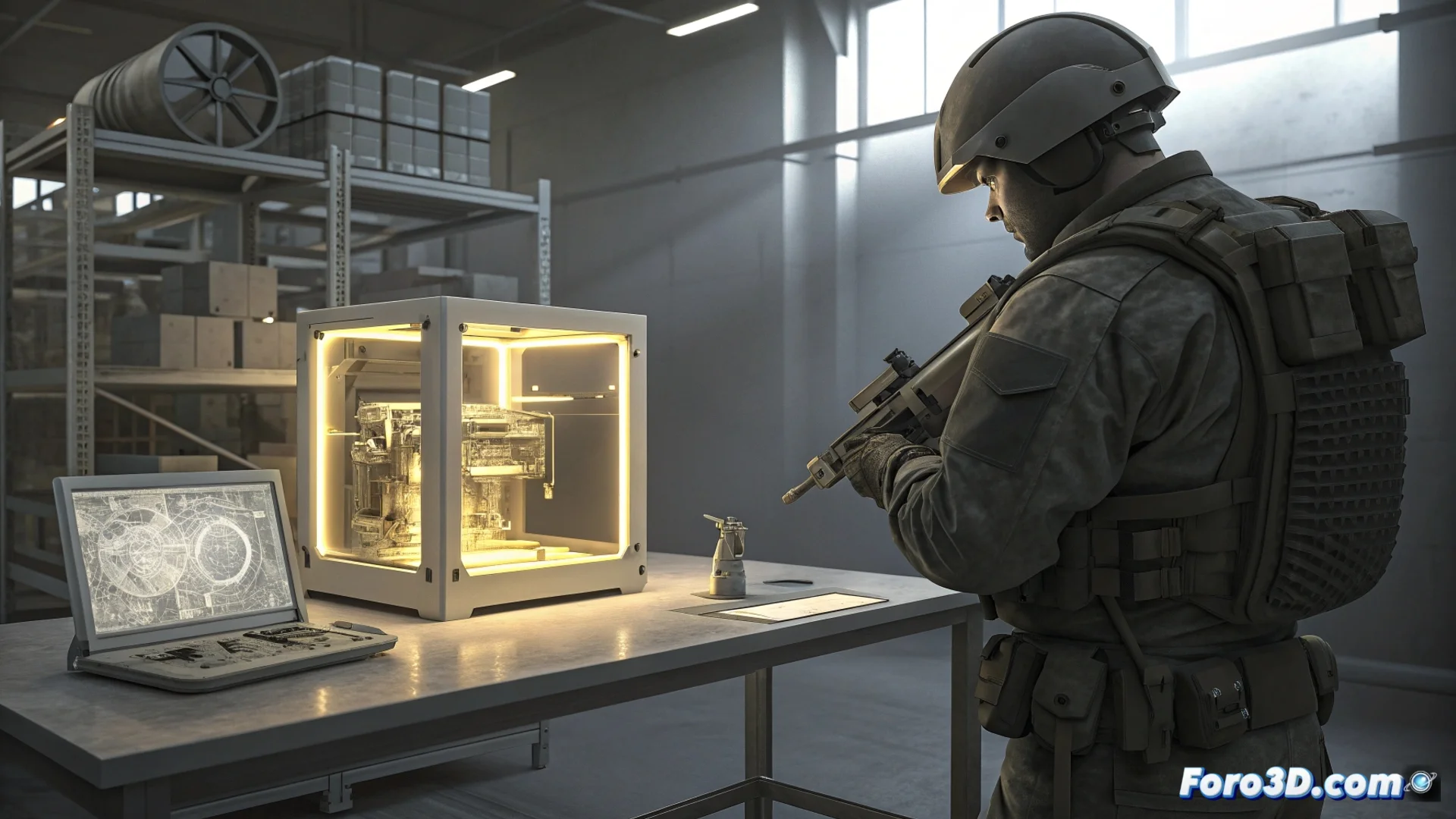
U.S. Army and Velo3D Evaluate Manufacturing Defense Parts with Metal 3D Printing
The United States Armed Forces are analyzing how additive manufacturing can strengthen their supply networks, making them more flexible and capable of quick recovery. A new agreement with the company Velo3D seeks to determine if it is feasible to produce vital components for military systems using metal 3D printers. The goal is to reduce the need to rely on conventional manufacturers and their lengthy delivery cycles, achieving on-demand creation of intricate parts that are difficult to obtain by other means. 🛡️
Priority on Complex Geometries and Compliance with Standards
This initiative focuses specifically on components made from nickel alloys, crucial for aerospace and defense equipment. Velo3D's technology, which stands out for printing sophisticated shapes without needing supports, is fundamental to the project. A key step will be certifying that items made with this process meet the demanding mechanical and quality standards required by the military field, which represents a considerable technical and administrative challenge.
Key Project Details:- Evaluate the feasibility of manufacturing critical components with metal 3D printing.
- Focus on nickel alloy parts for aerospace and defense systems.
- Utilize Velo3D's capability to handle complex geometries without support structures.
- Ensure that the final products comply with strict military quality standards.
Transforming military logistics by enabling the manufacture of spare parts near the point of need is a strategic priority.
Impact on Operations and Field Support
If the program succeeds, it could substantially modify military logistics. Instead of storing large stocks of spare parts or waiting months for a component, units could print essential parts near where they are needed, even in forward operating locations. This would reduce the downtime of critical equipment and provide an operational advantage by enabling repairs more quickly and independently.
Potential Field Advantages:- Shorten downtime for vital equipment.
- Grant greater autonomy to units to maintain their systems.
- Reduce dependence on long global supply chains.
- Enable on-demand production in remote or deployment environments.
A Near Future for Military Maintenance
The idea that a soldier could print a spare part on-site, instead of waiting for a transoceanic shipment, seems taken from a science fiction novel. However, it is the type of innovation in which the army is seriously investing resources. It is possible that the next instruction manuals will include sections on how to operate and maintain 3D printers, alongside usual procedures. This advance underscores the transition to more agile, resilient logistics adapted to the immediate needs of the operational field. ⚙️