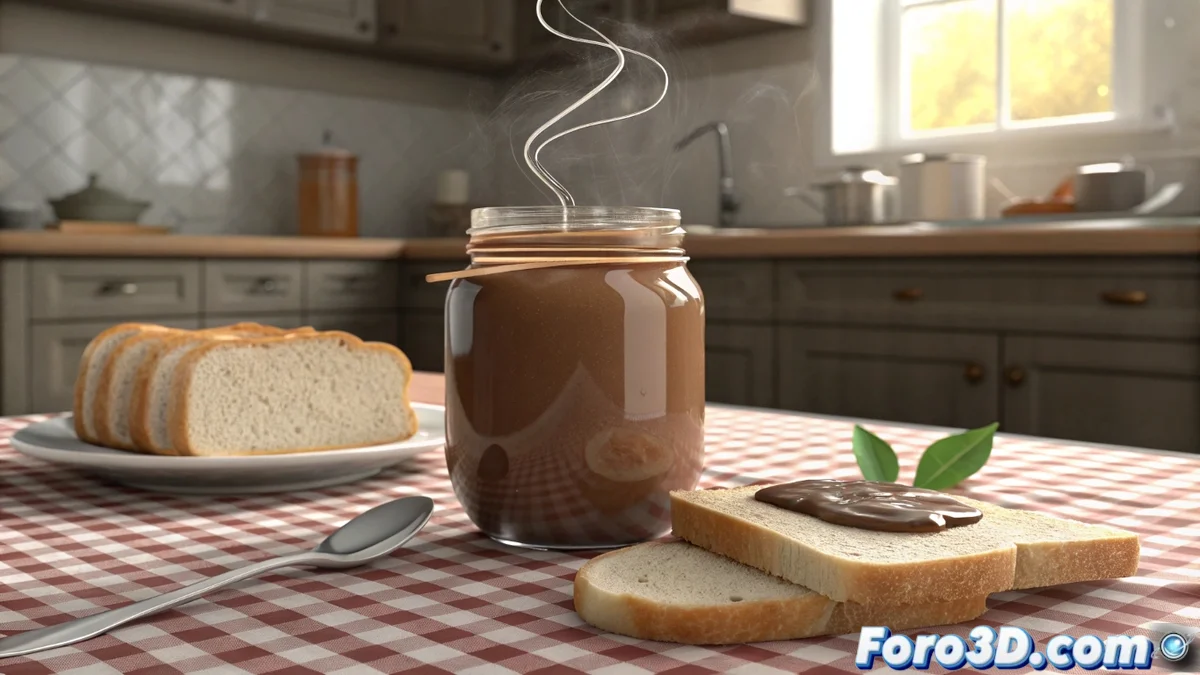
The Urban Legend of Soy in Nocilla: Between Nostalgia and Reality
In the vast universe of gastronomic urban legends, few are as persistent as the one claiming that the Nocilla recipe was altered to include soy. This rumor, which cyclically emerges in forums and conversations, goes beyond a simple ingredient; it has become a cultural symbol of the lost purity of past flavors and distrust of the modern food industry. 🍫
The Myth of the Secret Recipe and the Official Stance
Popular belief suggests that the flavor “is no longer the same as before” due to the introduction of soy as a cheap substitute. However, Ferrero, the owning company, has been categorical: soy lecithin is not a new ingredient. This emulsifier, present for decades in minimal quantities, serves a technical function as a stabilizer and does not replace key components like hazelnut or cocoa. The origin of the myth is usually placed in the early 2000s, when labeling regulations made allergens more visible, leading to misinterpretations. The perception of a flavor change is often attributed to natural variations in raw materials, production process optimizations, or simply the idealization of the past.
Factors that fuel the legend:- Visibility on labeling: The explicit mention of soy lecithin in the ingredients, previously less detailed, generated unfounded alarm.
- Generational nostalgia: The product is tied to emotional childhood memories, perceived as more authentic.
- Changes in sensory perception: Our palate evolves with age, affecting how we perceive familiar flavors.
"The soy legend acts as a tangible explanation for an intangible difference between memory and the present experience."
The Psychology of Taste and Generational Melancholy
This phenomenon is not exclusive to Nocilla. It affects numerous mass consumer products and speaks of a powerful collective psychology. The remembered taste is not just a chemical combination, but a multisensory experience linked to a unique emotional context (snacks, family, security) that is impossible to replicate. The discrepancy between memory and current reality creates a void that, culturally, is often filled with theories about secret ingredients or degraded recipes. Thus, an innocent emulsifier becomes the perfect scapegoat. 😌
Key elements in the construction of the myth:- Idealization of the past: There is a tendency to remember flavors as better or purer, a known cognitive bias.
- Industrial distrust: The widespread belief that companies prioritize profit over quality.
- Search for simple explanations: It is easier to blame a new ingredient than to accept the complexity of memory and perception.
More Than a Debate About a Food
At its core, the urban legend of soy in Nocilla transcends the gastronomic. It is a reflection of melancholy for an era and a discussion about authenticity and change. It reminds us that our memories, especially sensory ones, are fragile and subjective. The debate, therefore, says more about our relationship with the past and our skepticism toward the present than about the actual content of a jar of chocolate cream. Ironically, in this search for purity, we turn a common legume into the villain of a story where the true mystery is the elusive and imperfect nature of our own memory. 🕰️