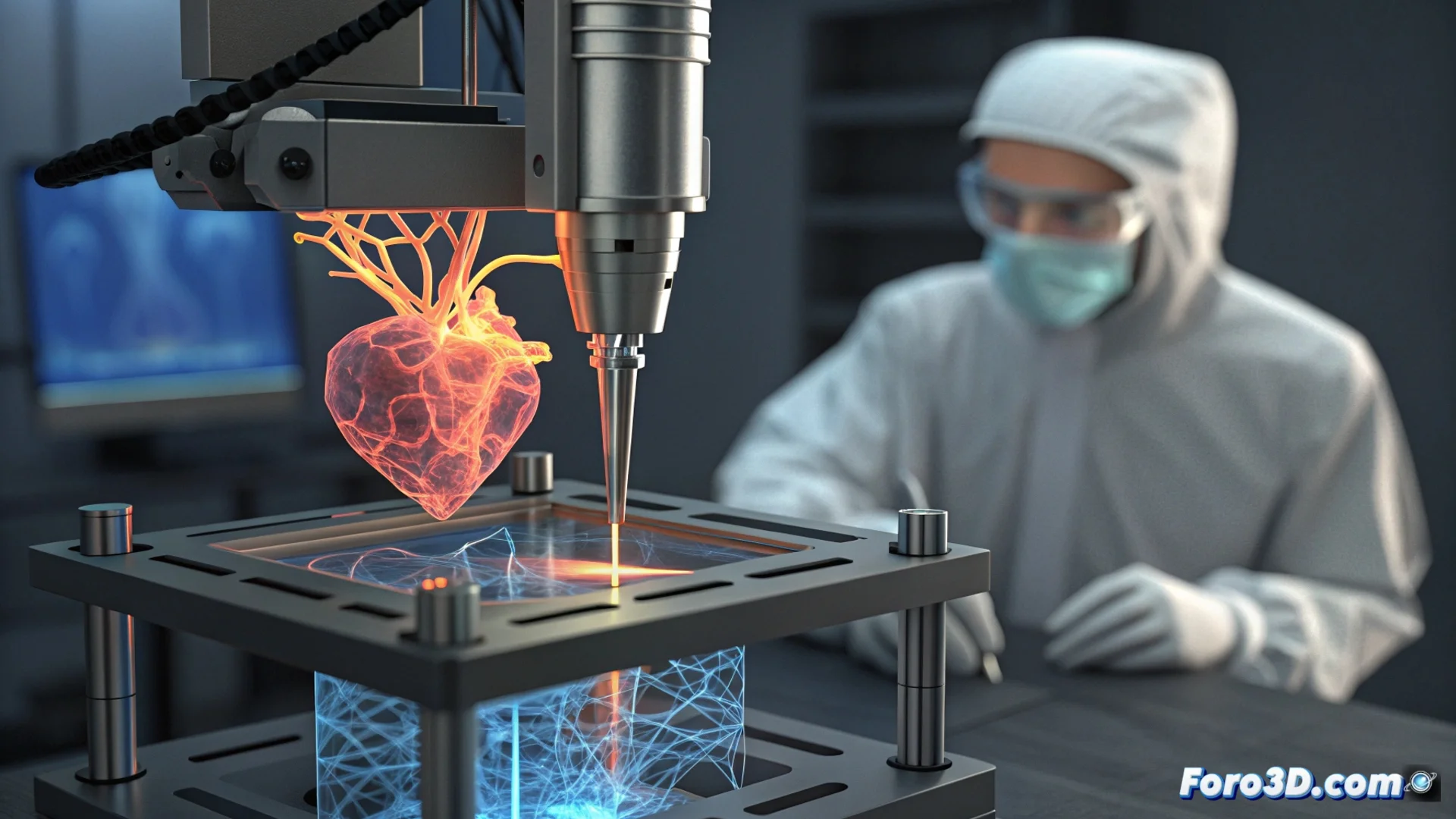
The University of Texas researches how to print functional liver tissue
A leading medical center in the United States has received a federal grant of 2.5 million dollars to boost a pioneering project. The goal is to manufacture human liver tissue that functions using advanced 3D bioprinting techniques. This effort aims to overcome current limitations in replicating the complexity of a real organ. 🧬
A strategy that fuses cutting-edge technologies
The scientific team, led by Dr. Jerry Shay, will integrate human pluripotent stem cells with a high-precision three-dimensional printing system. The method involves depositing layers of a specialized hydrogel containing the necessary cell types. The focus is on forming intricate vascular structures, essential for the tissue to receive oxygen and nutrients efficiently.
Main challenges to address:- Achieve bio-printed tissue that performs the key metabolic functions of a liver, such as detoxification or protein synthesis.
- Validate that the constructs can remain alive and functional for extended periods, several weeks long.
- Scale the process to create tissue volumes useful for practical applications.
This work could reduce reliance on animal testing for drug development and alleviate the severe shortage of donors for transplants.
Potential impact on medicine and research
If the project advances successfully, the printed liver tissues will first serve as reliable platforms to evaluate the safety and efficacy of new drugs. In the long term, their use in transplant procedures is envisioned, offering an alternative to waiting for a compatible organ.
Pursued future applications:- Create personalized liver models to test how patients react to specific treatments.
- Produce tissue patches or grafts that can repair damaged areas of a patient's liver.
- Establish a path toward on-demand manufacturing of organ components, transforming waiting lists.
A promising horizon for biofabrication
This initiative, funded by the National Institute of Biomedical Imaging and Bioengineering, represents a significant step in tissue engineering. By combining 3D bioprinting with stem cells, a route opens to generate functional organs in the lab. The advancement would not only improve drug development but could redefine the future of transplants. 🔬