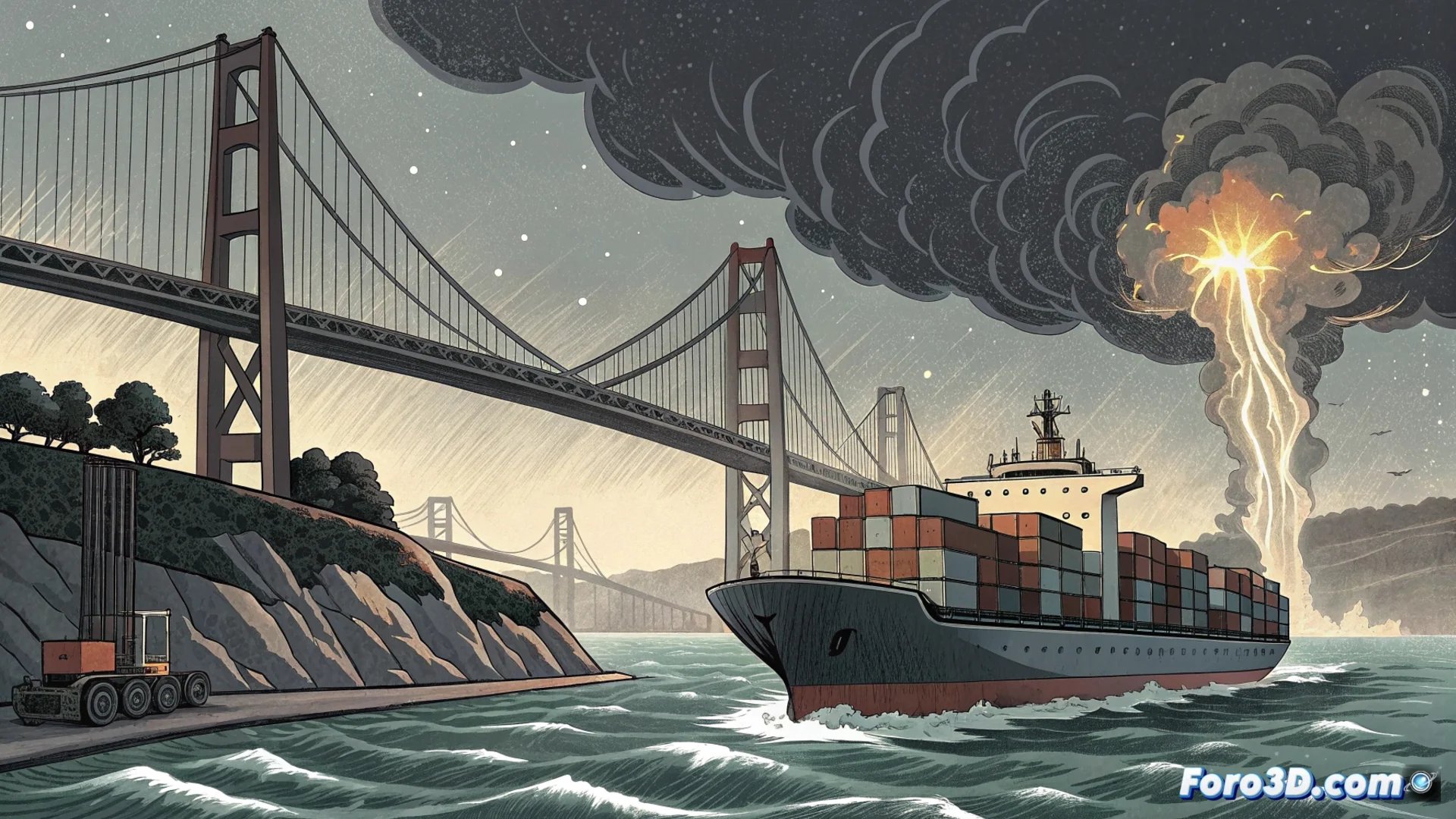
United States Develops AI Assistant for Ship Captains
Blockages in channels and collisions with bridges have exposed a constant weakness in global maritime transport. 🚢 Despite having advanced technology for radar and GPS, the human element remains a point where failures can arise with catastrophic results. To address this issue, a team of researchers in the United States has designed an artificial intelligence assistant that seeks to directly assist captains when they must make decisions.
An Algorithmic Copilot for Navigation
This AI tool does not intend to replace the ship's commander. Instead, it operates as a digital support that instantly analyzes information from radar, electronic navigation charts, ship sensors, and weather forecasts. Its main goal is to detect potential threats that a person might miss due to fatigue, data overload, or a lapse in attention, providing early warnings about dangers.
How does the system process information?- Integrates multiple data streams to build the most objective and complete situational picture.
- Examines movement patterns and can predict collision or grounding situations with more advance notice than conventional methods.
- Acts as a filter against cognitive biases and natural human limitations, offering suggestions based solely on data.
The central idea is that AI acts as a filter against cognitive biases and human limitations, providing recommendations based purely on the available data.
The Final Challenge: Who Decides?
Although the machine's goal is to prevent disasters, an inevitable question arises about final authority. When the captain and his algorithmic copilot disagree on an assessment, someone must decide whether to trust human intuition or the cold calculation of artificial intelligence. This dilemma underscores that technology is a support, but ultimate responsibility still resides with people. ⚖️
Key Points of the AI Assistant:- Operates in real time, processing navigation and environmental data.
- Aims to anticipate human errors due to fatigue or information overload.
- Does not take control, only alerts and recommends actions to the captain.
A Step Toward Safer Navigation
The development of this AI assistant marks an effort to enhance maritime safety where it is most needed. By combining human expertise with a machine's data processing capacity, an additional layer of defense is created against costly and dangerous accidents. The future of navigation may depend on this collaboration between the captain's judgment and the alerts from his new digital copilot. 🌊