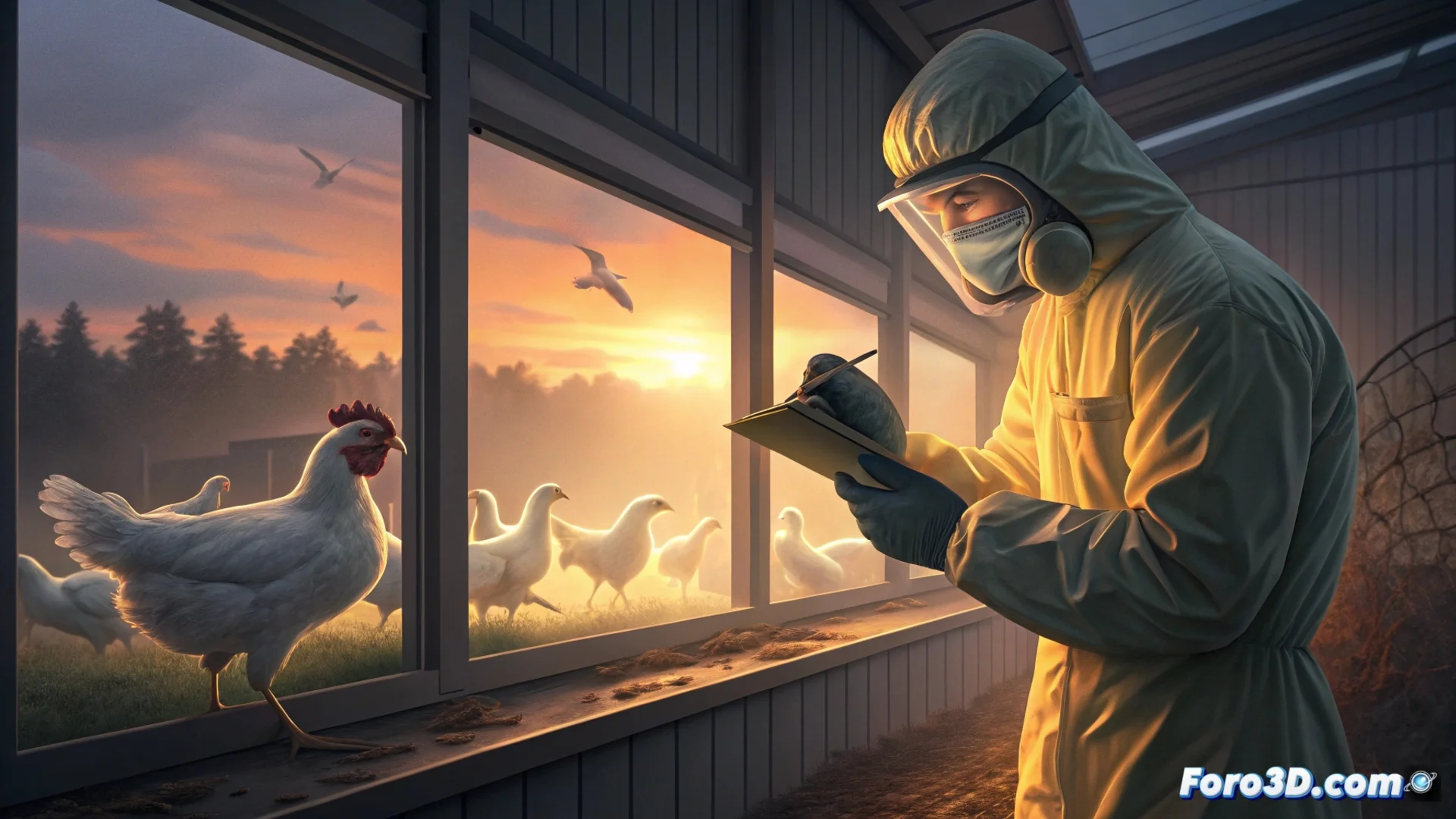
United States Contains the 2025 H5N1 Bird Flu Outbreak
Public health authorities in the United States managed to stop the spread of the H5N1 virus that affected the national poultry industry during 2025. This result was achieved by coordinating an immediate response that combined culling infected animals, increasing surveillance on farms, and applying movement restrictions. Despite this achievement, experts emphasize that the pathogen has not been eradicated and represents an ongoing threat. 🦠
The H5N1 Virus Persists as a Latent Threat in Nature
Although the outbreak was controlled in commercial facilities, H5N1 continues to circulate actively. Its main reservoir is populations of migratory and wild aquatic birds. This natural presence means the virus can be reintroduced at any time into areas with high poultry production density. Scientists monitor strains to identify any mutations that could make the pathogen more contagious or increase its danger to other species, such as mammals.
Key measures that allowed containing the outbreak:- Cull poultry in infection hotspots to cut transmission.
- Increase epidemiological surveillance on farms and markets.
- Apply strict restrictions on the movement of animals and products between farms.
The current tranquility is as fragile as an egg. The next time a bird sneezes near a farm, an entire economic sector will go on maximum alert.
Focusing on Preparing the Response for Future Crises is the Priority
The 2025 outbreak experience highlighted the strengths and weaknesses of the response system. The focus now is on improving several key aspects to be ready. Efforts aim to optimize early warning systems, develop more effective vaccines for birds, and ensure reserves of protective equipment for sector workers. There is also discussion on how to balance the need to ensure food safety with animal welfare, given that culling millions of birds is a drastic but often necessary measure.
Areas for improvement identified for the future:- Optimize early warning systems to detect outbreaks faster.
- Develop and produce more effective vaccines for the poultry population.
- Stockpile personal protective equipment for agricultural and veterinary workers.
A Relative Calm, but No Definitive Victory Over the Virus
The current situation can be described as one of relative calm, but it is far from a complete victory. The H5N1 virus continues its cycle in wildlife, posing a permanent risk of jumping back to commercial farms or, in less frequent scenarios, to humans. The main lesson is clear: surveillance cannot cease. The poultry sector and health authorities must maintain a state of constant preparedness, because the threat, though contained, has not disappeared. 🐔