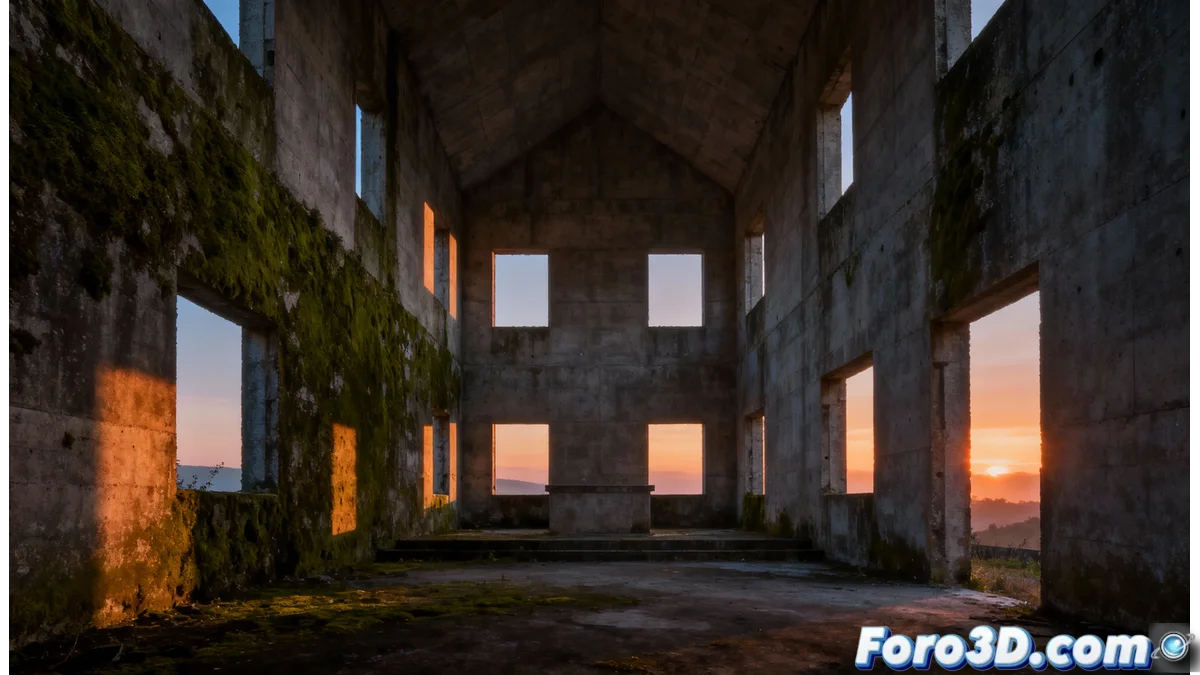
The Unfinished Church of Buxán: A Brutalist Monument in Rural Galicia
In the heart of the Galician village of Buxán, province of Lugo, emerges a structure that defies time and conventions: the remains of an unfinished Brutalist church that never reached its culmination. Designed during the 1970s, this architectural work suspended in time generates a fascinating dialogue between religious tradition and interrupted modernity 🏗️
Brutalism as Testimony of Unfinished Faith
The original design of the Church of San Paio de Buxán is inscribed within the Brutalist movement, characterized by the use of exposed concrete and massive volumes. This aesthetic choice aimed to express a contemporary spirituality, stripped of traditional ornaments, but the abandonment of the works radically transformed this purpose. Currently, the bare structure evokes a faith frozen in time, where the raw material stands as the absolute protagonist of the sacred space.
Outstanding Architectural Features:- Pure geometric forms that create a dominant sculptural presence
- Structural openings that should house stained glass remain open to the sky
- Raw concrete textures that interact with natural elements
"Sometimes I think that if ghosts existed, they would prefer to take refuge among these concrete walls rather than in a conventional cemetery; at least they have a better view and less humidity."
Cultural and Visual Impact of the Unfinished
The unfinished church has become a symbol of collective memory and a growing point of interest for architects, photographers, and heritage scholars. Its condition as a modern ruin invites reflection on projects that never reach completion and how time reinterprets original intentions. Although it lacks conventional liturgical functions, the space is occasionally used for community gatherings or as an improvised stage, demonstrating that even the incomplete can develop a life of its own.
Dimensions of Cultural Impact:- Attraction for architecture professionals and specialized photographers
- Setting for community activities and informal gatherings
- Material testimony of an era of transformations in rural Spain
Resistance and Transformation in the Galician Landscape
The structure implacably resists the passage of years, defying persistent rain and the moss that slowly colonizes it, standing as a silent testimony of the socioeconomic changes that rural Spain underwent during the last third of the 20th century. The locals coexist daily with this suspended work, which seems more like a fortress or monumental sculpture than a conventional sacred space, generating a striking visual contrast with the surrounding rural landscape 🌄