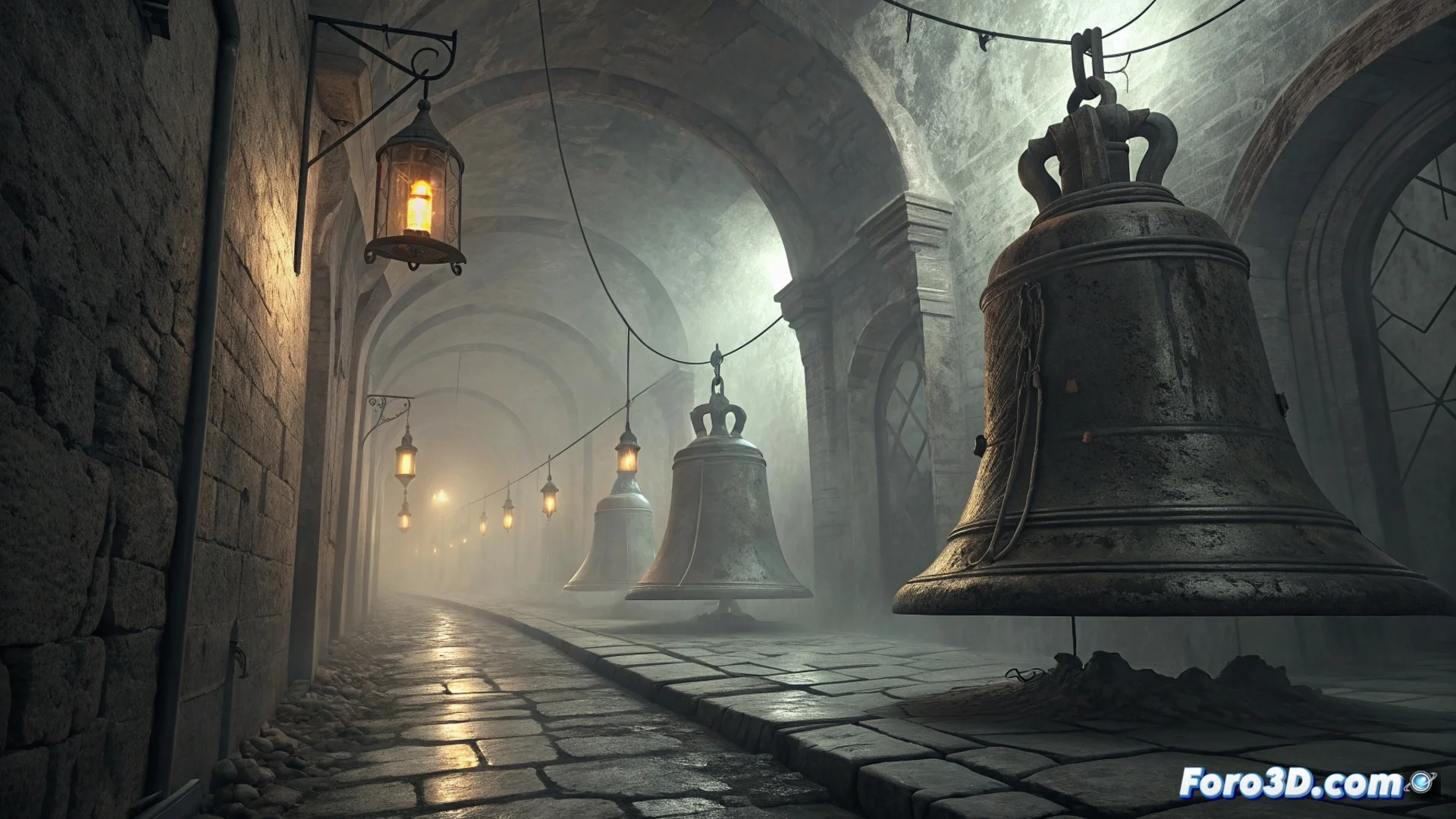
The Underground Bells of Toledo: An Echo of the Past
Among the walls of the imperial city, a legend endures: the pealing of bells that emerges from the depths when night falls. Many Toledans claim to perceive this distant sound, a phenomenon that fuels the imagination about what lies hidden beneath their feet 🕰️.
Theories about the origin of the sound
The mysterious tolling generates multiple explanations. Some point to a Visigothic monastery sealed in the subsurface. Others speak of an entire city that was submerged, whose bells still weep. All accounts agree on one key detail: it can only be heard in the absolute silence of the early morning hours.
Possible sources of the phenomenon:- Air currents in forgotten tunnels and passageways that act like a natural organ.
- Vibrations transmitted through the ground from distant modern infrastructure.
- Resonance of ancient structures, such as vaults or wells, that amplify ambient sounds.
The legend prefers to imagine a past that refuses to be silent, while reason seeks explanations in stone and wind.
The Stratified History of Toledo
The phenomenon is better understood by knowing the stratified nature of Toledo. The city accumulates centuries of history with superimposed layers of constructions: Roman, Visigothic, Arab, and Christian. This architectural palimpsest allows narratives to emerge that blend reality and myth.
Elements that fuel the legend:- The verified existence of crypts, cisterns, and tunnels beneath the historic center.
- The oral tradition passed down from generation to generation, transforming over time.
- Psychoacoustics: the tendency to interpret ambiguous sounds (like wind in alleys) as the longed-for pealing.
Hearing What One Wants to Believe
The myth of the underground bells demonstrates how the soundscape and deep history of a place can fuse together. Those who seek to hear them sometimes confuse the whistle of the air with the tolling, evidencing that, often, we perceive what our desire impels us to believe. The legend persists, not as a fact, but as a cultural echo that resonates in Toledo's identity 🌙.