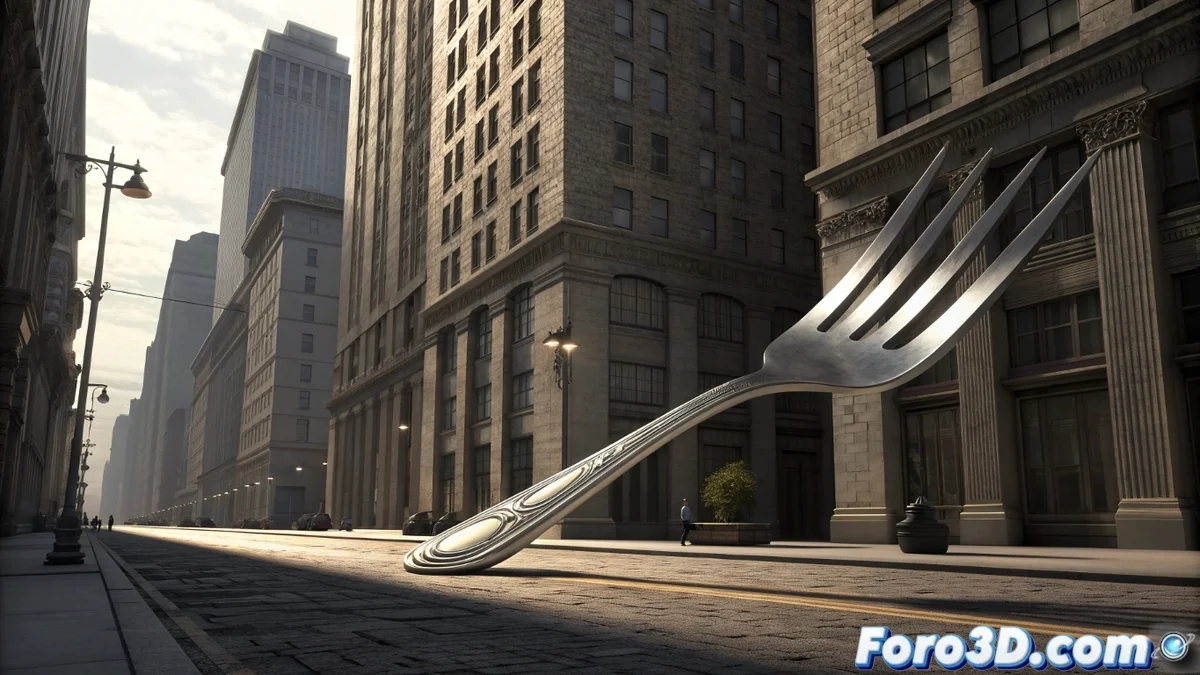
The Uncanny Scale in 2D Illustration: Narrative and Psychological Distortion
In the realm of visual creation, the uncanny scale establishes itself as a powerful artistic tool. This technique consists of deliberately manipulating the proportions of common elements, presenting them in impossible dimensions within contexts that maintain a high degree of realism. The result is a calculated fracture in our perception that generates a fascinating tension between the known and the impossible. 🎨
Fundamentals and Creative Application
The core of this practice lies in the subversion of expectations. It is not just about making something big or small, but integrating that anomaly coherently into a scene that otherwise respects physical and visual laws. This narrative distortion amplifies the work's message, inviting a deeper reading. A shoe occupying an entire square or a teacup that looks like a reservoir in the middle of a street are examples of how these visual metaphors are constructed.
Paradigmatic Examples of the Technique:- Giant Household Objects: A fork, a key, or a pencil transformed into dominant architectural structures within a detailed urban landscape.
- Miniaturized Environmental Elements: Buildings or vehicles reduced to toy scale alongside normal-sized natural elements, creating a sense of an alternate world.
- Hyperrealistic Contrast: The texture, lighting, and shadows of the disproportionate object are rendered with extreme realism to accentuate the disconnection with its equally realistic environment.
The true magic of altering scale is not in the size, but in the question it poses to the viewer about their own reality.
The Effect on the Viewer's Perception
The impact transcends the merely visual to delve into psychological territory. This perceptual alteration provokes an immediate emotional response, ranging from curiosity and awe to a slight sensation of unease or vertigo. The mind, recognizing the object but not its size context, experiences a cognitive short-circuit. This resource connects directly with universal themes such as insignificance, power, or the strangeness of the everyday seen in a new light.
Common Psychological Reactions:- Momentary Derealization: Brief sensation that what is observed cannot be real, despite its apparent verisimilitude.
- Spatial Questioning: The brain struggles to readjust its understanding of distances and proportions within the image.
- Emotional Connection: The scale anomaly acts as a powerful narrative hook, making the illustration memorable and evocative.
Conclusion: More Than a Visual Effect
The uncanny scale demonstrates that 2D illustration is a fertile field for conceptual exploration. Far from being a mere optical trick, it is a sophisticated visual language that enriches the narrative and provokes reflection. By turning a mundane object into the absurd protagonist of a realistic scenario, the artist not only captures the gaze but also invites an internal dialogue about the nature of our perception and the limits of the reality we take for granted. In a visually saturated world, this technique stands out for its ability to turn the simple into a profound and immersive experience. 🤔