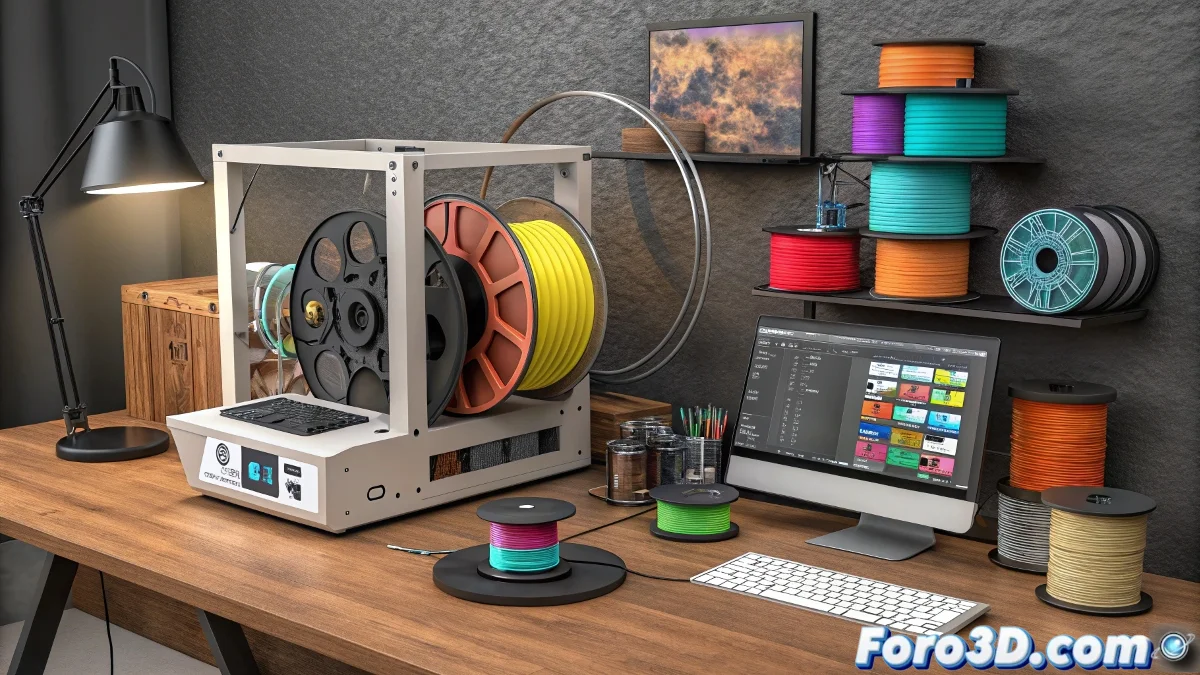
The Universe of Materials in 3D Printing
The world of 3D printing has evolved since those early days when ABS reigned supreme without competition. Today, designers have a palette of materials that would make any traditional artist blush with envy. Choosing the right filament can make the difference between a successful prototype and a thermoplastic disaster. Each material offers unique properties that make it ideal for specific applications, from technical parts to artistic creations.
Understanding the characteristics of each filament is not just a matter of printing temperature or bed adhesion. It's about selecting the right material for the right project, considering factors like mechanical strength, flexibility, surface finish, and behavior under different environmental conditions. Design and prototyping professionals know that mastering these materials equates to significantly expanding their creative and technical capabilities.
Basic Filaments for Beginners and Experts
- PLA: the most popular material for its ease of use and minimal shrinkage
- ABS: known for its strength and durability, though it requires more experience
- PETG: combines the ease of PLA with the strength of ABS
- TPU: flexible filament ideal for parts that require impact absorption
Specialized Materials for Advanced Applications
When projects require specific properties, specialized filaments come into play. Materials like Nylon offer exceptional resistance to wear and impacts, while filaments composite with carbon fiber provide additional rigidity for structural parts. In the professional realm, these materials allow for the creation of functional prototypes that can undergo rigorous testing before final production.
The correct selection of filament can transform a simple model into a functional and durable part
Technical filaments like PC (polycarbonate) allow for the creation of parts with extraordinary thermal and mechanical resistance, although they require printers capable of reaching high temperatures. On the other hand, materials like HIPS or PVA are used as soluble support material, facilitating the creation of complex geometries that would be impossible to print with conventional methods.
Technical Considerations for Choosing the Perfect Filament
- Printing temperature and specific hotend requirements
- Need for a heated bed and type of print surface
- Chemical and thermal resistance according to the final use environment
- Required surface finish and possible post-processing
In-depth knowledge of available materials allows designers and creators to strategically select the filament that best suits their specific needs. From the design studio creating conceptual prototypes to the engineer developing functional parts, every professional will find in this variety of materials the tools to materialize their ideas with precision and quality. 🔧
Because in the end, choosing the wrong filament is like trying to make sushi with modeling clay: the result may be colorful, but it's definitely not appetizing. 🍣