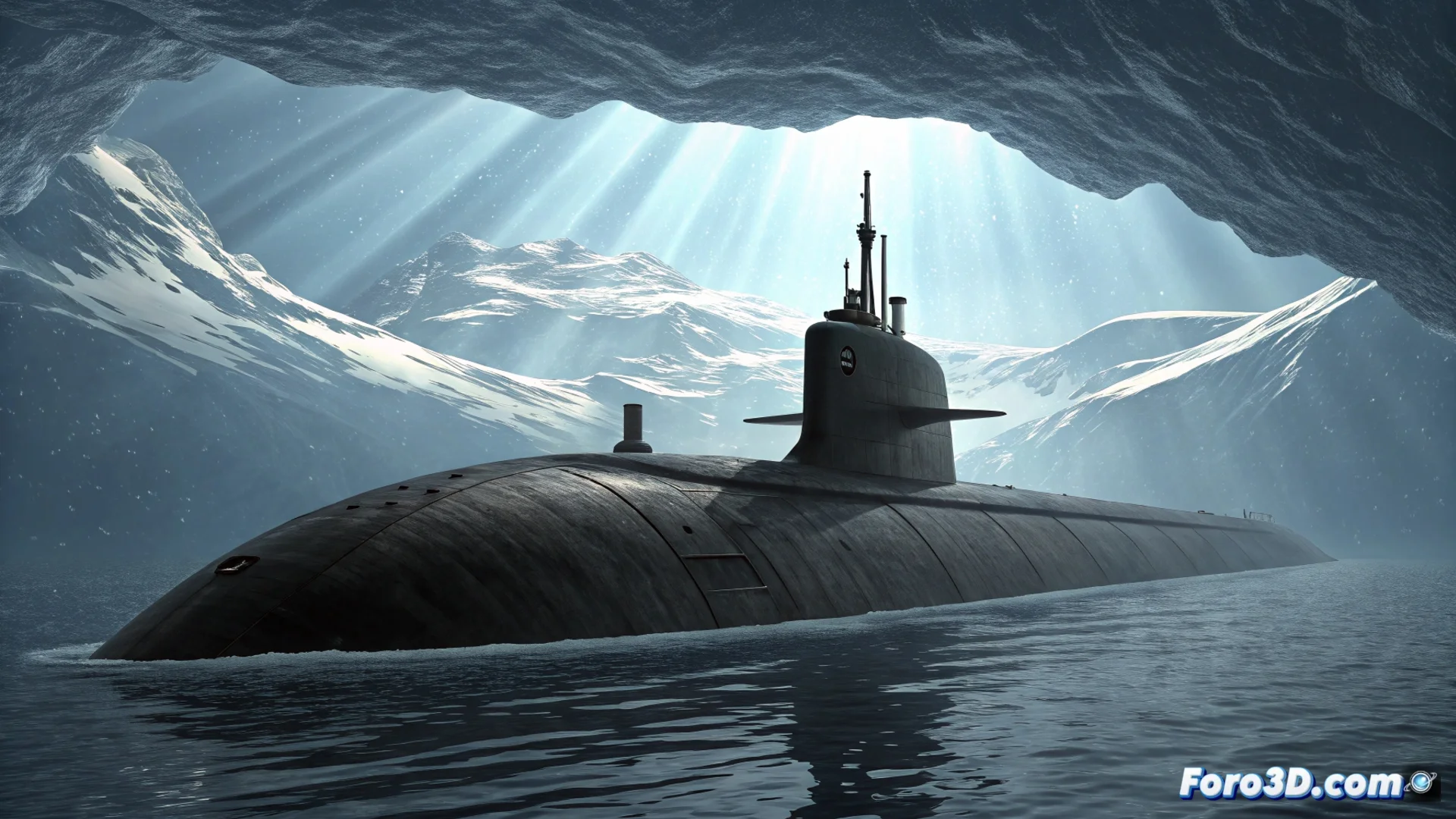
Modeling the Typhoon-class Submarine: Features and Design Guide
The Typhoon-class ballistic missile submarine, internally known as Project 941 Akula, holds the record as the most colossal submarine to ever sail the oceans. Its imposing dimensions of 175 meters in length, 23 meters in beam, and 12 meters in draft define it as a true underwater fortress. Its most distinctive and complex feature to replicate is its innovative titanium double hull structure, which gave it unparalleled strength and vast internal space. 🚢
Key Structural Features for 3D Modeling
For those wishing to model this giant with precision, the first aspect to capture is its nearly rectangular cross-section, a direct consequence of the two parallel pressure hulls. The sail or command tower is notably positioned forward. Right in front of its base, the twenty missile launch tubes are aligned, organized in two rows. The outer hull, smooth and rounded, was specifically designed to operate and break through Arctic ice.
Critical Details for an Accurate Model:- Double Hull: Represent the two titanium hulls within the outer hydrodynamic profile.
- Forward Sail: Correctly position the tower and its retractable hydroplanes.
- Propulsion System: Include the characteristic seven-bladed propeller, a distinctive hallmark.
Its double hull design not only gave it enormous structural strength but also allowed for exceptional living conditions for its crew.
Armament and Operational Role
The deterrent heart of the Typhoon was its twenty R-39 ballistic missiles (SS-N-20 Sturgeon), with a range exceeding 8000 km. For defense, it had a secondary arsenal of six 533 mm torpedo tubes and two 650 mm tubes, capable of launching torpedoes and anti-submarine missiles. Its ability to patrol for months under the ice made it the pillar of Soviet nuclear deterrence.
Armament Elements to Model:- Missile Tubes: The two rows of launchers on the forward deck.
- Torpedo Tubes: The smaller firing points for close-range weaponry.
- Silent Profile: The smooth exterior design, optimized for stealth under the ice.
A Colossus with Unique Amenities
Operating this machine required a large crew that could spend months submerged. For this reason, the Typhoon incorporated unusual facilities in a warship, such as a small swimming pool, gym, sauna, and even a solarium. These details are not only a historical curiosity but also speak to the enormous internal space offered by its design, an aspect to consider when modeling its interiors or to understand its true scale. This giant was not just a weapon; it was a self-sufficient underwater world. ⚓️