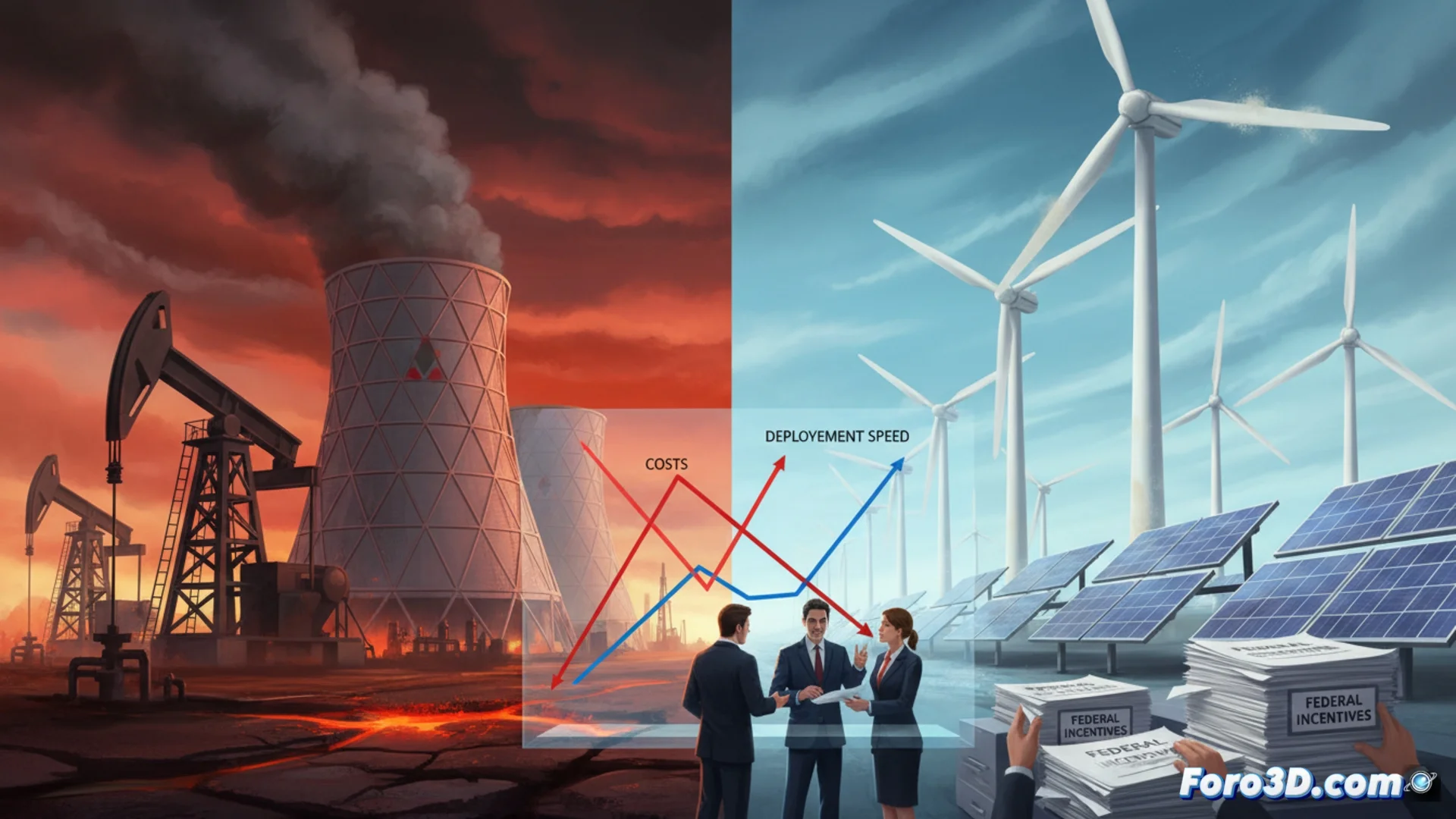
The Trump Administration Alters U.S. Energy Policy
The federal government led by Donald Trump substantially modifies the course of national energy policy. It explicitly decides to prioritize fossil fuels, nuclear energy, and resources like geothermal. At the same time, it cuts back support for clean technologies such as solar and wind. This shift forces the renewable sector to rethink how it presents its benefits to gain political support. 🔄
Executive Actions Impacting Clean Energies
The implemented executive orders eliminate crucial tax incentives for wind and solar farms. Additionally, they temporarily pause authorizations for renewable energy projects on federal lands and waters. The president's critical statements about wind energy create an atmosphere of regulatory uncertainty. This context causes delays in new investments and developments within the clean energy sector.
Main Measures Implemented:- Elimination of key tax benefits for wind and solar energy.
- Temporary halt of new renewable projects on federal public domain.
- Creation of a regulatory framework that explicitly favors traditional fuels.
The wind in Washington no longer blows in favor of the blades, but the industry seeks new engines to keep growing.
The Renewable Sector Reinvents Itself in the New Framework
Facing this scenario, clean energy companies adapt their communication and lobbying strategies. They focus on purely economic arguments: their cost competitiveness, their ability to create local jobs quickly, and their reliability for integration into the electrical grid. The message evolves from environmental to practical and financial, with the aim of maintaining sector growth despite reduced support from the federal administration. 💡
Industry Adaptation Strategies:- Emphasize cost reduction and the speed of project deployment.
- Highlight the creation of local jobs and economic development in communities.
- Promote technological reliability and complementarity with the existing energy mix.
A Divided Energy Landscape
While federal policy shifts, numerous individual states double down on their commitments and goals for renewable energies. This creates a fragmented landscape where the push toward energy transition depends more on local and private initiatives. At the national level, the course seems set toward other sources, although the renewable sector demonstrates notable resilience and adaptability to navigate changing waters. 🌍