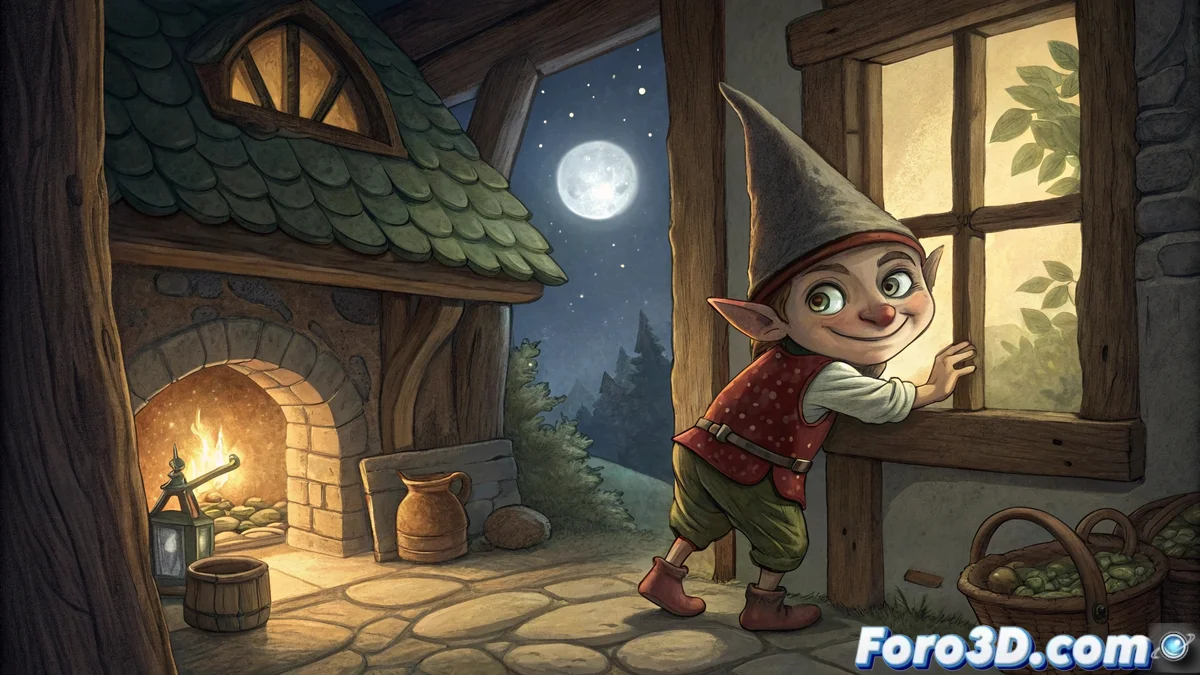
The Trasgu: the Mischievous Elf of Asturian and Cantabrian Folklore
In the lands of northern Spain, especially in Asturias and Cantabria, dwells a legendary creature that has captivated the popular imagination for centuries. This being, known as the Trasgu, appears as a small-statured elf, dressed in simple clothes and sporting a characteristic pointed hat. Its most distinctive feature is a perforated hand that prevents it from holding objects normally, adding a touch of uniqueness to its figure. 🧚
Nocturnal Activities of the Elf
The Trasgu unleashes its energy mainly at night, moving stealthily through homes while the inhabitants sleep. Its mischief includes everything from producing mysterious noises with kitchen utensils to hiding everyday objects like keys or coins. Although its actions are not usually malicious, its persistence can be annoying for those who experience them frequently.
Typical Behaviors of the Trasgu:- Generating inexplicable sounds with pots and other household items
- Moving light furniture or changing objects' places
- Hiding personal belongings in unexpected places
"Those who have had the luck -or misfortune- of hosting a Trasgu know that finding the missing slippers can become a daily adventure" - Popular saying from northern Spain
Strategies for Coexisting with the Trasgu
The relationship with this mythological being can be managed through proper treatment. Offering it food or addressing it with respect can transform its behavior, even leading it to perform simple household tasks at night. On the contrary, assigning it impossible tasks, such as carrying water with its perforated hand, usually persuades it to leave the home.
Tips for Interacting with the Elf:- Maintain a patient attitude with a sense of humor towards its mischief
- Offer small food gifts to gain its sympathy
- Propose impossible tasks if you want it to leave the home
The Cultural Legacy of the Trasgu
This peculiar character from northern folklore represents more than just amusing anecdotes; it embodies the rich oral tradition of these regions. Its presence in popular tales has served to explain inexplicable everyday phenomena, creating a unique bond between the real world and the collective imagination. Coexisting with the Trasgu, although it may be exasperating, has become part of the cultural charm of Asturias and Cantabria, transforming possible nightmares into memorable experiences. 🌟