The Tower of Hercules: a Roman lighthouse that still guides
On the Atlantic coast of Galicia, a stone witness defies time. The Tower of Hercules is not just a lighthouse; it is a living piece of Roman engineering that continues to fulfill its original mission after nearly two millennia. Its light still guides navigators from the promontory of A Coruña, fusing history, myth, and function into a single monument. 🗿
A structure that spans the centuries
The Romans built this lighthouse in the 1st century AD, under the reign of Emperor Trajan. Although its external appearance changed radically during a major reform in the 18th century, when a new cladding was added, its inner core remains intact. This fact makes it the oldest Roman-origin lighthouse in the world that is still operational. Its persistence speaks of exceptional construction quality and adaptations that respected its essence.
Key data on its architecture and history:- Origin and chronology: Its construction dates to the 1st century AD, being a work of Roman civil engineering.
- Transformations: The most significant intervention occurred in the 18th century, when it was clad with a new facing to consolidate the structure.
- Continuous function: It has never stopped emitting its light signal, maintaining its original purpose of guiding ships.
It is the oldest Roman lighthouse in the world that remains operational, a direct bridge between classical antiquity and the modern world.
The myth that founded a symbol
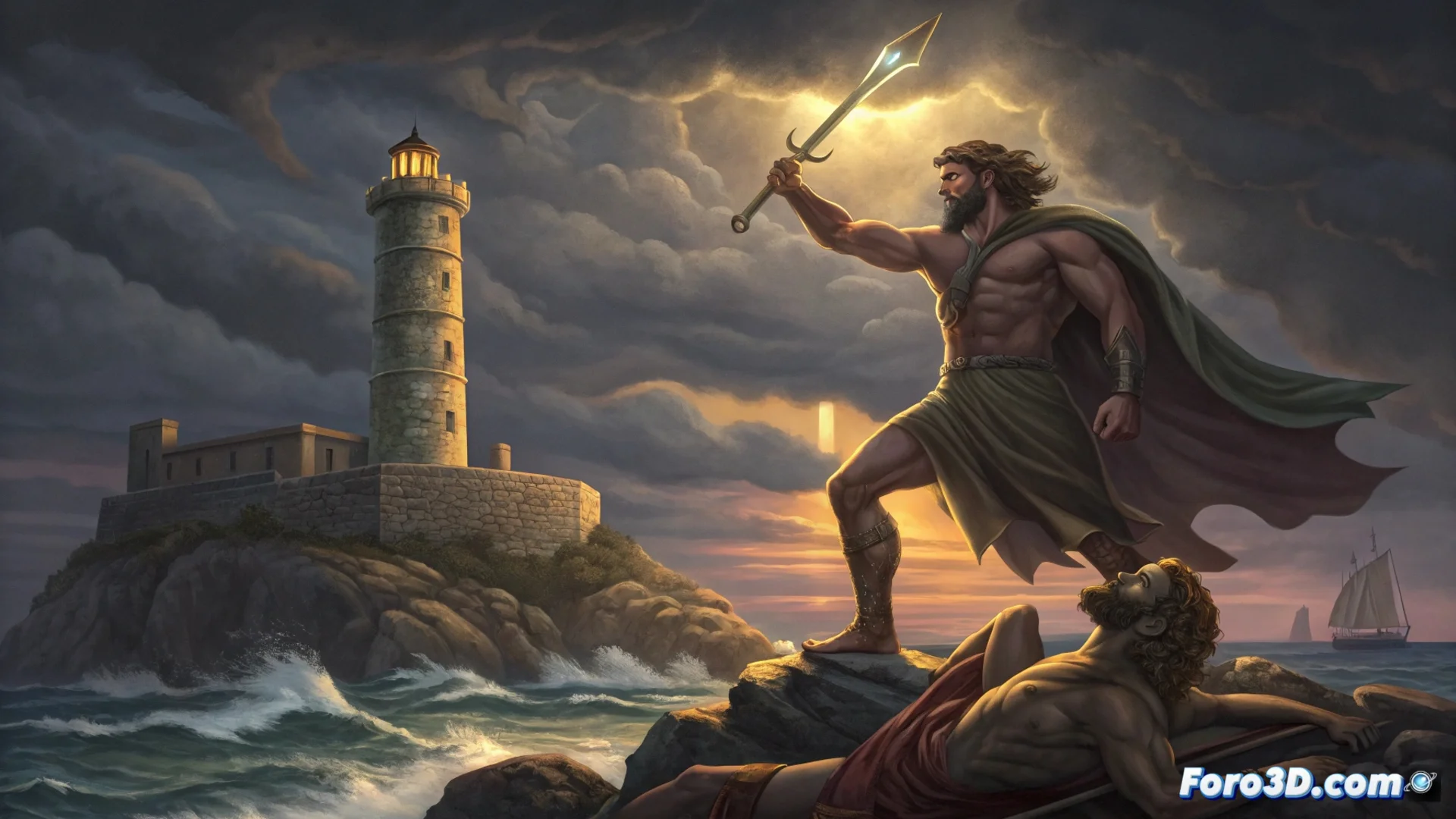
The reason for its name is rooted in legend. Tradition tells that the hero Hercules traveled to these parts to confront the tyrannical giant Geryon. After an epic three-day battle, Hercules prevailed and cut off his head. To mark his triumph and found a new city, he ordered the giant's head to be buried and a tower erected on the spot. This tale is not just a simple story; it constitutes the foundational myth of the city of A Coruña.
Connections between myth and reality:- Toponymy: The ancient name of the place, Crunia or Clunia, may derive from a Celtic word meaning 'horn' or 'promontory', linking to the landscape.
- Heraldry: The coat of arms of A Coruña depicts Hercules holding the tower and Geryon's head, forever uniting the city's symbol with its origin legend.
- Cultural identity: The lighthouse transcends its practical utility to become a deeply rooted cultural symbol in Galicia.
A legacy of stone and light
The next time you gaze at a lighthouse, remember that the Tower of Hercules is much more. It is the materialization of a mythical feat, an ancient engineering prowess, and a World Heritage Site that continues to illuminate. Its history reminds us that the most enduring monuments are those that serve a tangible purpose while embodying the stories that define us. Its light, both from its lantern and from its legend, remains lit. 🌅