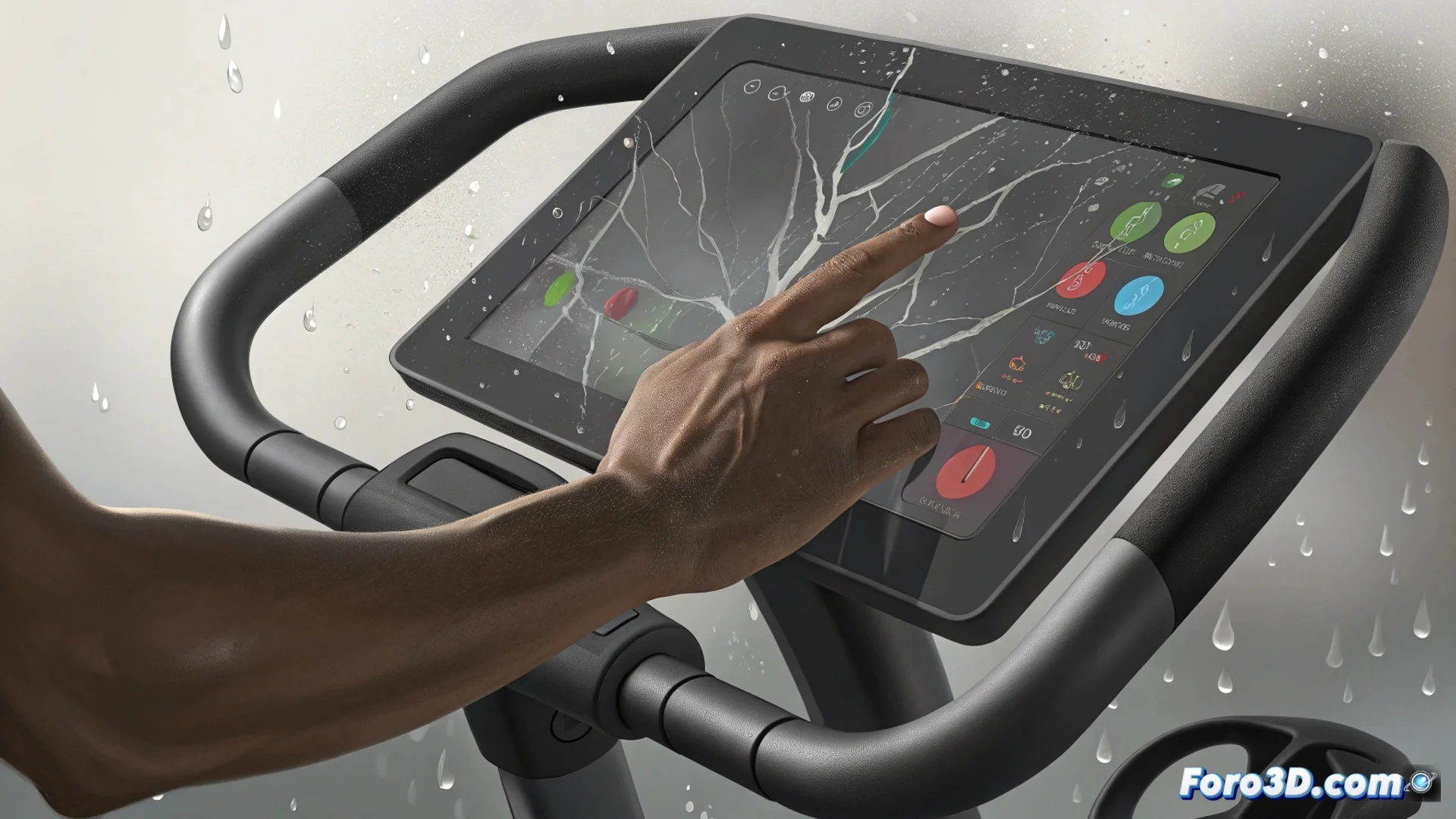
The Touchscreen, the Weak Point of Connected Spin Bikes
In modern static bikes with connectivity, the central screen acts as the control hub. This device processes training data, executes routines, and manages the connection with fitness apps. Its uninterrupted operation in every session subjects it to continuous stress. 🧠
Factors that Degrade Screen Integrity
Repeated finger contact in specific areas causes progressive deterioration of the sensitive layer. Added to this is the corrosive effect of sweat and ambient humidity, which can infiltrate through the perimeter seals and affect the internal circuitry. Although some manufacturers incorporate hardened glass, persistent exposure to these elements accelerates its degradation.
Main Consequences of Wear:- The touch layer responds poorly or stops working.
- Moisture corrodes internal contacts and electronic circuits.
- Screen visibility may be reduced by scratches or condensation.
Without a functional screen, the smart bike turns into a heavy mechanical contraption incapable of measuring performance.
The Collapse of Functions When the Interface Fails
A damaged screen paralyzes the bike's smart ecosystem. The user loses access to programmed routines, cannot record key metrics like power generated or calories burned, and automatic data synchronization with digital platforms is interrupted.
Functions That Disappear:- Execute structured and guided training programs.
- Measure and analyze performance in real time.
- Connect and compete in interactive apps like Zwift or Peloton.
From Technological Investment to Inert Burden
This failure turns a technological fitness investment into a heavy piece of equipment that only allows manual pedaling without feedback. The device takes up space without providing the value for which it was purchased, serving as a reminder of planned obsolescence and the fragility of integrated gadgets in high-performance equipment. It is crucial to consider this risk when evaluating the durability and total cost of ownership of these devices. ⚠️