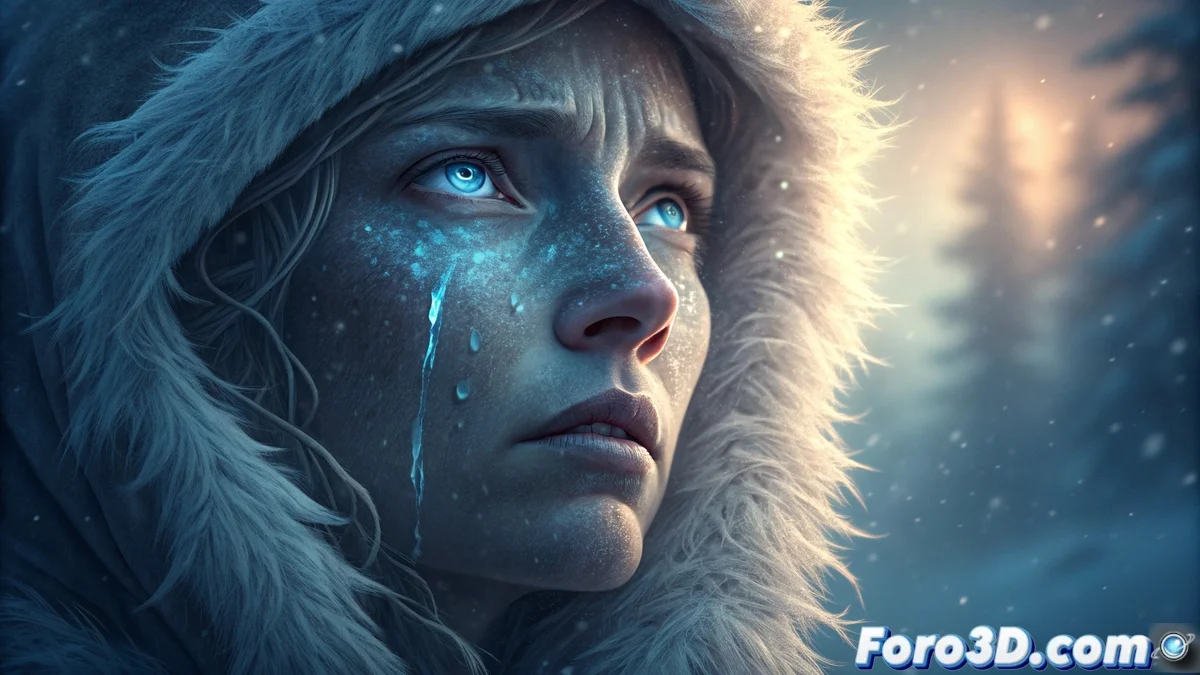
The Torn Eyelid: From Siberian Legend to 3D Model
Indigenous oral traditions of Siberia have preserved for centuries the chilling legend of the torn eyelid, an ancestral warning for travelers venturing into the frozen expanses. This supernatural tale finds its ultimate expression when transformed into a 3D modeling project that captures all its eerie essence. 🌬️❄️
Mythological Origins and Cultural Significance
The narrative of the torn eyelid emerges as a cultural survival mechanism among Siberian nomadic communities. These stories served as early warning systems metaphors, discouraging people from sleeping without protection in the tundra. The gliding entity represents the invisible dangers of the Arctic environment, while the eyelid's transformation into a vigilant spirit reflects deep beliefs about the body-soul connection.
Key Elements of the Legend:- Gliding entity with surgical precision to tear eyelids
- Painless transformation that adds a psychological dimension to the physical horror
- Regional variations: from personified icy winds to creatures of ice and shadows
The transformed eyelid into an eternal observer symbolizes the constant vigilance required in hostile environments and the symbiotic relationship between humans and spirits in indigenous cosmologies.
Project Setup in FreeCAD
Starting a project based on this legend requires meticulous setup in FreeCAD. Begin by selecting the Part Design environment and setting units to millimeters to ensure precision in modeling. Organization through multiple separate bodies allows simultaneous work on the human face, torn eyelid, and spectral entity without interference.
Essential Initial Setup:- Set appropriate scale to maintain realistic anatomical proportions
- Create reference planes and preliminary sketches to guide modeling
- Use boolean operations to define interactions between different elements
Advanced Modeling Techniques
The stylized human face is built using basic primitives and controlled extrusions, while the eye socket requires specialized hollowing and chamfer tools for anatomical realism. The upper eyelid is modeled as an independent object using NURBS curved surfaces and sweep operations that capture the complexity of human form.
Lighting and Materials System
Implementing a three-dimensional lighting system is crucial to convey the supernatural atmosphere. Three directional sources work together: a main light creates dramatic shadows, while soft fill lights reveal tear details. Assigned materials include sub-surface scattering for skin and controlled transparencies for the torn eyelid.
Specialized Material Properties:- Skin shader with sub-surface scattering for cutaneous realism
- Semitransparent translucent material for the torn eyelid
- Shaders with high reflectivity and Fresnel for the spectral entity
Final Rendering and Effects
The final rendering process incorporates atmospheric effects like volumetric fog and suspended ice particles to emphasize the frigid environment. The application of normal and displacement maps adds realistic micro-details to skin texture and torn edges. The global ray tracing setup with adaptive sampling ensures physically accurate lighting.
Legacy and Contemporary Applications
This project demonstrates how ancestral legends can be revitalized through modern 3D technology, creating bridges between oral tradition and digital expression. The meticulous recreation of the torn eyelid serves both as a technical exercise in organic modeling and a cultural exploration of Siberian indigenous narratives. The final result, though potentially unsettling, represents the perfect fusion between mythology and digital art. 👁️❄️