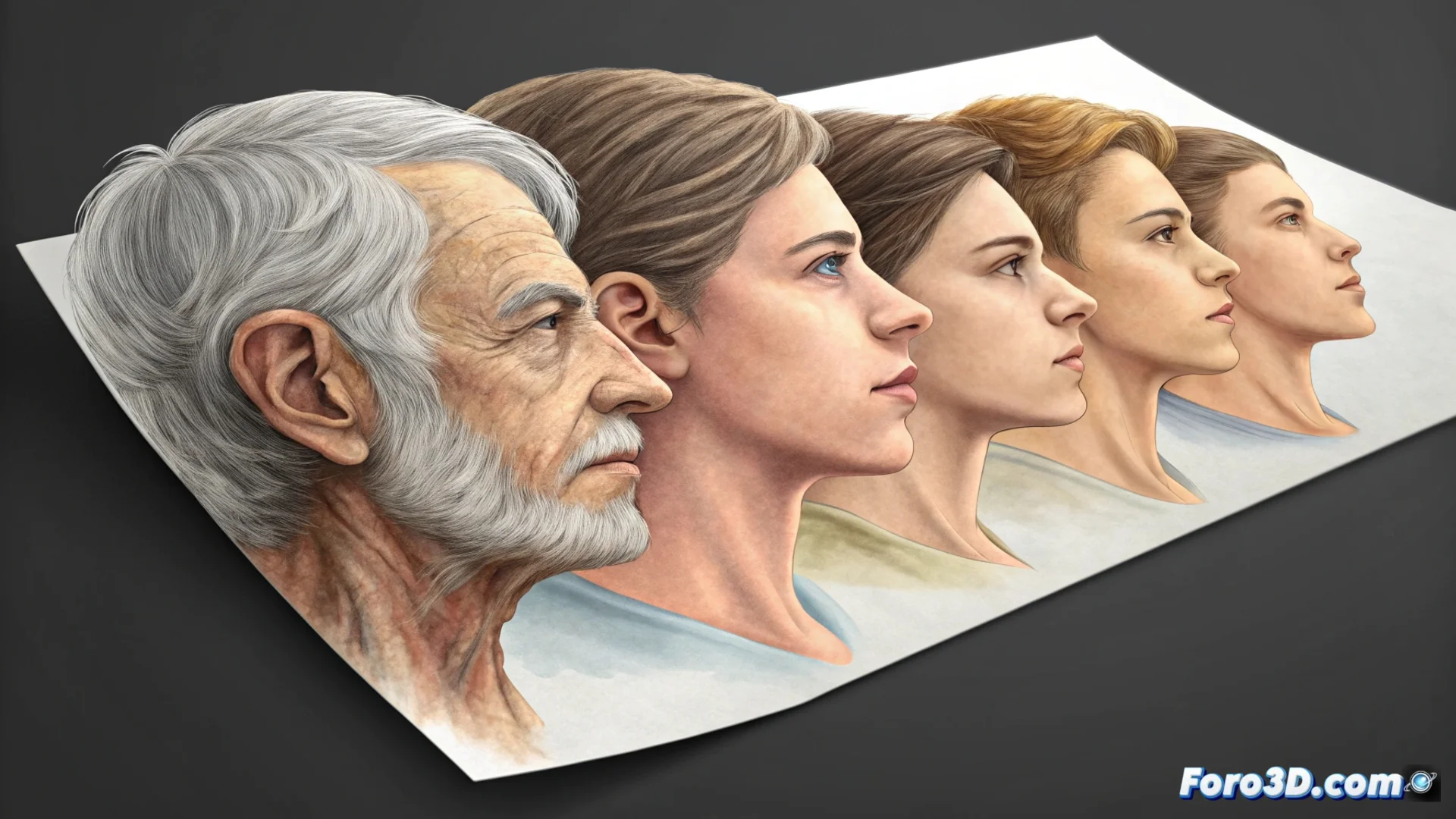
The Timeline Technique to Improve Visual Narrative
This illustration methodology allows condensing multiple instants of the same subject into a single work. The artist creates a fluid sequence that reveals how an entity transforms, training the eye to perceive gradual alterations in its anatomy, surface, and contour. It enhances the ability to narrate events without text, using only images that transition from one state to another. 🎨
Organize Your Graphic Sequence
The first step is to select a theme with a defined metamorphosis, such as a flower that sprouts and withers or a city that changes with the day. Then, segment the support into areas that align with crucial milestones of that transition. It is vital to mark the main moments of change so that the progress is interpreted as a coherent flow. The illustrator must focus on extracting the identity of each stage, linking them through faint guide strokes or an environment that acts as a nexus.
Key Points for Planning:- Choose a transformation with a clearly differentiated beginning and end.
- Divide the workspace into sections corresponding to essential phases.
- Define transition nodes to ensure a logical and natural evolution.
- Use compositional elements, such as a background or action line, to unify the scene.
A common mistake is drawing an old person who looks like a child with painted wrinkles. This happens when only the skin is represented and not the bone structure that yields over time.
Apply to Evolve Forms and Concepts
This practice is fundamental for understanding anatomy, perspective, and element design. By drawing a mountain that erodes, one studies how lighting and shadows modify its volume. By showing an animal that grows, one analyzes how its proportions vary while preserving its distinctive features. The final product is a unique piece that synthesizes a complete story, encouraging the observer to traverse it visually and infer the intermediate events. ✏️
Practical Application Areas:- Understand dynamic anatomy and structural changes in characters.
- Study the transformation of scenarios and environments over time.
- Analyze the variation of light and shadow on an evolving object.
- Develop the ability to narrate visually without textual support.
Integrate the Technique into Your Creative Process
Implementing this visual timeline in your workflow not only improves your technical skill but also your narrative thinking. It forces you to think in terms of process and consequence, connecting each state organically. The result transcends the mere succession of images to become a powerful and autonomous graphic narrative. Mastering this exercise means gaining a potent tool to communicate complex ideas immediately and emotionally. 🖼️