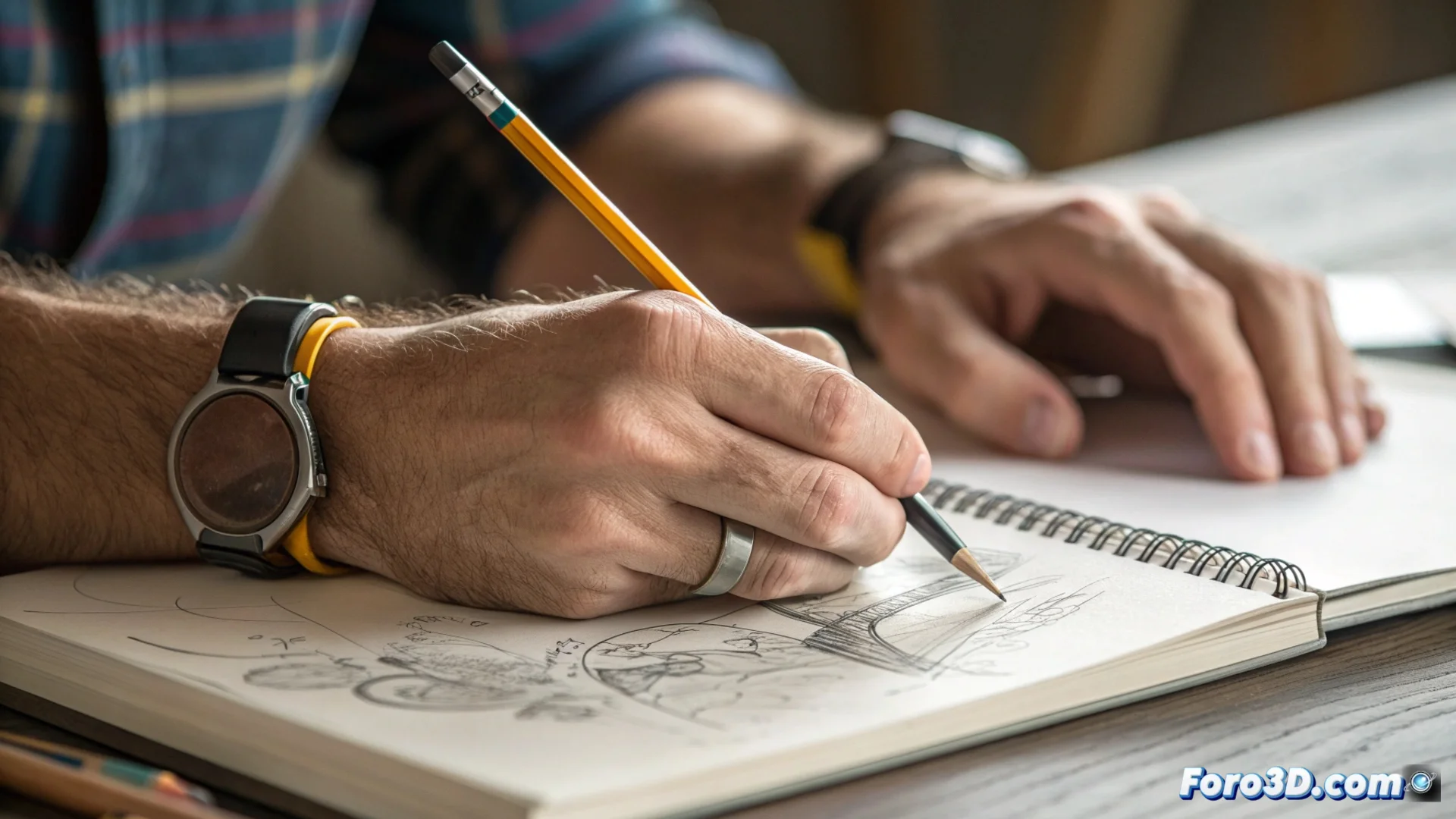
The Tied Hand Technique for Drawing with the Shoulder
This method proposes holding the drawing tool in a deliberately uncomfortable and unnatural way. The main objective is to block the fine control normally exerted by the fingers and wrist, forcing the body to find a new source of movement. 🎨
Resetting Established Motor Patterns
The practice acts as a physical reset for automated drawing habits. Many artists, especially at the beginning, tend to generate lines only with their fingers, which usually produces short and hesitant strokes. By adopting a forced posture, such as clenching the fist or placing the fingers very far back on the pencil, that pattern is interrupted. The nervous system must seek an alternative solution, resorting to larger and more stable muscle groups.
Key benefits of this change:- The pivot point shifts from the wrist to the shoulder joint.
- Wider, fluid strokes with more character are generated.
- The resulting drawing loses rigidity and gains a more organic and gestural quality.
Forcing more decisive and wider strokes fosters a smoother and less interrupted workflow.
Universal Application: From Paper to Screen
The mechanical principle is identical and applies with full effectiveness both in traditional and digital media. Drawing on paper with a common pencil or working with a graphics tablet benefits equally from this exercise. In the digital environment, it specifically helps combat the tendency to overuse the undo tool or to obsessively polish every line.
How to integrate the technique:- It does not seek to replace precision drawing, but to complement it.
- It is ideal for freeing the hand during the initial phases of sketching and gesturality.
- It trains the brain to connect the stroke intention with the movement of the shoulder and elbow.
A Lesson in Motor Humility
Discomfort is an inherent part of the process. It is not uncommon for the hand to protest with cramps after a few minutes of practice, reminding us why we normally do not hold objects that way. This sensation underscores a valuable lesson about the comfort we take for granted and about our body's ability to adapt and learn new fundamental movement patterns for art. ✏️