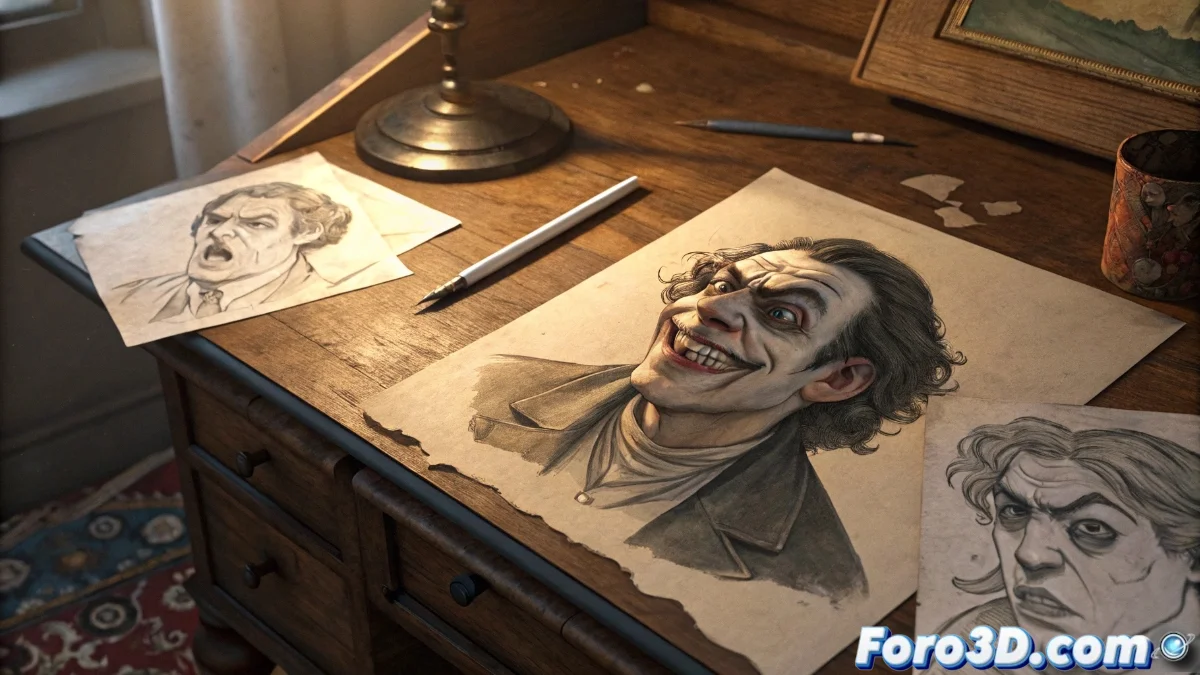
The Fine Line Between Humor and Rejection in Exaggerated Caricatures
In current graphic design, caricatures with amplified features constitute an expressive tool intended to evoke comedy through the alteration of physical characteristics. However, when distortion exceeds certain perceptual limits, it can produce displeasure instead of entertainment 🎭.
Psychological Mechanisms of Visual Aversion
Human perception operates through identifiable patterns, and when a caricature excessively modifies basic anthropomorphic proportions, it generates cognitive dissonance. Research in neuroaesthetics reveals that there are defined boundaries in tolerance to distortions, where controlled exaggeration produces comedy, but radical deformation activates defensive responses. The uncanny valley illustrates this phenomenon, where almost-human but imperfect representations generate psychological discomfort 😵.
Determining Factors in Perception:- Degree of alteration of fundamental facial proportions
- Cultural context and previous experiences of the observer
- Level of recognizability preserved by the representation
The essence of caricature art lies in knowing what to intensify and what to respect from the original
Principles for Balanced Character Design
Graphic creators must evaluate the environment and target audience when developing caricatures. A moderate enlargement of attributes like eyebrows or chin can be effective, while the deformation of primary facial components such as pupils or lips commonly induces rejection. The fundamental balance lies in preserving the recognizable identity of the subject while enhancing selected traits, avoiding crossing the boundary where the humorous becomes grotesque 🎨.
Strategies to Maintain Visual Balance:- Preserve the basic structure of the face while exaggerating secondary details
- Test the reactions of the target audience through preliminary versions
- Study references of successful caricatures that maintain recognizability
The Paradox of Expressive Minimalism
In the universe of visual design, simplicity is often more impactful, except when it comes to explaining why the simple works better, which curiously demands elaborate justifications. An irony that will certainly be understood by those who have witnessed their most complex creations receive the same reception as a basic sketch 🖌️.