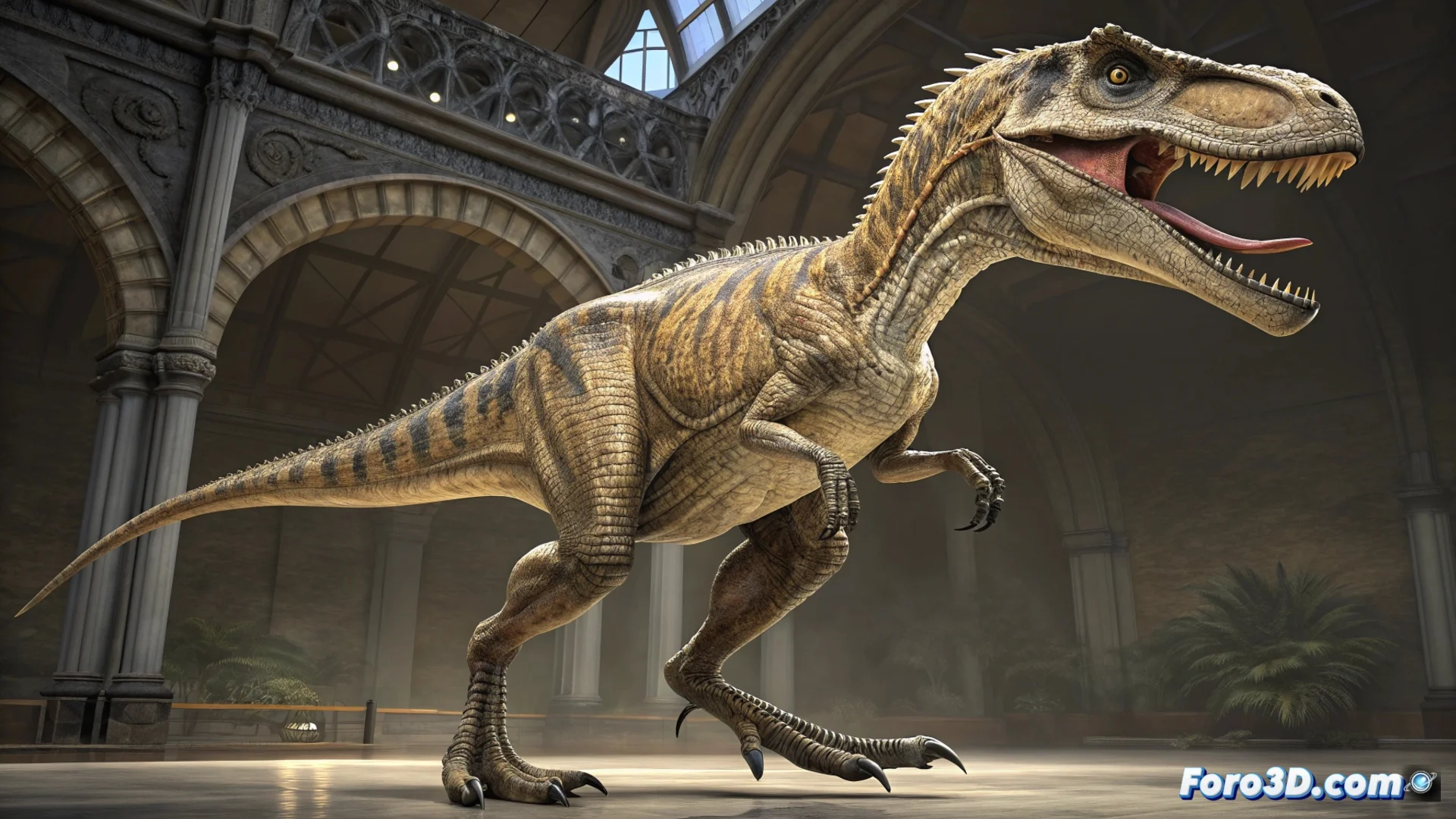
The Tellus Science Museum exhibits a detailed replica of a dinosaur predator
The paleontology hall of the Tellus Science Museum has just renovated its central space with an exceptional piece: a life-size reconstruction of a predatory theropod dinosaur. This project, described by the institution as the most accurate to date, aims to show the appearance of this animal with unprecedented detail, grounded in the latest science 🦖.
A long-term multidisciplinary project
To achieve this level of fidelity, a team that integrated paleontologists, digital artists, and specialized technicians worked for over two years. The process began with 3D scanning the original fossils of the specimen to obtain high-resolution digital models. These data served as the basis for digitally sculpting the skeletal structure. Subsequently, layers of muscles, skin, and other soft tissues were added, using bone marks and comparative anatomy studies with modern animals as guides. The final phase included applying textures and colors that reflect the most accepted visual hypotheses.
Key phases of creation:- Digitalize the original fossils using high-precision three-dimensional scanning.
- Model the complete skeletal structure from the obtained digital data.
- Add musculature and skin, based on osteological evidence and comparative biology.
- Texture and color the model to achieve a realistic and scientifically plausible appearance.
This model serves as a powerful visual reference to educate the public and for researchers to test new ideas.
Anatomical precision and verifiable details
The replica incorporates numerous anatomical details supported by current paleontological research. It is possible to observe the protofilamentous feathers that covered parts of its body, a common trait in many theropods. The posture, spinal curvature, and jaw articulation conform to the latest biomechanical studies. Even the smallest elements, such as the scale pattern or claw morphology, were inspired by fossil skin impressions and preserved tracks.
Highlighted features of the replica:- Presence of protofilamentous feathers, indicating the evolutionary relationship with birds.
- Posture and joints validated by computational biomechanical analysis.
- Skin texture and claw shape derived from direct fossil evidence.
- Coloration based on studies of pigmentation in fossils and modern animals.
Educational impact and public perception
Although the realism of the figure is striking, its presence generates curious reactions, especially among younger visitors, who sometimes ask if the dinosaur will blink or roar. This demonstrates that, sometimes, the line between what science reconstructs and what fiction imagines can seem very thin. The museum trusts that this reference model will not only educate but also spark discussions and new lines of research among experts 🧠.