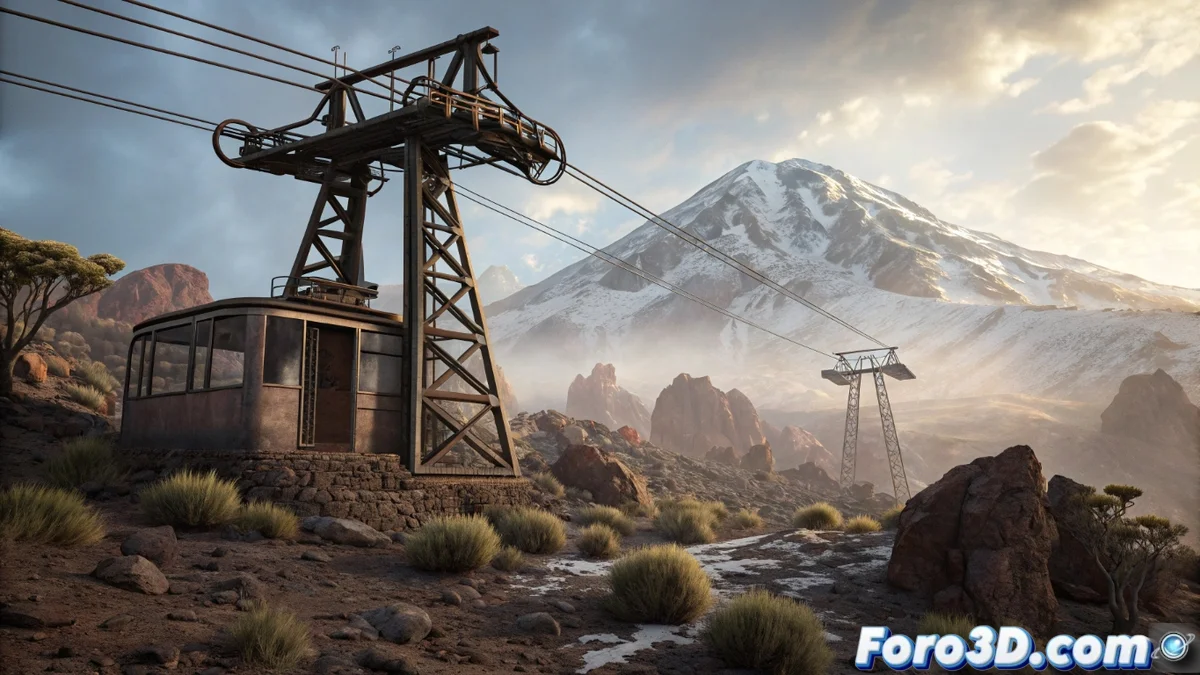
The Teide Cable Car on its North Face: An Ambitious and Unfinished Project
In the volcanic landscape of Tenerife, the Teide Cable Car for its north side stands as one of the most intriguing and frustrating chapters in Spanish tourist engineering. Designed to offer spectacular and panoramic access to the summit of Spain, this transportation system remains, decades after its conception, in a state of perpetual suspension, becoming a symbol of the limits between human ambition and natural and bureaucratic realities. 🏔️
Origins and Conception of a Great Idea
The seed of this project was planted in the 1970s, driven by the success of the already operational cable car on the south face. The vision was to replicate and surpass that model, creating a new access route that would boost tourism in other areas of the island. Plans were drawn up with state-of-the-art cabins and structures calculated to withstand the strong winds at altitude, painting a future of seamless connection with the peaks.
Key Factors in its Development:- Inspiration from Previous Success: The operation of the south cable car demonstrated the viability and demand for this type of transportation in the Teide environment.
- Detailed Planning: Engineers developed exhaustive technical studies, taking into account the unique orography and extreme weather conditions.
- Tourist Objective: The initiative was part of a broader strategy to decentralize and enhance the tourist offer in Tenerife.
What was conceived as an epic journey to the heart of the volcano has transformed into an unfulfilled promise, a lesson in how the most ambitious projects can get trapped in the web of reality.
The Walls that Stopped the Ascent
The path to construction soon encountered seemingly insurmountable obstacles. The ecologist opposition, concerned about the irreversible impact on a National Park declared a World Heritage Site, was a crucial brake. Added to this were the technical challenges of the volcanic terrain, the skyrocketing economic costs, and increasingly strict environmental legislation, creating a perfect storm of impediments.
Main Reasons for the Stagnation:- Conservationist Pressure: Ecologist groups warned about the potential damage to the park's fragile ecosystem, generating intense public debate.
- Technical Complexity and Cost: The irregular volcanic orography raised the requirements and budget of the project far above what was initially planned.
- Changing Legal Framework: The evolution of environmental protection laws added layers of requirements and procedures that slowed and complicated the process.
A Legacy of Suspended Expectations
Today, the Teide north cable car project is more of an relic of what could have been than a plan with a realization horizon. Its history reflects a common pattern in infrastructure megaprojects where initial enthusiasm is overcome by practical, economic, and environmental considerations. For visitors and locals, the image remains of an unfinished dream, a ghost infrastructure that forces tourists to continue conquering the summit on foot, while the volcano keeps its secrets, apparently, safe from cables and cabins. 🚡❌