The Broken Brushstroke Technique in Impressionism
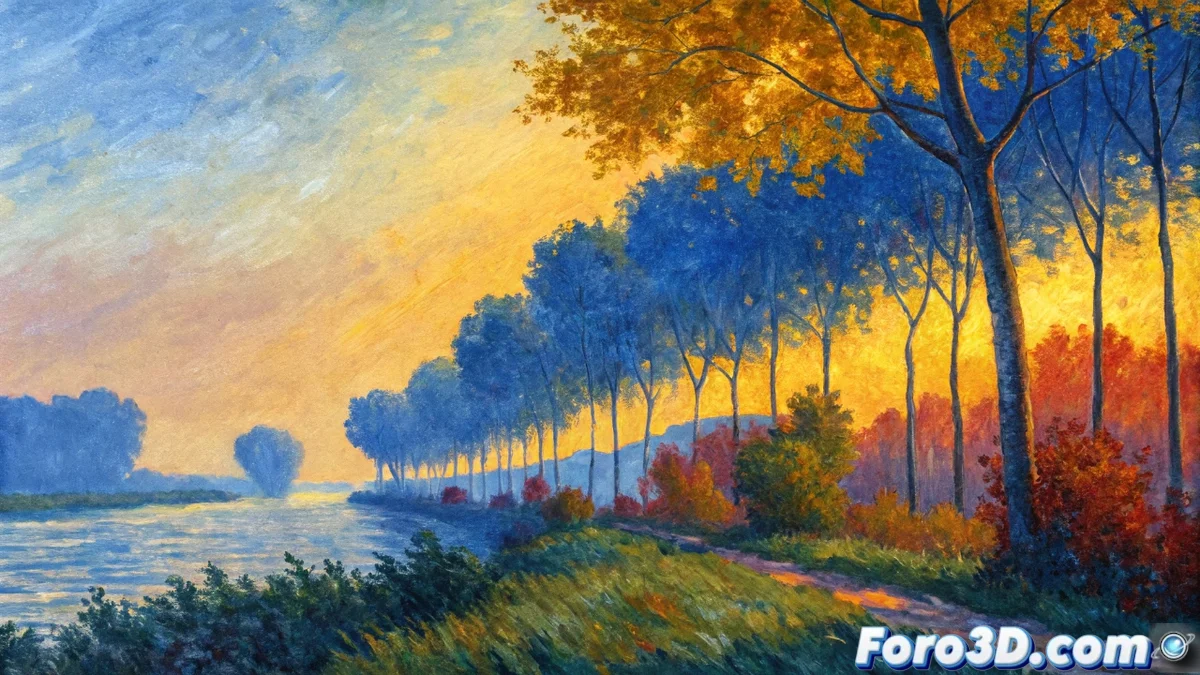
The Impressionist movement is characterized by its revolutionary approach to color application, where the broken brushstroke plays a central role. This methodology consists of applying small independent brushstrokes that do not fully blend, allowing the underlying tones to remain visible through the spaces between them. The result is an optical interaction that the human eye interprets as a vibrant, lively mixture. Impressionist artists discovered that this chromatic fragmentation generated a luminosity impossible to achieve with traditional palette mixing, giving their works a nearly breathing quality that interacts with ambient light. 🎨
Visual and Atmospheric Effects Achieved
The broken brushstroke technique produces a unique luminous vibration, making the colors appear to shimmer on the canvas surface, especially when viewed from a certain distance. This approach captures the transience of natural light and atmospheric changes, conveying the impression of a specific moment in time. Works by Monet and Renoir illustrate how these fragmented brushstrokes can evoke the movement of water, the texture of foliage, or the changing quality of sunlight, creating a dynamic visual experience that varies according to the viewer's position.
Key Aspects of the Effects:- Optical vibration that simulates ambient luminosity
- Capture of ephemeral moments and atmospheric changes
- Suggestion of movement and textures through separated brushstrokes
The same technique that critics once dismissed as incomplete is today valued as one of the greatest innovations in art history.
Practical Application in Pictorial Creation
To employ this technique, artists use brushes of various sizes and shapes, depositing pure colors or slightly modified ones in successive layers without waiting for complete drying. The key lies in maintaining the separation between brushstrokes while building the overall form through the accumulation of these color touches. Impressionists frequently combined complementary colors in adjacent brushstrokes, such as blues next to oranges or violets near yellows, leveraging the principles of simultaneous contrast to intensify the vibration and increase the luminosity of their compositions.
Essential Elements in Application:- Use of varied brushes to achieve different effects
- Application in layers without prior mixing on the palette
- Strategic combination of complementary colors
Legacy and Historical Irony
The irony of this revolutionary technique is that the same critics who initially ridiculed it as incomplete painting or mere accumulation of meaningless blobs today pay millions for these works they once deemed unworthy of the title of true art. This evolution in perception underscores how artistic innovation often faces resistance before being celebrated. The legacy of the broken brushstroke endures not only in museums but also in contemporary digital graphics techniques that seek to emulate its vibrant effects. ✨