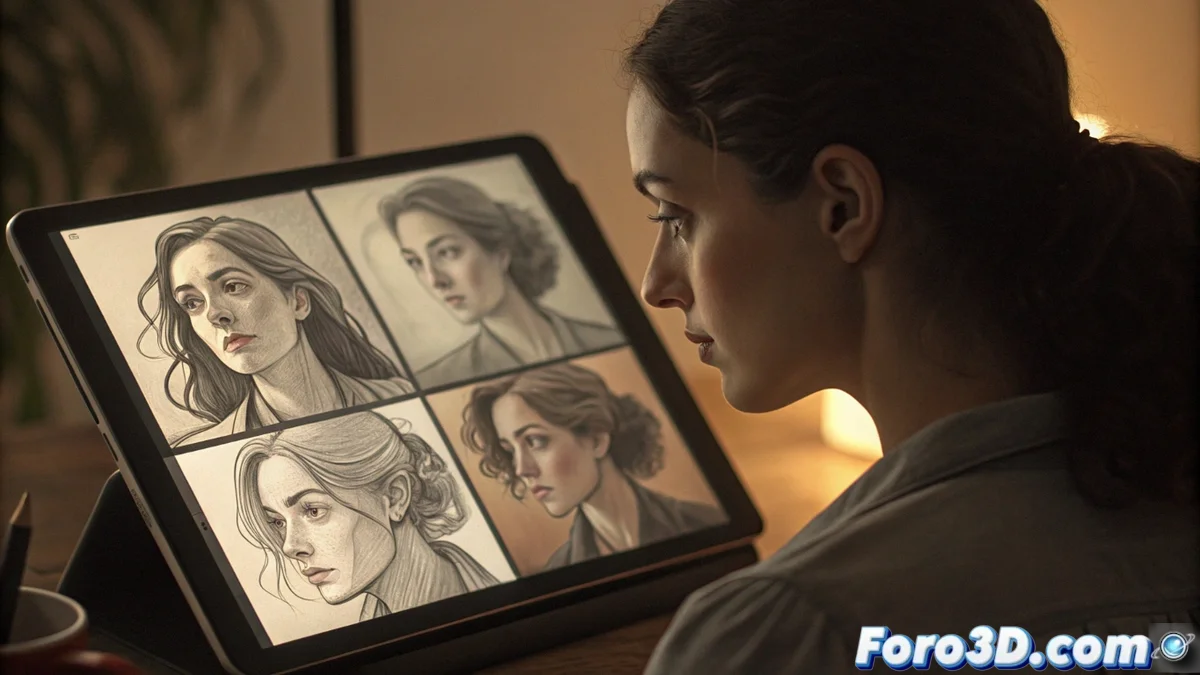
The Progressive Timed Drawing Technique
Imagine taking a simple pencil and challenging yourself to capture the essence of an object or figure in increasingly longer time periods, like a clock that accelerates your creativity. This progressive timed drawing technique not only sharpens your artistic eye but also transforms the way you see and represent the world, turning each session into a personal adventure against time. It's ideal for artists looking to break routines and enhance their creative flow, whether in home studios or intensive sessions 📝.
From Basic to Maximum Detail in Each Stage
This practice involves drawing the same subject multiple times, but with increasing time intervals, forcing your mind to adapt and focus on the crucial elements in each phase. For example, you start with a brief 30-second period, where you only manage to sketch the overall gesture and basic positioning, fostering an instinctive and fluid approach. Then, in the next 2 minutes, you can refine proportions and shape the main volumes, adding a touch of structure that brings the drawing to life. By the 10-minute mark, the piece solidifies, allowing you to adjust previous inaccuracies and add touches like soft shadows or initial textures, consolidating a solid foundation. Finally, with the full 30 minutes, you dive into fine details, exploring lights, finishes, and nuances with the peace of mind that the essentials are already secured. This method is not just an exercise; it's a personal evolution that reveals hidden layers in every stroke.
Key Stages of the Process:- In the first 30-second interval, the focus is on capturing the global gesture and placement of basic masses, promoting impulsive drawing that ignores the superfluous and highlights the instinctive.
- During the 2 minutes, proportion and volume are refined, allowing the definition of main structures and suggesting details that enrich the initial sketch without losing momentum.
- In the 10-minute phase, the overall construction is solidified, correcting errors from previous stages and beginning to incorporate elements like shadows or key textures for greater depth.
Remember that sometimes the solution is not having time to think. Just draw.
Advantages for Developing a Prioritized Vision
What makes this technique truly valuable is not the drawings themselves, but the mental training it provokes, helping you quickly discern the vital from the secondary in any visual reference. For example, if you're working on a quick animation or a detailed study for a professional illustration, this practice teaches you to prioritize visual elements efficiently, separating the fundamental to optimize your workflow. Additionally, it combats blank canvas paralysis, a common trap for many creators, by accustoming you to operate under real time pressures, which abound in the professional world of digital and traditional art. In my experience, this approach not only accelerates learning but also instills confidence, turning you into a more adaptable and productive artist 😊.
Essential Benefits to Consider:- Improves the ability to identify key information in references, which is indispensable for quick sketches or complex projects in animation.
- Breaks creative paralysis, facilitating the start of drawings and fostering a routine that works under usual time constraints in work environments.
- Strengthens visual prioritization, allowing artists to separate the essential from the accessory, a crucial skill for final illustrations or detailed studies.
Conclusion: Kickstart Your Creativity Without Delay
In summary, the progressive timed drawing technique is a powerful tool that not only refines your artistic skills but also transforms your mental approach to drawing, making each session a step toward mastery. If you ever find yourself stuck on an intricate project, consider this method as a way to unlock your potential, remembering that true art lies in immediate action. In the end, it's that adaptation to time that makes the difference in your creative journey, inspiring you to keep evolving with every new stroke 🎨.