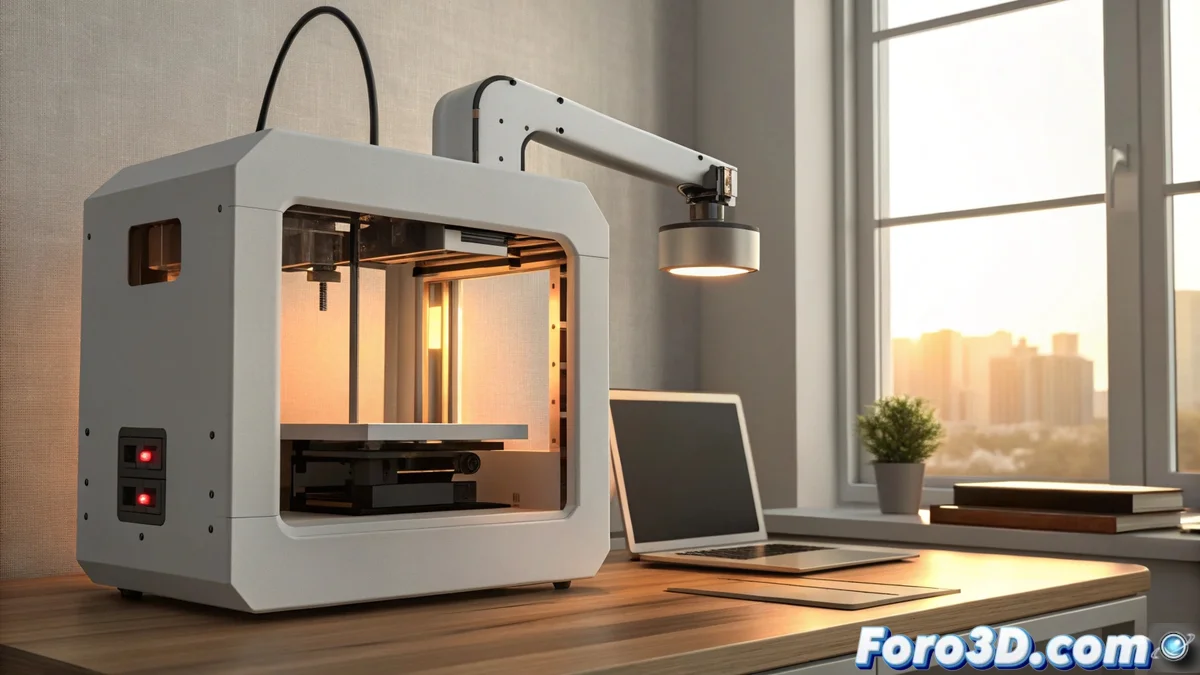
Anycubic's Technical Director Analyzes the Future of Home 3D Printing
Home 3D printing is seeking its definitive moment to take off 🚀. In a recent intervention, Samuel Chen, Anycubic's technical director, has detailed what he believes are the keys for this technology to stop being a hobby for enthusiasts and become just another household appliance. His vision is based on eliminating the technical barriers that still hold back many users.
Automate to Democratize: The Key to Change
Chen points out that the main obstacle is the learning curve. To overcome it, it is essential for machines to evolve toward a plug & play model. This involves developing 3D printers that perceive their environment and act autonomously, integrating artificial intelligence and advanced automation systems. The ultimate goal is for the user to only think about the design, not configuring the machine.
Key capabilities that Chen envisions:- Automatically calibrate the print bed without user intervention.
- Detect and pause the job if filament runs out, resuming after reloading.
- Adjust parameters in real time to compensate for temperature or humidity changes.
The goal is to close the gap between the digital idea and the physical object, minimizing intermediate steps and possible points of error.
A Complete Ecosystem: Beyond Hardware
Simplification does not depend solely on the machine. Chen also highlights the need to progress in other areas to create a cohesive user experience. Developing more versatile and easy-to-use materials is a fundamental piece. At the same time, software must become more intuitive, and platforms must achieve better interoperability.
Complementary development areas:- Create more adaptable filaments with less tendency to fail.
- Design slicing software with simplified interfaces and guided workflows.
- Ensure devices work seamlessly with different applications and cloud services.
Toward a Future Without Technical Complications
This comprehensive approach not only aims to attract new creators but also to free current users. Instead of spending time solving first-layer adhesion or leveling issues, they can fully focus on creating. Chen's vision paints a picture where home 3D printing will be as reliable and simple as using any other common electronic device. The path involves making machines "think" so that people only have to imagine. 🛠️✨